Revetlla de Sant Joan
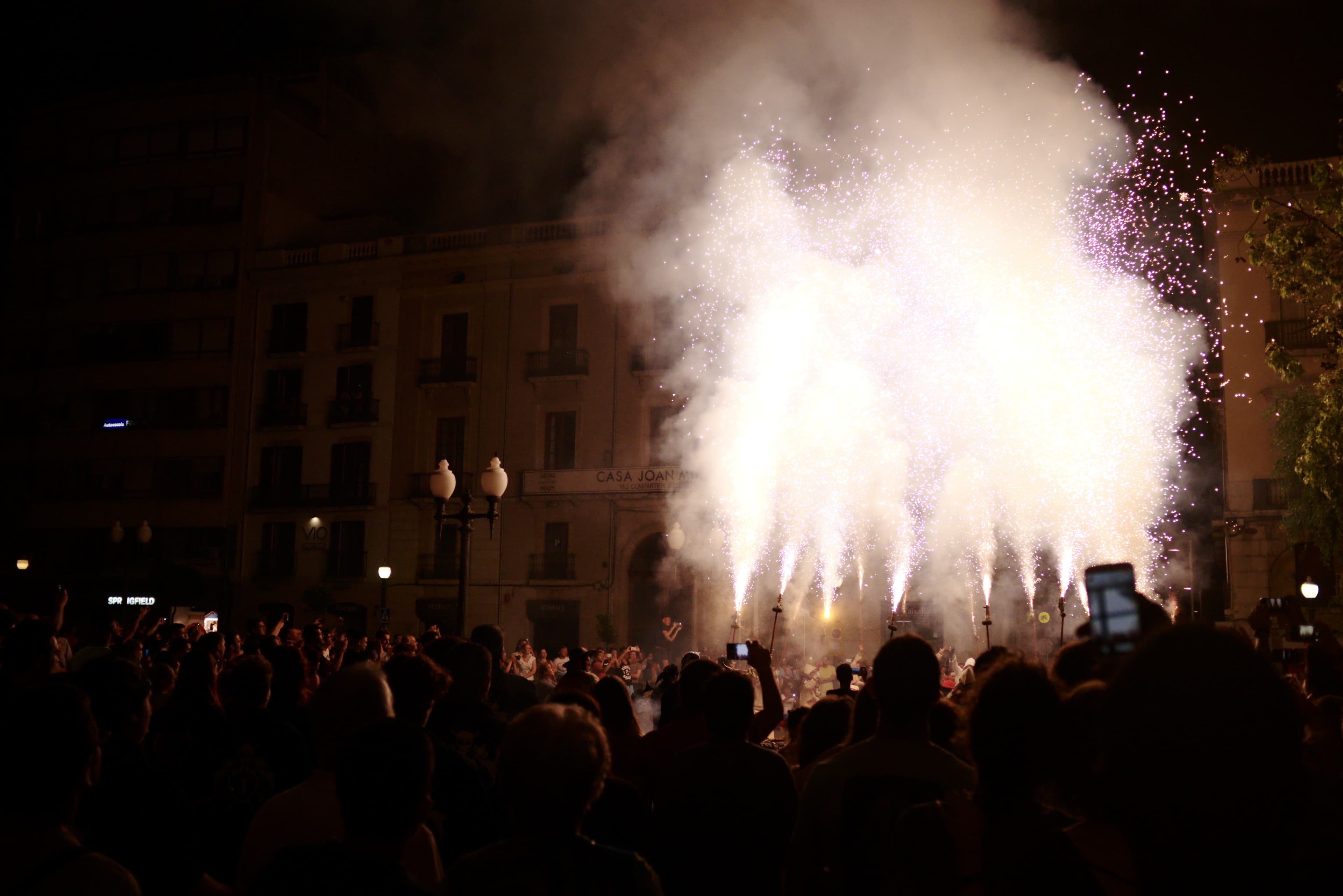
The Revetlla de Sant Joan — free and open to all — lights up Tarragona on the night of 23–24 June (the 24th is a public holiday across Catalonia). The Flama del Canigó arrives in the fishermen's quarter of El Serrallo, the bonfire blazes in plaça Corsini, and the beaches fill with fire, firecrackers, coca and cava until dawn.
What is the Nit de Sant Joan
The Nit de Sant Joan is celebrated on the night of 23–24 June throughout Catalonia. It is a festival with pagan, solstice-rooted origins that the Church absorbed by linking it to the birth of Saint John the Baptist (24 June). Fire takes centre stage: communal and family bonfires with a purifying role, alongside firecrackers, midnight swims and the gathering of Sant Joan herbs. One common misconception is worth clearing up: this is NOT the shortest night of the year. The 2026 astronomical solstice falls on 21 June (at 09:24 peninsular time, according to the IGN), two days earlier; the 23–24 date was set by the liturgical calendar. The defining modern symbol is the Flama del Canigó, lit at the summit of Canigó (2,784 m, Catalunya Nord). Started in 1955 and spread widely from 1963, volunteers carry the flame in relay chains to hundreds of towns: it is estimated that around 3,000 bonfires are lit that night using fire from Canigó. Coca de Sant Joan and cava complete the ritual.
How the night unfolds in Tarragona
In Tarragona the evening is split between the sea and the old town. Platja del Miracle, at the foot of the Roman amphitheatre and 5–10 minutes from the historic centre, is the main draw; l'Arrabassada and la Savinosa pull in the rest of the crowds. Worth noting: these beaches fill up spontaneously, but the Ajuntament does not programme official bonfires on them (at least in the 2022–2025 editions). The organised heart of the celebrations is the fishermen's quarter of El Serrallo, where the Flama del Canigó arrives around 18:30 at the fishing port, welcomed by the Diables Voramar, the Víbria, the Gegants del Serrallo and Club Vaixell. From plaça de la Mitja Lluna, around 22:30, the cercavila de foc sets off — with diables, drac, bou and víbria — heading to plaça Corsini, where around 23:30 the central bonfire is lit and the verbena continues with live bands. One key detail to remember: there are NO fireworks over the sea on Sant Joan; that spectacle is the Concurs de Focs, which takes place in July. Coca and cava are a given.
Dates, public holiday and programme
The revetlla always falls on the night of 23–24 June, and the 24th (a Wednesday in 2026) is an official regional public holiday across Catalonia: most shops close, so plan any shopping and meals in advance. The bulk of the festivities kick off in the late afternoon of the 23rd and carry on until dawn. On the afternoon of the 24th, at 19:30 in plaça de la Font, the diada castellera takes place with all four local colles (Xiquets de Tarragona, Colla Jove, Xiquets del Serrallo and Sant Pere i Sant Pau) — a great option if you want tradition without the night-time chaos. The Ajuntament typically programmes around thirty events, but the timetable and line-up change every year and details are sometimes published with little notice. This guide is for general orientation: for exact dates, routes and times for the next edition, check the official website at tarragona.cat (under festes i cultura popular) and the municipal events calendar. Never assume a specific programme without verifying it first.
Practical tips
From Barcelona, the train is your best bet: the Media Distància lines R14, R15, R16 and R17 reach Tarragona in around 71 minutes, with the station sitting right on the edge of the old town, a short walk from La Rambla. Check night-time services at rodalies.gencat.cat before you leave, as late trains to Tarragona are not always confirmed. If you drive, forget about parking near the beaches that night; use the park-and-ride at Joan XXIII (388 spaces) and walk in. With the fireworks and firecrackers, use common sense: never hold them in your hands or throw them from balconies, buy only from authorised sellers, and if you are with children, elderly people or anyone noise-sensitive (including those with autism), bring earplugs. On the beach, always wear closed shoes: there are embers, firecracker debris and broken glass in the sand. Bring your own food and drinks and claim your spot before dark; chiringuitos get packed and close early. This is a free celebration — all you need is patience with the crowds.
Frequently asked questions
When does the Revetlla de Sant Joan take place in Tarragona, and is it free?
Are there fireworks over the sea on Sant Joan?
Where is the best place to experience the celebrations in Tarragona?
How do I get there from Barcelona, and where should I park?
Some links on this page are affiliate links: if you book through them, Andelaria may earn a commission at no extra cost to you. Transparency & affiliate policy
Book tickets and tours: Revetlla de Sant JoanPlan your trip
Book the essentials for your trip to Tarragona.
Other places in Tarragona
Anfiteatro Romano de Tarragona
monumento2nd-century seafront amphitheatre where bishop Fructuós was martyred in 259.
Catedral de Tarragona
monumentoGothic cathedral built over the former temple of Augustus, atop the Part Alta staircase.
Passeig Arqueològic (Murallas)
monumentoWalk between the Roman and medieval walls, nearly 1 km around the old town.
Balcó del Mediterrani
miradorSea balcony at the end of Rambla Nova; touching the railing is said to bring luck.
El Serrallo
barrioFishermen's quarter with the best seafood and the afternoon fish auction.
Festa de Santa Tecla
fiestaSanta Tecla is Tarragona's main festival, held around 23 September in honour of the city's patron saint since the 12th century. It is free and open to all, featuring the richest seguici popular in Catalonia — bestiari, gegants and castellers in a single procession. It holds a double recognition of national interest at both regional and state level.
Tarraco Viva
fiestaEvery May, for about two weeks, Tarragona becomes Tárraco again: Tarraco Viva fills the Roman amphitheatre, circus, and forum with gladiators, legionaries, and period markets. It is the most important Roman re-enactment festival in southern Europe, with more than 500 activities and 70% free admission.
Festes de Sant Magí
fiestaSant Magí is Tarragona's Festa Major Petita, the co-patron's festival known as "the water festival." In 2026 it runs from August 8 to 19 (with the 19th as the main day). Its hallmark: the "miraculous" water that portants carry on foot from the Brufaganya. Free and open to all.
Navidad en Tarragona
fiestaAt Christmas, Tarragona lights up around 70 streets in the old town and along the Rambla from late November through January 7th. Everything is free and open to all: a Christmas market on the Rambla Nova, a municipal nativity scene on the Rambla Vella, and the Three Kings Parade on January 5th — with the Roman ruins almost entirely to yourself.
Similar places in other cities
Revetlla de Sant Joan
SitgesThe Revetlla de Sant Joan is the free, open-access midsummer fire festival on the night of 23–24 June (the 24th is a public holiday throughout Catalonia). In Sitges it unfolds on the beaches, with the Flama del Canigó, coca de Sant Joan, cava and firecrackers until dawn.
Carnaval de Sitges
SitgesThe Carnaval de Sitges is the town's biggest street party: free, open to all, and drawing over 200,000 visitors (municipal figure). Documented since 1586 and revived in 1976, it is today Catalonia's most internationally recognised carnival, featuring two nocturnal rúas, a drag gala, and an unmistakable LGBTQ+ spirit.
Festival de Cine Fantástico de Sitges
SitgesThe Sitges Film Festival is the world's oldest fantastic film festival (since 1968) and a global benchmark for the genre alongside Fantasia and Fantastic Fest. Ten days in October with over 200 horror, fantasy and science fiction films. Screenings are ticketed: individual tickets and passes available on the official website.