Festa de Santa Tecla
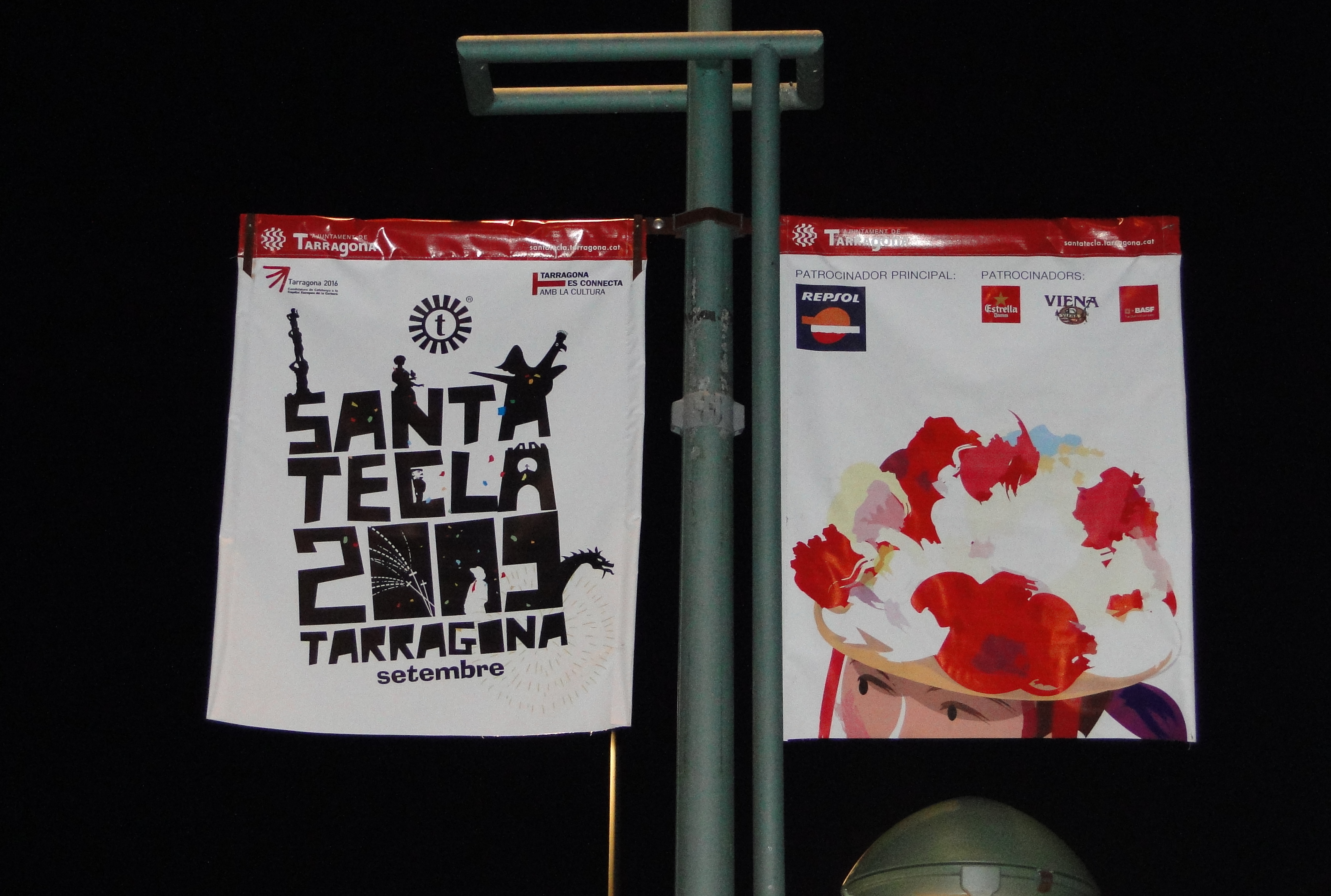
Santa Tecla is Tarragona's main festival, held around 23 September in honour of the city's patron saint since the 12th century. It is free and open to all, featuring the richest seguici popular in Catalonia — bestiari, gegants and castellers in a single procession. It holds a double recognition of national interest at both regional and state level.
Nine centuries honouring the patron saint
Tarragona has venerated Santa Tecla as its patron saint since the 12th century, following the Christian reconquest of the city in 1117. The bond became physical on 17 May 1321, when the relic of the saint's arm arrived from Armenia — an event whose 700th anniversary the city marked in 2021. In 1370, Archbishop Pere Clasquerí issued the Ordinacions that fixed the ritual for the 22nd and 23rd, essentially still in force today. The Generalitat declared it a Festa Tradicional d'Interès Nacional in 1996, reclassified as Festa Patrimonial d'Interès Nacional in 2010; the Spanish state granted it the title of Fiesta de Interés Turístico Nacional in 2002 — a double recognition unique in Catalonia. The festival runs for around 12 days (starting around 12–13 September and closing on the 24th), with the patronal date on the 23rd. Check the programme and exact dates for each edition on the official Tarragona Turisme website.
The Seguici Popular: dragons, giants and castellers
The Seguici Popular is the most complete festive procession in Catalonia: 28–29 elements and around 1,700 participants, with documented roots going back to the 14th century. Its bestiari brings together eight figures — the Drac de Sant Roc, Cucafera (recorded in Tarragona since 1383), Víbria, Àliga, Lleó, Mulassa, Bou and the Griu, added in 2014 — each with its own symbolism and accompanied by fire or music. They are joined by three pairs of gegants (the Vells date from 1825), nanos, dances such as the Ball de Gitanes and Ball de Bastons, and the Moixiganga. What makes it unique is that bestiari, gegants and castellers all march together — something with no equivalent in any other major Catalan festival. The full cortège takes to the old town on the 22nd and 23rd. Practical tip: the Víbria and the Drac fire off pyrotechnics and the Ball de Diables involves open flames; wear cotton, put on a cap and avoid synthetic fabrics, and keep children away from the sparks.
The castellers in the Plaça de la Font
The Diada Castellera is the human heart of the festival: at midday on 23 September, the local colles (Xiquets de Tarragona, Colla Jove, Vella de Valls and often the Castellers de Vilafranca) raise towers of up to ten storeys in the Plaça de la Font. A second session on the 24th features pilars. The most distinctive feature of Santa Tecla are the pilars caminant — human columns that climb and descend the steps of the Catedral de Tarragona, an act that exists in no other major Catalan festival. Castells became part of the patronal celebrations in the final third of the 18th century. Practical tip: the Plaça de la Font is small and fills up fast; arrive 45–60 minutes early to get a clear view. Absolute silence is expected during the construction of the towers, so this is not the moment to move around or talk loudly in the crowd.
Getting there and making the most of it
From Barcelona, the Regional Rodalies train (around 70 minutes, every 30 minutes on weekdays) drops you at Tarragona station, right in the centre — far more practical than the high-speed AVE. From Madrid there is a direct AVE to Camp de Tarragona in around 2 h 14 min, but that station is 10–11 km from the centre and requires a connecting bus (around 20 minutes, 2–4 €). September is stable and sunny, with highs of 24–27 °C and lows of 16–19 °C. Stay in the Parte Alta to walk everywhere; book well in advance as demand pushes prices up sharply. Practical tip: during the main days the historic centre is closed to traffic, so leave your car in a peripheral car park. The Braç procession leaves the Pla de la Seu at around 19:00 and the correfoc closes the festival on the night of the 24th along the Rambla Nova; position yourself early as both spots fill up quickly. Outside the festival, don't miss the Roman ensemble of Tarraco, a UNESCO World Heritage Site.
Frequently asked questions
When does the Festa de Santa Tecla take place?
Is there an entrance fee for Santa Tecla?
Where is the best place to watch the castellers?
How do I get there from Barcelona or Madrid?
Some links on this page are affiliate links: if you book through them, Andelaria may earn a commission at no extra cost to you. Transparency & affiliate policy
Book tickets and tours: Festa de Santa TeclaPlan your trip
Book the essentials for your trip to Tarragona.
Other places in Tarragona
Anfiteatro Romano de Tarragona
monumento2nd-century seafront amphitheatre where bishop Fructuós was martyred in 259.
Catedral de Tarragona
monumentoGothic cathedral built over the former temple of Augustus, atop the Part Alta staircase.
Passeig Arqueològic (Murallas)
monumentoWalk between the Roman and medieval walls, nearly 1 km around the old town.
Balcó del Mediterrani
miradorSea balcony at the end of Rambla Nova; touching the railing is said to bring luck.
El Serrallo
barrioFishermen's quarter with the best seafood and the afternoon fish auction.
Revetlla de Sant Joan
fiestaThe Revetlla de Sant Joan — free and open to all — lights up Tarragona on the night of 23–24 June (the 24th is a public holiday across Catalonia). The Flama del Canigó arrives in the fishermen's quarter of El Serrallo, the bonfire blazes in plaça Corsini, and the beaches fill with fire, firecrackers, coca and cava until dawn.
Tarraco Viva
fiestaEvery May, for about two weeks, Tarragona becomes Tárraco again: Tarraco Viva fills the Roman amphitheatre, circus, and forum with gladiators, legionaries, and period markets. It is the most important Roman re-enactment festival in southern Europe, with more than 500 activities and 70% free admission.
Festes de Sant Magí
fiestaSant Magí is Tarragona's Festa Major Petita, the co-patron's festival known as "the water festival." In 2026 it runs from August 8 to 19 (with the 19th as the main day). Its hallmark: the "miraculous" water that portants carry on foot from the Brufaganya. Free and open to all.
Similar places in other cities
Revetlla de Sant Joan
SitgesThe Revetlla de Sant Joan is the free, open-access midsummer fire festival on the night of 23–24 June (the 24th is a public holiday throughout Catalonia). In Sitges it unfolds on the beaches, with the Flama del Canigó, coca de Sant Joan, cava and firecrackers until dawn.
Carnaval de Sitges
SitgesThe Carnaval de Sitges is the town's biggest street party: free, open to all, and drawing over 200,000 visitors (municipal figure). Documented since 1586 and revived in 1976, it is today Catalonia's most internationally recognised carnival, featuring two nocturnal rúas, a drag gala, and an unmistakable LGBTQ+ spirit.
Festival de Cine Fantástico de Sitges
SitgesThe Sitges Film Festival is the world's oldest fantastic film festival (since 1968) and a global benchmark for the genre alongside Fantasia and Fantastic Fest. Ten days in October with over 200 horror, fantasy and science fiction films. Screenings are ticketed: individual tickets and passes available on the official website.