Navidad en Tarragona
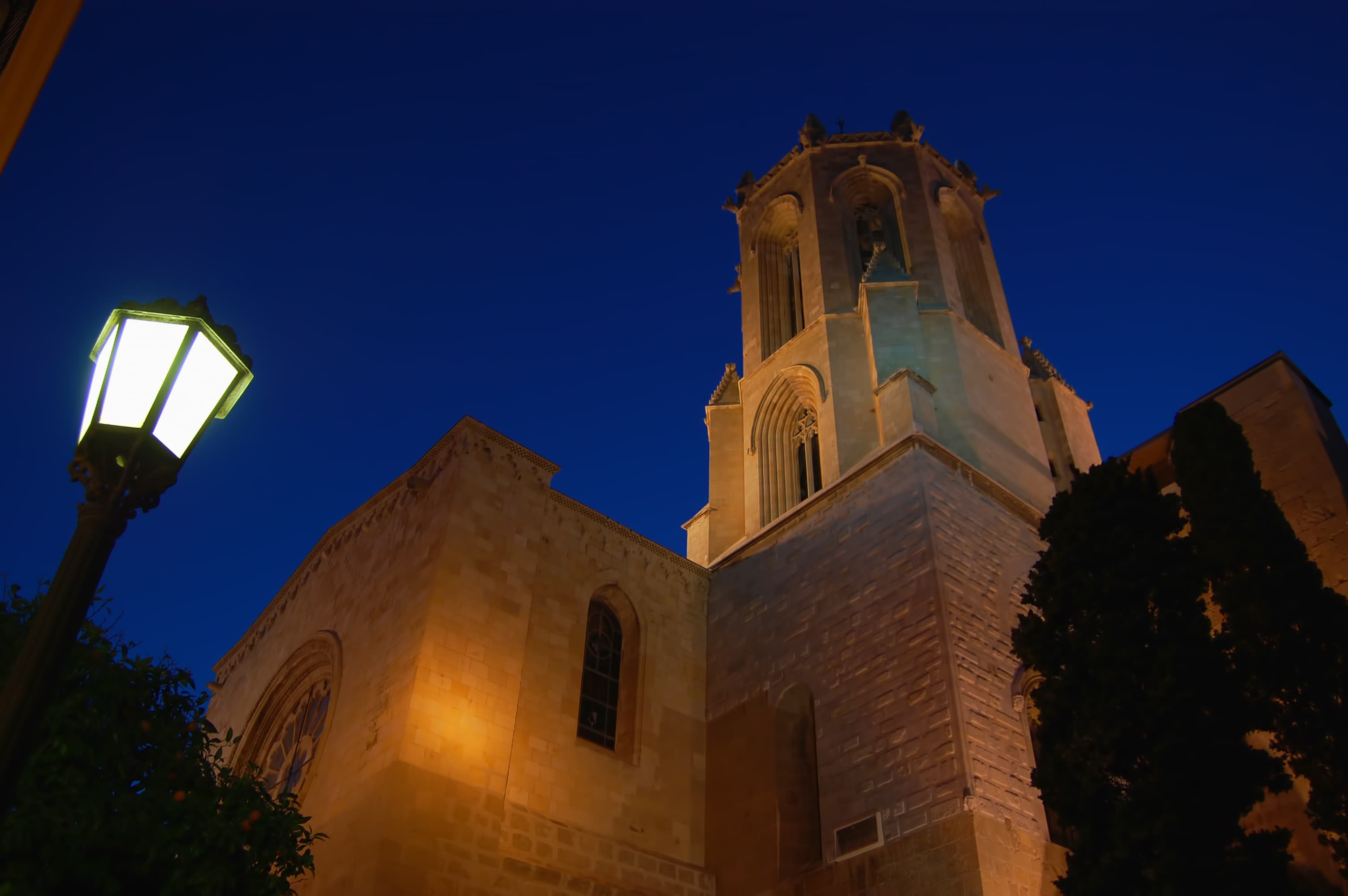
At Christmas, Tarragona lights up around 70 streets in the old town and along the Rambla from late November through January 7th. Everything is free and open to all: a Christmas market on the Rambla Nova, a municipal nativity scene on the Rambla Vella, and the Three Kings Parade on January 5th — with the Roman ruins almost entirely to yourself.
Lights in the Part Alta and the Rambla
The official switch-on kicks off in late November at the Plaça de la Font, with music, sweets, and some fireworks, and the lights stay on from dusk until midnight through January 7th. Around 70 streets are lit up: the Rambla Nova as the main commercial spine, and the Rambla Vella and the Part Alta with a more neighbourhood-scale display — far less crowded and more low-key. Districts like Sant Salvador, Bonavista, and Torreforta put on their own separate lighting. Practical tip: the Rambla Nova on the first weekend and Saturday evenings fills with families and pushchairs; if you want a quiet shot of the illuminated streets, head up to the Part Alta on a weekday at dusk, when the medieval alleyways are nearly empty. Confirm the switch-on date and full programme at tarragonaturisme.cat, as it changes every year.
Fira de Nadal next to the Cathedral
Tarragona's Christmas market runs along the Rambla Nova, between the col·legi de les Teresianes and the Teatre Metropol, with wooden stalls and around 40 vendors selling trees, nativity figures (pessebres), crafts, and decorations. It typically runs from late November until December 23rd, roughly 11:00–21:00, with a crafts fair continuing afterwards. On the Rambla Vella, at the corner with Rere Sant Domènec, the municipal nativity scene goes up in late December. Practical tip: this is not a sprawling German-style market — it's a local fair with a dozen-odd stalls; go without high expectations and you'll enjoy it. Pair it with the Cathedral organ concerts (mid-December, around 20:00, entrance via the Pla de la Seu, doors open 30 minutes before). Check dates at tarragonaturisme.cat and the Cathedral's own website.
Three Kings Parade on January 5th
Tarragona's Cabalgata de Reyes has a wonderful prologue: the Kings arrive by sea at the Serrallo with pyrotechnic salutes. The parade sets off from the carrer Reial and passes through the Plaça dels Carros, Apodaca, the Mitja Lluna, Unió, and the Rambla Nova — which it covers twice — finishing at the Plaça de la Font with the handover of the city keys and a message of peace. Note: the heart of the route is the Rambla Nova, not the historic Part Alta. Practical tip: for sweets and a good view of the floats, stake out a spot on the Rambla Nova early if you have kids; if you're going without children and hate crowds, the Serrallo arrival or the Plaça de la Font finale are the better bets. Cold and possibly rainy: dress warmly. Confirm timings at tarragonaturisme.cat.
December: Roman ruins with no queues
December is pure low season in Tarragona, and that's exactly the point. Ancient Tarraco (a UNESCO World Heritage Site since 2000) keeps its Roman monuments open in winter, though with reduced hours and spot closures on December 24th, 25th, and 26th, and on December 31st, January 1st, and January 6th. Check prices at tarragonaturisme.cat or the Museu Nacional Arqueològic de Tarragona (MNAT), as they change; under-12s are usually free or reduced. The amphitheatre by the sea and the underground passages of the Circus are virtually deserted, with an eerie echo. The weather is mild and walkable: highs of around 13–15°C and five to seven hours of sunshine, though rain is possible. Practical tip: check prices and hours at tarragonaturisme.cat before you go, as they change, and dress in layers. The Acueducte de les Ferreres, about 4 km north (bus #5 from Plaça Imperial Tàrraco), is free all year round.
Frequently asked questions
Is Christmas in Tarragona free?
When do the Christmas lights go on?
What is the route of the Three Kings Parade?
Is Tarragona worth visiting in December?
Some links on this page are affiliate links: if you book through them, Andelaria may earn a commission at no extra cost to you. Transparency & affiliate policy
Book tickets and tours: Navidad en TarragonaPlan your trip
Book the essentials for your trip to Tarragona.
Other places in Tarragona
Anfiteatro Romano de Tarragona
monumento2nd-century seafront amphitheatre where bishop Fructuós was martyred in 259.
Catedral de Tarragona
monumentoGothic cathedral built over the former temple of Augustus, atop the Part Alta staircase.
Passeig Arqueològic (Murallas)
monumentoWalk between the Roman and medieval walls, nearly 1 km around the old town.
Balcó del Mediterrani
miradorSea balcony at the end of Rambla Nova; touching the railing is said to bring luck.
El Serrallo
barrioFishermen's quarter with the best seafood and the afternoon fish auction.
Revetlla de Sant Joan
fiestaThe Revetlla de Sant Joan — free and open to all — lights up Tarragona on the night of 23–24 June (the 24th is a public holiday across Catalonia). The Flama del Canigó arrives in the fishermen's quarter of El Serrallo, the bonfire blazes in plaça Corsini, and the beaches fill with fire, firecrackers, coca and cava until dawn.
Festa de Santa Tecla
fiestaSanta Tecla is Tarragona's main festival, held around 23 September in honour of the city's patron saint since the 12th century. It is free and open to all, featuring the richest seguici popular in Catalonia — bestiari, gegants and castellers in a single procession. It holds a double recognition of national interest at both regional and state level.
Tarraco Viva
fiestaEvery May, for about two weeks, Tarragona becomes Tárraco again: Tarraco Viva fills the Roman amphitheatre, circus, and forum with gladiators, legionaries, and period markets. It is the most important Roman re-enactment festival in southern Europe, with more than 500 activities and 70% free admission.
Festes de Sant Magí
fiestaSant Magí is Tarragona's Festa Major Petita, the co-patron's festival known as "the water festival." In 2026 it runs from August 8 to 19 (with the 19th as the main day). Its hallmark: the "miraculous" water that portants carry on foot from the Brufaganya. Free and open to all.
Similar places in other cities
Revetlla de Sant Joan
SitgesThe Revetlla de Sant Joan is the free, open-access midsummer fire festival on the night of 23–24 June (the 24th is a public holiday throughout Catalonia). In Sitges it unfolds on the beaches, with the Flama del Canigó, coca de Sant Joan, cava and firecrackers until dawn.
Carnaval de Sitges
SitgesThe Carnaval de Sitges is the town's biggest street party: free, open to all, and drawing over 200,000 visitors (municipal figure). Documented since 1586 and revived in 1976, it is today Catalonia's most internationally recognised carnival, featuring two nocturnal rúas, a drag gala, and an unmistakable LGBTQ+ spirit.
Festival de Cine Fantástico de Sitges
SitgesThe Sitges Film Festival is the world's oldest fantastic film festival (since 1968) and a global benchmark for the genre alongside Fantasia and Fantastic Fest. Ten days in October with over 200 horror, fantasy and science fiction films. Screenings are ticketed: individual tickets and passes available on the official website.