Festes de Sant Magí
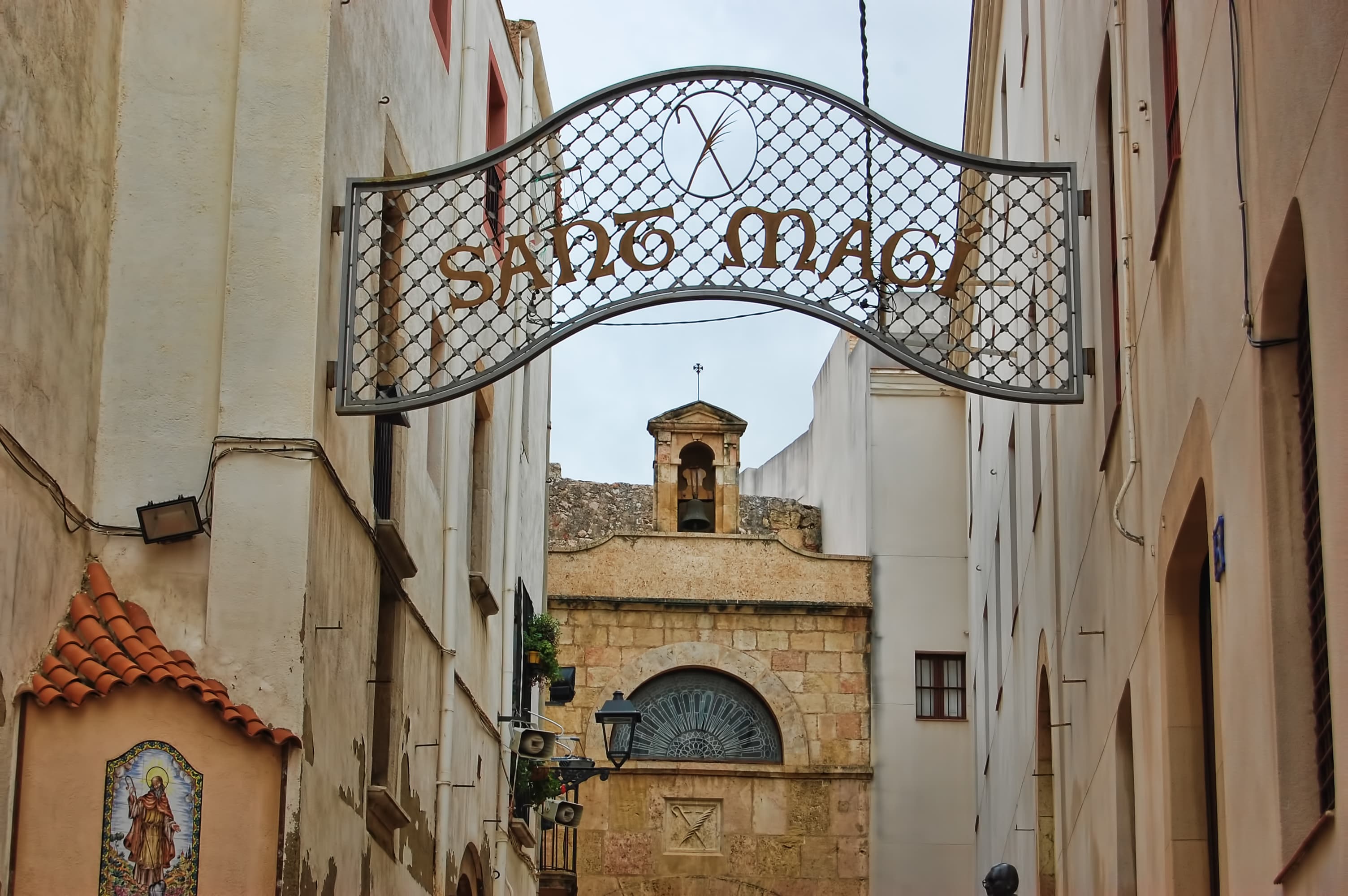
Sant Magí is Tarragona's Festa Major Petita, the co-patron's festival known as "the water festival." In 2026 it runs from August 8 to 19 (with the 19th as the main day). Its hallmark: the "miraculous" water that portants carry on foot from the Brufaganya. Free and open to all.
What it is: the Festa Major Petita
Sant Magí is Tarragona's second major festival — the Festa Major Petita, as opposed to the grand Santa Tecla in September — held in honor of one of the city's co-patrons. You'll know it as "la Festa de l'Aigua," the water festival, and it is unique in Catalonia for being built entirely around that element: a water considered protective since ancient times. Don't expect the monumental scale of Santa Tecla; the seguici here is more modest and, above all, more down-to-earth. As Sergi Baches, the portants coordinator, puts it: "Santa Tecla és més universal i massificada; Sant Magí té aquell punt de la gent de Tarragona." This is the tarraconenses' own festival — devotional, intimate, and recognized as a Festa Patrimonial d'Interès Nacional. Tip: if you want the local soul without the crowds, this is your festival; if you're after the full castells and bestiari, come back in September.
When: August 8 to 19, with the 19th as the main day
The Festa Major de Sant Magí runs from August 8 to 19; in 2026 those are the dates, with the 19th as the central day marking the saint's feast. The documented procession dates back to 1847, with gegants, enanos, gralleros and castellers. The two highlights you won't want to miss are the arrival of the water (afternoon of the 18th) and the Revetlla Il·luminada (night of the 18th) at the plaça de la Font. Since this is an evergreen event, the dates shift little, but the specific program, timetables and activities change each year — always check the official schedule at tarragona.cat before you plan. Key tip: the heaviest events cluster between the 17th and the 19th, so if you only have a few hours, aim for those days rather than the opening. Avoid planning long midday visits: the main events happen in the late afternoon and evening, and by then the Part Alta holds its heat.
The legend of the water and the Portants
Tradition holds that Magí, a fourth-century hermit who lived in a cave at the Brufaganya (Pontils), struck a rock three times with his staff while fleeing Roman soldiers, causing three springs to gush forth. His martyrdom is traditionally placed around 304–306 (sources give a range of 296–306), during the Diocletianic persecution. Since then, that water has been considered healing. Each August, a procession of portants brings it from the sanctuary to Tarragona by horse-drawn carts: roughly 66 km according to local Tarragona sources, though some accounts put it at around 80 km. The journey takes two days, crossing three comarques and twelve municipalities (Pontils, Santa Perpètua de Gaià, Querol, el Pont d'Armentera, Santes Creus, Vila-Rodona, Bràfim, Nulles, l'Argilaga, la Secuita, els Pallaresos and Tarragona), with a stop at Santes Creus and an overnight at the hermitage of Loreto in Bràfim. The tradition was re-established in its current form around 1994, with documented devotion going back to at least 1847. Tip: if you love ethnographic detail, follow one leg of the route from village to village — don't just catch the arrival.
The water on the 18th and the càntirs at the Portal
It helps to keep two moments distinct, as they are often confused. On Sunday, August 17, around 7 p.m., the carts enter Tarragona and arrive at the plaça de la Font. It is on the Monday afternoon of the 18th that the procession moves from that square to the Capella de Sant Magí, inside the Portal del Carro — a medieval gateway from the 12th century, most likely built over an ancient Roman gate, through which, according to tradition, the saint escaped. The chapel, which houses the wick that Magí supposedly snuffed out in 1813 to stop the French troops, opens around 4 p.m. One honest note: the water from the Brufaganya and the clay càntirs are NOT given away free; they can be purchased on site for a symbolic price. Key tip: there will be a queue and space in the Part Alta is tight. Go early, wear comfortable shoes and bring patience; if you just want a càntir as a keepsake, skip the peak of the procession and come back later when the crowds thin out.
Frequently asked questions
Is the festival free?
Who is the Magí de les Timbales?
What is the weather like and what should I wear?
What are the most local events?
Some links on this page are affiliate links: if you book through them, Andelaria may earn a commission at no extra cost to you. Transparency & affiliate policy
Book tickets and tours: Festes de Sant MagíPlan your trip
Book the essentials for your trip to Tarragona.
Other places in Tarragona
Anfiteatro Romano de Tarragona
monumento2nd-century seafront amphitheatre where bishop Fructuós was martyred in 259.
Catedral de Tarragona
monumentoGothic cathedral built over the former temple of Augustus, atop the Part Alta staircase.
Passeig Arqueològic (Murallas)
monumentoWalk between the Roman and medieval walls, nearly 1 km around the old town.
Balcó del Mediterrani
miradorSea balcony at the end of Rambla Nova; touching the railing is said to bring luck.
El Serrallo
barrioFishermen's quarter with the best seafood and the afternoon fish auction.
Revetlla de Sant Joan
fiestaThe Revetlla de Sant Joan — free and open to all — lights up Tarragona on the night of 23–24 June (the 24th is a public holiday across Catalonia). The Flama del Canigó arrives in the fishermen's quarter of El Serrallo, the bonfire blazes in plaça Corsini, and the beaches fill with fire, firecrackers, coca and cava until dawn.
Festa de Santa Tecla
fiestaSanta Tecla is Tarragona's main festival, held around 23 September in honour of the city's patron saint since the 12th century. It is free and open to all, featuring the richest seguici popular in Catalonia — bestiari, gegants and castellers in a single procession. It holds a double recognition of national interest at both regional and state level.
Tarraco Viva
fiestaEvery May, for about two weeks, Tarragona becomes Tárraco again: Tarraco Viva fills the Roman amphitheatre, circus, and forum with gladiators, legionaries, and period markets. It is the most important Roman re-enactment festival in southern Europe, with more than 500 activities and 70% free admission.
Similar places in other cities
Revetlla de Sant Joan
SitgesThe Revetlla de Sant Joan is the free, open-access midsummer fire festival on the night of 23–24 June (the 24th is a public holiday throughout Catalonia). In Sitges it unfolds on the beaches, with the Flama del Canigó, coca de Sant Joan, cava and firecrackers until dawn.
Carnaval de Sitges
SitgesThe Carnaval de Sitges is the town's biggest street party: free, open to all, and drawing over 200,000 visitors (municipal figure). Documented since 1586 and revived in 1976, it is today Catalonia's most internationally recognised carnival, featuring two nocturnal rúas, a drag gala, and an unmistakable LGBTQ+ spirit.
Festival de Cine Fantástico de Sitges
SitgesThe Sitges Film Festival is the world's oldest fantastic film festival (since 1968) and a global benchmark for the genre alongside Fantasia and Fantastic Fest. Ten days in October with over 200 horror, fantasy and science fiction films. Screenings are ticketed: individual tickets and passes available on the official website.