Catedral de Tarragona
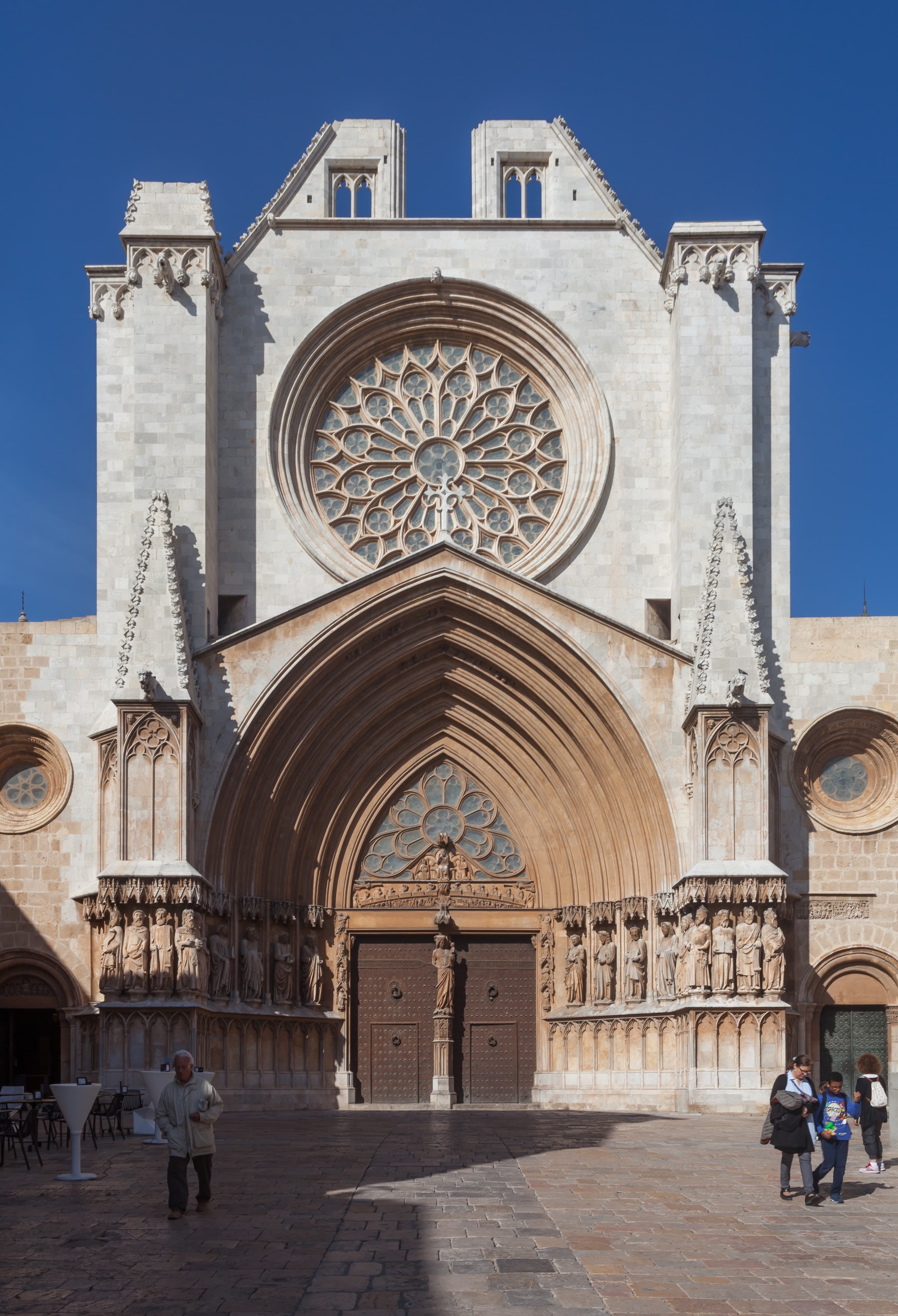
Gothic cathedral built over the former temple of Augustus, atop the Part Alta staircase.
What it is and why it's worth visiting
Tarragona Cathedral crowns the Part Alta, perched at the top of the old town on the site of the ancient Roman temple of Augustus. This is no ordinary cathedral: construction began in 1171, it was consecrated in 1331, and work continued until the 18th century — meaning you'll see a very visible blend of Romanesque and Gothic, with sections where both styles merge asymmetrically. What surprises visitors most is the detail. The cloister measures roughly 45 × 45 metres and is the largest Romanesque cloister in Catalonia, with capitals featuring scenes as curious as a procession of rats burying a cat — a medieval satire. On the façade stands the famous horned Moses, a legacy of a translation error in the Vulgate (the Hebrew word karan means both horn and ray of light). The rose window, around 11 metres across, was made with glass coloured using silver sulphide and gold dust. If you enjoy details most visitors overlook, seek out the Last Judgement relief from the workshop of Jaume Cascalls: it contains what is considered the earliest representation in Europe of a woman within a secular context.
Tickets, opening hours and how to skip the queue
The general admission ticket costs €12.50 and includes the cathedral, cloister, Diocesan Museum and Archaeological Route. The reduced rate is €8.50 (over 65s, under 18s, large families, teachers and groups of 20+); children aged 7–12 pay €5.50; under 7s enter free, as do people with a functional disability of 50%+ and one companion. The ticket includes a free audio guide. Opening hours vary by season: in summer (29 Jun–30 Aug) the last entry is until 20:00, in spring/autumn until 19:00, and in winter until 17:00 or 18:00. Two things to note: last entry is 30 minutes before closing, and on Sundays the cathedral does not open in the morning (visits from 14:00 onwards, due to religious services). To skip the box-office queue in high season (July–August), buy online at tickets.catedraldetarragona.com and arrive before 11:00 or right at the 9:30 opening from Tuesday to Saturday, which is the quietest slot. Tickets are non-transferable and non-refundable.
How to get there and tips from those who've been
Tarragona has no metro or tram, so don't bother looking for them. From the train station, the most common approach is to walk up to the Part Alta: it's about 15–20 minutes uphill along the historic stairway that begins near the Rambla Nova. The Rodalies train (lines R15/R16) connects with Barcelona in approximately 1 hour, and the station sits at the foot of the hill. The EMT urban bus serves the historic centre, but as of June 2026 a route reorganisation is underway — check the current route at emt.tarragona.cat or on Moovit before relying on it. If you're driving, the closest municipal car parks are Saavedra and Catalunya, with an all-day rate of around €5.95. Allow at least 1 hour for the self-guided visit, 1.5 hours if you take the guided tour, and add 20–30 minutes extra if you climb the bell tower. Most of the route is wheelchair accessible, except the Archaeological Route through the Roman underground. No food or drink is allowed inside, and under-16s must be accompanied by an adult.
Frequently asked questions
How much does a ticket cost and is booking required?
How long does the visit take?
What is the best time to avoid crowds?
Some links on this page are affiliate links: if you book through them, Andelaria may earn a commission at no extra cost to you. Transparency & affiliate policy
Book tickets and tours: Catedral de TarragonaPlan your trip
Book the essentials for your trip to Tarragona.
Other places in Tarragona
Anfiteatro Romano de Tarragona
monumento2nd-century seafront amphitheatre where bishop Fructuós was martyred in 259.
Passeig Arqueològic (Murallas)
monumentoWalk between the Roman and medieval walls, nearly 1 km around the old town.
Balcó del Mediterrani
miradorSea balcony at the end of Rambla Nova; touching the railing is said to bring luck.
El Serrallo
barrioFishermen's quarter with the best seafood and the afternoon fish auction.
Revetlla de Sant Joan
fiestaThe Revetlla de Sant Joan — free and open to all — lights up Tarragona on the night of 23–24 June (the 24th is a public holiday across Catalonia). The Flama del Canigó arrives in the fishermen's quarter of El Serrallo, the bonfire blazes in plaça Corsini, and the beaches fill with fire, firecrackers, coca and cava until dawn.
Festa de Santa Tecla
fiestaSanta Tecla is Tarragona's main festival, held around 23 September in honour of the city's patron saint since the 12th century. It is free and open to all, featuring the richest seguici popular in Catalonia — bestiari, gegants and castellers in a single procession. It holds a double recognition of national interest at both regional and state level.
Tarraco Viva
fiestaEvery May, for about two weeks, Tarragona becomes Tárraco again: Tarraco Viva fills the Roman amphitheatre, circus, and forum with gladiators, legionaries, and period markets. It is the most important Roman re-enactment festival in southern Europe, with more than 500 activities and 70% free admission.
Festes de Sant Magí
fiestaSant Magí is Tarragona's Festa Major Petita, the co-patron's festival known as "the water festival." In 2026 it runs from August 8 to 19 (with the 19th as the main day). Its hallmark: the "miraculous" water that portants carry on foot from the Brufaganya. Free and open to all.
Similar places in other cities
Església de Sant Bartomeu i Santa Tecla
SitgesThe church on the rock between two beaches, the symbol of Sitges.
Palau de Maricel
SitgesSeafront Noucentista palace with decorated halls and Mediterranean views, a venue for concerts and weddings.
Sagrada Família
BarcelonaGaudí's unfinished basilica, under construction since 1882 and a UNESCO World Heritage Site. Its forest of columns and coloured stained glass is a unique experience; book your ticket in advance.