Palau de Maricel
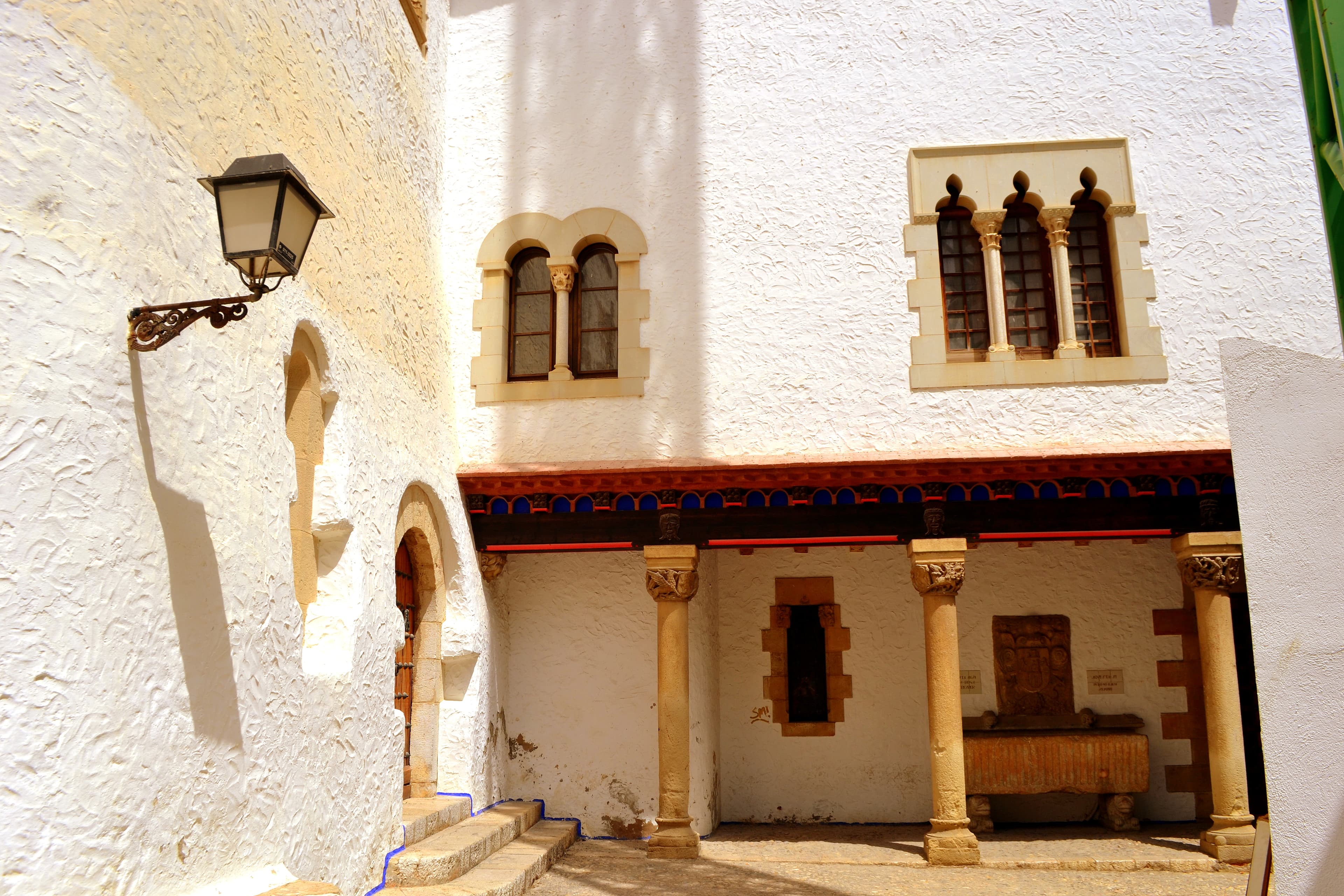
Seafront Noucentista palace with decorated halls and Mediterranean views, a venue for concerts and weddings.
A palace that is, in fact, a collage of all Spain
The Palau de Maricel is not an ancient building: it is a brilliant assemblage from the early twentieth century. It was commissioned by Charles Deering, a Chicago industrialist who wanted a seafront residence to display his collection of Hispanic art, and he entrusted the project to Miquel Utrillo between 1910 and 1921. What makes it remarkable is that Utrillo did not build from scratch — he pieced together original elements brought from across the Iberian Peninsula: the Gothic doorway comes from the Palau Villena in Cadalso de los Vidrios (Madrid), a door from the Palacio de Raixa (Mallorca), the figure of Sant Miquel from a bridge in Balaguer (Lleida) and a balcony from Santa Coloma de Queralt. As you walk through the Saló d'Or, the Saló Blau, the Sala Vaixells and the terraces overlooking the Mediterranean, the guide tells you how the story ended: in 1921 Deering fell out with Utrillo and left, taking all his Goyas, Velázquezes and El Grecos — which now hang in the Art Institute of Chicago. The city council bought the empty palace in 1952. Ask to be shown the concealed door in the main salon: it connected to his private quarters in the building opposite via a gallery suspended above the street.
Prices, opening hours and how to avoid the busiest session
Entry is only possible with a guided tour — there is no free-roaming option — which keeps things well organised. The general ticket costs €12, the family reduced rate is €10 and the super-reduced rate is €7 (pensioners, Carnet Jove, Carnet Blau). Admission is free on the first Wednesday of the month, on Museum Day and Museum Night, and always for under-17s. The tour itself lasts 60–90 minutes. In low season (September–June) the palace only opens on Sundays: 10 am in English, 11 am and 12 pm in Catalan, 1 pm in Spanish. In high season (July–August) it also opens on Tuesdays and Wednesdays, with sessions at 10 am (English), 11 am (Spanish) and 12 pm (Catalan). Capacity is limited and sessions sell out, so book in advance at botiga.museusdesitges.cat. Insider tip: the 10 am English session is the least crowded; in summer Tuesdays are quieter than Wednesdays; and the 12 pm session in August should be avoided as it coincides with peak footfall in the old town.
How to get there and a couple of practical tips
The Palau is on Carrer de la Davallada, right in the pedestrianised old town next to the seafront promenade. From Barcelona the easiest option is the Rodalies commuter train (R2 Sud / R2) from Sants or Passeig de Gràcia, running roughly every 30 minutes; Sitges station is about a 7-minute walk away. Note: improvement works have been announced between Garraf and Sitges for 2026 — check the current status at rodalies.gencat.cat before you travel. By bus, line 72 (Bus Garraf) stops at Oasis, around 3 minutes on foot. Inside the Palau there is no shop or café, but the adjacent Museu de Maricel — independently accessible — has both: if you are up for it, combine the two in the same afternoon and make the most of the journey. One final note: the building is available for hire for weddings and events and may occasionally be closed to visitors, so confirm on the website before you go. Contact number: 938 940 364.
Frequently asked questions
How much does it cost and do I need to book?
How long does the visit take?
What is the best time to visit without crowds?
Some links on this page are affiliate links: if you book through them, Andelaria may earn a commission at no extra cost to you. Transparency & affiliate policy
Book tickets and tours: Palau de MaricelPlan your trip
Book the essentials for your trip to Sitges.
Other places in Sitges
Església de Sant Bartomeu i Santa Tecla
monumentoThe church on the rock between two beaches, the symbol of Sitges.
Museu del Cau Ferrat
museoSantiago Rusiñol's house-studio, a Modernist gem with works by El Greco.
Platja de la Ribera
playaThe main town beach, beside the promenade and old quarter.
Passeig Marítim
paseoSeafront promenade with palms, terraces and the El Greco statue.
Platja de Sant Sebastià
playaQuieter beach on the far side of the church, family-friendly.
Revetlla de Sant Joan
fiestaThe Revetlla de Sant Joan is the free, open-access midsummer fire festival on the night of 23–24 June (the 24th is a public holiday throughout Catalonia). In Sitges it unfolds on the beaches, with the Flama del Canigó, coca de Sant Joan, cava and firecrackers until dawn.
Carnaval de Sitges
fiestaThe Carnaval de Sitges is the town's biggest street party: free, open to all, and drawing over 200,000 visitors (municipal figure). Documented since 1586 and revived in 1976, it is today Catalonia's most internationally recognised carnival, featuring two nocturnal rúas, a drag gala, and an unmistakable LGBTQ+ spirit.
Festival de Cine Fantástico de Sitges
fiestaThe Sitges Film Festival is the world's oldest fantastic film festival (since 1968) and a global benchmark for the genre alongside Fantasia and Fantastic Fest. Ten days in October with over 200 horror, fantasy and science fiction films. Screenings are ticketed: individual tickets and passes available on the official website.
Festa Major de Sitges (Sant Bartomeu)
fiestaThe Festa Major de Sant Bartomeu is the celebration Sitgetans truly call their own — not a tourist event like Carnival. It is the town's most deep-rooted festival, declared a Festivity of National Interest in Catalonia, with the Ball de Diables documented since 1853. Free and street-level: its heart is the 36 hours spanning 23 and 24 August.
Similar places in other cities
Sagrada Família
BarcelonaGaudí's unfinished basilica, under construction since 1882 and a UNESCO World Heritage Site. Its forest of columns and coloured stained glass is a unique experience; book your ticket in advance.
Casa Batlló
BarcelonaGaudí's most fantastical house on Passeig de Gràcia, with its bone-and-scale façade and a roof evoking the dragon of Saint George. A jewel of modernisme in the heart of the Eixample.
Anfiteatro Romano de Tarragona
Tarragona2nd-century seafront amphitheatre where bishop Fructuós was martyred in 259.