Garraf · España
Sitges
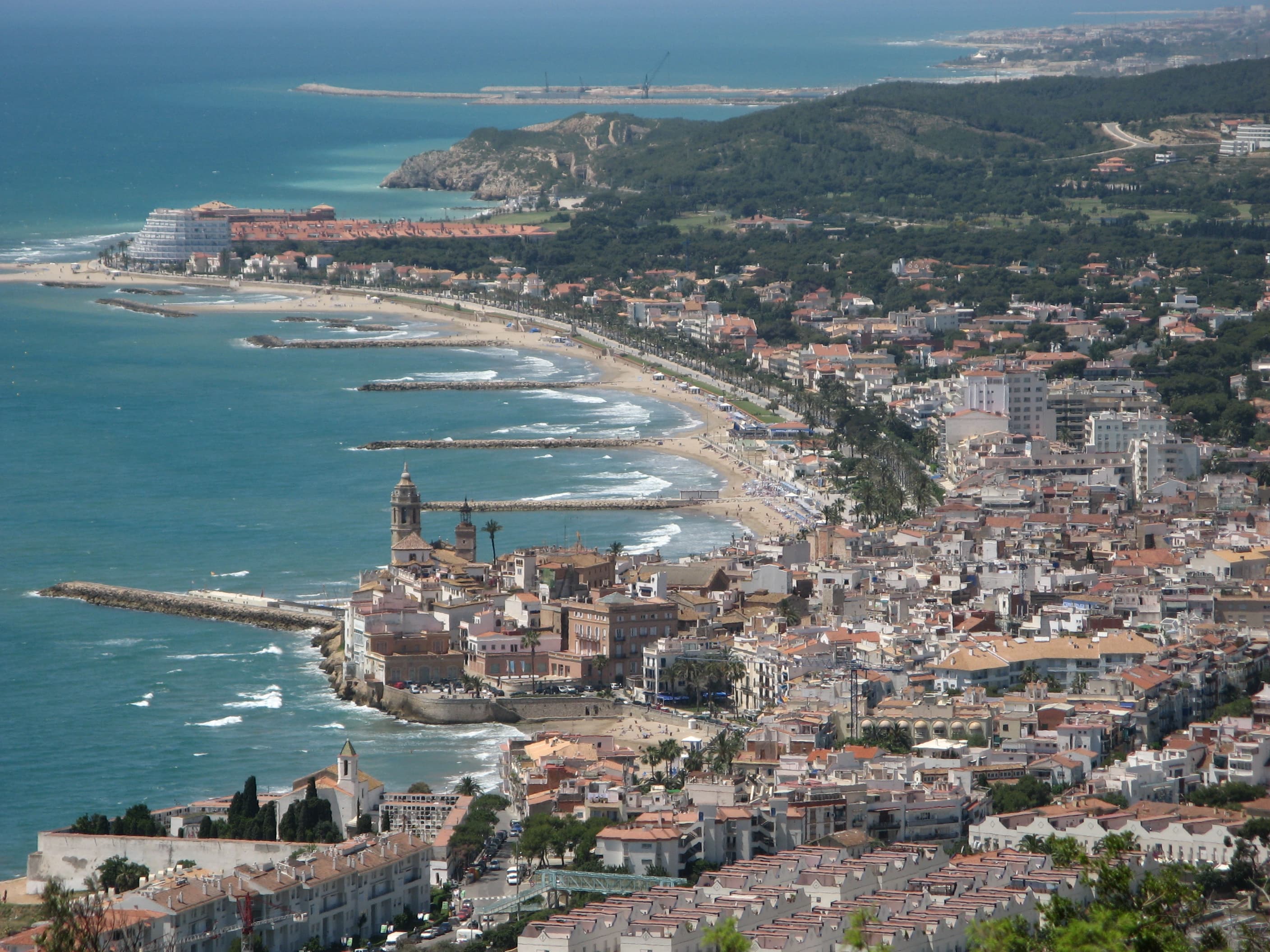
Modernist seaside town: 17 beaches, a historic LGBTQ+ scene, carnival and a fantastic-film festival.
By Brandon Quiroz · Verified by the Andelaria editorial team
The essentials
- Best time
- July, August
- Cost per day
- 170€/día
- Must-see
- Església de Sant Bartomeu i Santa Tecla
About Sitges
Forty minutes by train from Barcelona, Sitges is the seaside escape the capital uses to breathe. Seventeen beaches spread between a whitewashed old town and a promenade crowned by the church of Sant Bartomeu, the silhouette on the rock that fronts every postcard. Sitges sheltered the Modernist painters in the late 19th century —Santiago Rusiñol turned the Cau Ferrat into studio and museum— and never lost that bohemian, cosmopolitan air. Today it is one of the Mediterranean's landmark LGBTQ+ destinations, its nightlife packed into the 'street of sin' and its calendar relentless: Carnival, one of Spain's most uninhibited, fills February with floats and feathers; in October, the Sitges Film Festival draws genre-cinema directors and fans from across the world. But Sitges rewards quiet pleasures too: a beer at La Fragata over the bay, the calmer coves towards the Garraf, the midday vermouth, or the xató trail —that escarole, cod and romesco salad that here is close to religion. It is pricey by local standards and packed in August, but off-peak —May, June, September— it offers the best of itself: mild weather, unhurried beaches and gentler prices. Take the R2 Sud train from Barcelona-Sants, leave the car at home and walk: Sitges is best measured on foot, between the sea and the bougainvillea.
Guides to plan your trip
How much does a trip to Spain cost
A mid-range trip runs about €90–150 per person per day with a shared hotel; budget style, €50–70. Real breakdown of hotel, food, transport, and entry fees.
Best time to visit Spain
May and October offer the best balance: 19–21 °C and fewer crowds. Summer is hot (interior above 40 °C), winter is cheap. A month-by-month guide based on
What to do in Sitges in 3 days: complete itinerary
3-day Sitges itinerary: clifftop church, beaches, Cau Ferrat and seafront promenade. Grounded in real data from the Andelaria team.
When to go
Best time to visit: July, August
Best avoided: January, February, April, October, December
Temperature, rainfall and crowds month by month.
| Month | Temp. | Rain | Crowds | Suitability |
|---|---|---|---|---|
| January | 11°C | 38 mm | Low | 44 |
| February | 12°C | 34 mm | Medium | 38 |
| March | 14°C | 38 mm | Low | 51 |
| April | 16°C | 45 mm | Medium | 44 |
| May | 19°C | 50 mm | Medium | 53 |
| June | 23°C | 32 mm | High | 63 |
| July | 26°C | 20 mm | High | 70 |
| August | 26°C | 48 mm | High | 67 |
| September | 23°C | 75 mm | High | 52 |
| October | 19°C | 85 mm | High | 40 |
| November | 14°C | 50 mm | Low | 48 |
| December | 12°C | 42 mm | Low | 43 |
Suitability (0-100) computed from temperature, rainfall, crowds and events.
Festivals & events
Revetlla de Sant Joan
The Revetlla de Sant Joan is the free, open-access midsummer fire festival on the night of 23–24 June (the 24th is a public holiday throughout Catalonia). In Sitges it unfolds on the beaches, with the Flama del Canigó, coca de Sant Joan, cava and firecrackers until dawn.
Carnaval de Sitges
2027-02-20 → 2027-03-02
The Carnaval de Sitges is the town's biggest street party: free, open to all, and drawing over 200,000 visitors (municipal figure). Documented since 1586 and revived in 1976, it is today Catalonia's most internationally recognised carnival, featuring two nocturnal rúas, a drag gala, and an unmistakable LGBTQ+ spirit.
Festival de Cine Fantástico de Sitges
2026-10-09 → 2026-10-19
The Sitges Film Festival is the world's oldest fantastic film festival (since 1968) and a global benchmark for the genre alongside Fantasia and Fantastic Fest. Ten days in October with over 200 horror, fantasy and science fiction films. Screenings are ticketed: individual tickets and passes available on the official website.
Festa Major de Sitges (Sant Bartomeu)
2026-08-22 → 2026-08-24
The Festa Major de Sant Bartomeu is the celebration Sitgetans truly call their own — not a tourist event like Carnival. It is the town's most deep-rooted festival, declared a Festivity of National Interest in Catalonia, with the Ball de Diables documented since 1853. Free and street-level: its heart is the 36 hours spanning 23 and 24 August.
Browse by category
What to see & where to eat
Església de Sant Bartomeu i Santa Tecla
monumentoThe church on the rock between two beaches, the symbol of Sitges.
Museu del Cau Ferrat
museoSantiago Rusiñol's house-studio, a Modernist gem with works by El Greco.
Platja de la Ribera
playaThe main town beach, beside the promenade and old quarter.
Passeig Marítim
paseoSeafront promenade with palms, terraces and the El Greco statue.
Platja de Sant Sebastià
playaQuieter beach on the far side of the church, family-friendly.
Palau de Maricel
monumentoSeafront Noucentista palace with decorated halls and Mediterranean views, a venue for concerts and weddings.
Some links on this page are affiliate links: if you book through them, Andelaria may earn a commission at no extra cost to you. Transparency & affiliate policy
Book experiences and tours in SitgesAverage prices
Approx. cost: ~170 €/day · Pricey
| Item | Price |
|---|---|
| Coffee | 1,60 € |
| Small beer | 2,80 € |
| Set lunch menu | 16-22 € |
| Hotel night (avg) | 110-180 € |
| Beach sunbed | 6-8 € |
1-day estimate (1 person): hotel night + set menu + 2 coffees + 1 beer.
Getting there
- R2 Sud train from Barcelona-Sants/Passeig de Gràcia, ~40 min, every 20-30 min.
- Via the C-32 motorway from Barcelona, ~45 min (40 km). Summer: heavy traffic and tight parking.
- Car parks at Can Robert and near the station; the centre is paid and fills up early.
Plan your trip
Book the essentials for your trip to Sitges.
Book your visit
Frequently asked questions
When is the best time to visit Sitges?
Can you visit from Barcelona in a day?
Why is Sitges famous in the LGBTQ+ scene?
When is the best time to visit Sitges?
How much does it cost to visit Sitges per day?
More destinations
- Barcelonès
Barcelona
The capital of modernisme: Gaudí and the Sagrada Família, the Gothic Quarter, the Ramblas, Montjuïc and city beaches in Barceloneta.
- Tarragonès
Tarragona
Ancient Roman Tárraco: a seafront amphitheatre, UNESCO walls and human-tower castells.
- Gironès
Girona
Catalan medieval city on the Onyar: colourful riverside houses, a vast cathedral, an intact Jewish quarter and Game of Thrones filming.
- Comunidad Valenciana
Valencia
Calatrava's Ciudad de las Artes, the Art Nouveau Mercado Central, the Jardins del Túria and the Fallas that set the city ablaze every March.
- País Vasco
San Sebastián
La Concha bay, pintxos in the Parte Vieja, Chillida's Peine del Viento and two festivals: Jazzaldia and the Zinemaldia film festival.
- Comunidad de Madrid
Madrid
The art triangle (Prado, Reina Sofía, Thyssen), the taverns of La Latina, and a street life that keeps going late.