Museu del Cau Ferrat
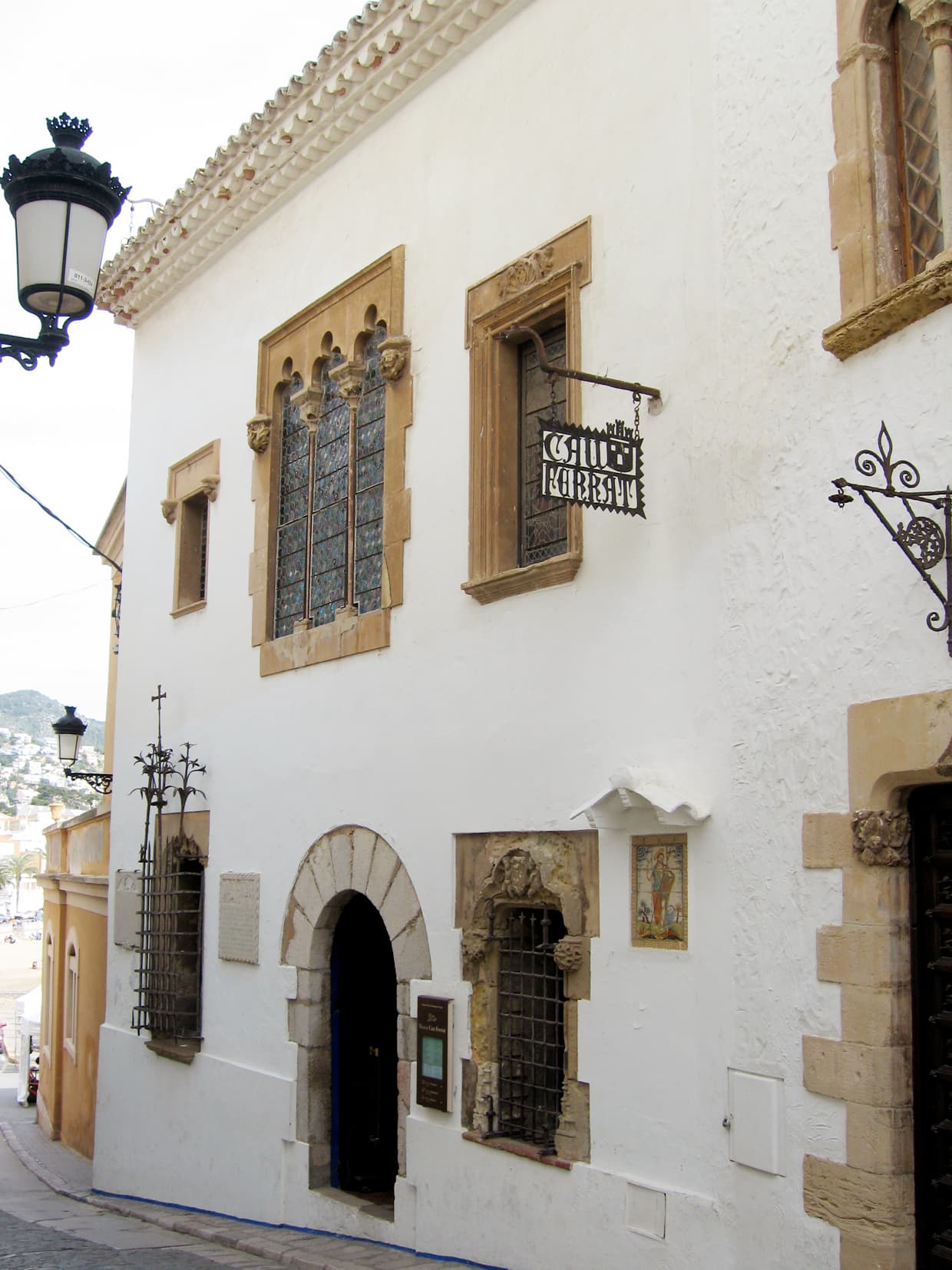
Santiago Rusiñol's house-studio, a Modernist gem with works by El Greco.
What it is and why it's genuinely worth your time
Cau Ferrat was the live-in workshop of painter and writer Santiago Rusiñol, and since 1933 it has been a public museum — by the artist's own wish, who bequeathed his home and entire collection to the people of Sitges. This is no ordinary picture gallery: you step into the space where one of the driving forces of Catalan Modernisme actually lived, with its blue-tiled walls facing the sea, paintings, glasswork, ceramics, and — above all — one of the most important collections of decorative ironwork in Europe, with over 500 pieces (keys, grilles, candlesticks, crosses) that Rusiñol gathered travelling across Catalonia for decades. Also hanging here are two El Grecos — The Tears of Saint Peter and The Penitent Magdalene — which Rusiñol brought to Sitges in 1894 in a torch-lit procession widely regarded as the founding act of local Modernisme. One detail that speaks volumes about the affection this place inspires: since Rusiñol's death in 1931, a group of local women has kept fresh flowers in the museum on a rotating basis, without a single day's interruption in over 90 years.
Tickets, opening hours and how to skip the queues
The ticket is joint and mandatory with the Museu de Maricel next door: the standard price is €12 and covers both museums — a bonus, not a drawback. There is a reduced rate of €9 and a concession rate of €6 for seniors, students with a Carnet Jove, the unemployed and people with disabilities. Under-17s get in free, as does everyone on the first Wednesday of each month (check museusdesitges.cat in advance to make sure it doesn't fall on a closing day). Opening hours: Tuesday to Sunday, 10:00–17:00 in winter and 10:00–19:00 from April to October; closed on Mondays. Allow 1h30–2h30 for a thorough visit, as the collection is dense; if you also take in the Maricel on the joint ticket, budget 3–4 hours in total. No advance booking is needed for individual visits — just go straight to the ticket desk. Best time to avoid groups? Weekday mornings, especially in July and August, when cruise-ship groups can fill what is a small museum.
How to get there and tips from those who've already been
The easiest option from Barcelona is the train: the R2 Sud line of Rodalies Renfe (towards Sant Vicenç de Calders) departs from Barcelona-Sants and Passeig de Gràcia and reaches Sitges station in around 35–40 minutes, with services every 15–30 minutes. From Tarragona it's 20–30 minutes on the R2 Sud or the R15/R16. From Sitges station to the museum it's a pleasant 10–15 minute walk through the old town towards the sea: head down to the Passeig Marítim, turn left through the Ribera neighbourhood and follow C/ Fonollar. MonBus coaches also run from Barcelona (around 45–50 min), and if you drive, take the C-32 exit for Sitges, but parking in the centre is limited and paid (blue/green zones), so it's better to leave the car in a peripheral car park and walk. Two practical notes: the building dates from the 19th century and has limited accessibility in some areas, so if you have specific mobility requirements it's worth calling ahead (93 894 03 64); and if you're planning the free Wednesday, check the calendar, as it may fall on a public holiday when the museum is closed.
Frequently asked questions
How much does entry cost and do I need to book?
How long do I need to see it?
What's the best time to visit without crowds?
Some links on this page are affiliate links: if you book through them, Andelaria may earn a commission at no extra cost to you. Transparency & affiliate policy
Book tickets and tours: Museu del Cau FerratPlan your trip
Book the essentials for your trip to Sitges.
Other places in Sitges
Església de Sant Bartomeu i Santa Tecla
monumentoThe church on the rock between two beaches, the symbol of Sitges.
Platja de la Ribera
playaThe main town beach, beside the promenade and old quarter.
Passeig Marítim
paseoSeafront promenade with palms, terraces and the El Greco statue.
Platja de Sant Sebastià
playaQuieter beach on the far side of the church, family-friendly.
Palau de Maricel
monumentoSeafront Noucentista palace with decorated halls and Mediterranean views, a venue for concerts and weddings.
Revetlla de Sant Joan
fiestaThe Revetlla de Sant Joan is the free, open-access midsummer fire festival on the night of 23–24 June (the 24th is a public holiday throughout Catalonia). In Sitges it unfolds on the beaches, with the Flama del Canigó, coca de Sant Joan, cava and firecrackers until dawn.
Carnaval de Sitges
fiestaThe Carnaval de Sitges is the town's biggest street party: free, open to all, and drawing over 200,000 visitors (municipal figure). Documented since 1586 and revived in 1976, it is today Catalonia's most internationally recognised carnival, featuring two nocturnal rúas, a drag gala, and an unmistakable LGBTQ+ spirit.
Festival de Cine Fantástico de Sitges
fiestaThe Sitges Film Festival is the world's oldest fantastic film festival (since 1968) and a global benchmark for the genre alongside Fantasia and Fantastic Fest. Ten days in October with over 200 horror, fantasy and science fiction films. Screenings are ticketed: individual tickets and passes available on the official website.
Festa Major de Sitges (Sant Bartomeu)
fiestaThe Festa Major de Sant Bartomeu is the celebration Sitgetans truly call their own — not a tourist event like Carnival. It is the town's most deep-rooted festival, declared a Festivity of National Interest in Catalonia, with the Ball de Diables documented since 1853. Free and street-level: its heart is the 36 hours spanning 23 and 24 August.
Similar places in other cities
La Lonja de la Seda
ValenciaA masterpiece of Valencian civic Gothic, declared a UNESCO World Heritage Site in 1996. Built between 1482 and 1548 as the city's silk-trading exchange, its Sala de Contratació — with 16 helical columns rising 16 metres — still impresses. Free entry on Sundays and public holidays.
Kursaal (Palacio de Congresos y Auditorio)
San SebastiánTwo cubes of translucent glass designed by Rafael Moneo (1999) on the banks of the Urumea river, winners of the Mies van der Rohe Award. Home to the San Sebastián International Film Festival (one of the world's most prestigious) and the Quincena Musical. An icon of contemporary Spanish architecture, dramatically lit after dark.
Museo del Prado
MadridSpain's most important painting museum holds more than 8,000 works on display, among them Velázquez's Las Meninas, Bosch's The Garden of Earthly Delights and Goya's cartoons. Juan de Villanueva's neoclassical building, opened in 1819, is itself a monumental piece of architecture on the Paseo del Arte.