Platja de la Ribera
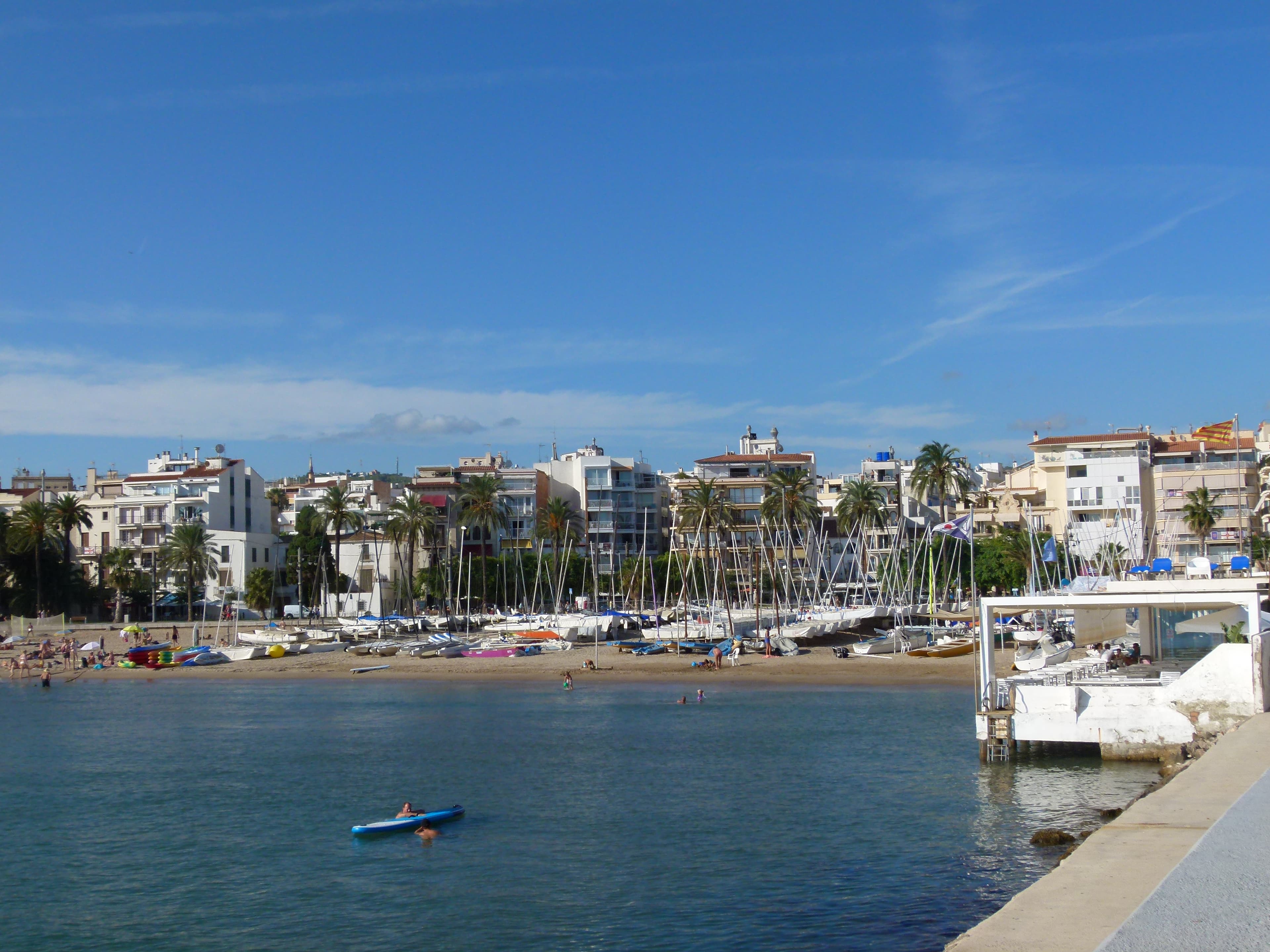
The main town beach, beside the promenade and old quarter.
Sitges' town beach — and why it's worth it
Platja de la Ribera is the heart of Sitges: 260 metres of fine golden sand right at the foot of the old town, with the Passeig de la Ribera running the full length of the seafront. It's neither the most secluded nor the most rugged beach around, but that's precisely its charm — you swim in calm Mediterranean waters and five minutes' walk later you're having drinks in the centre or climbing up to the Museu Cau Ferrat. It holds a Blue Flag (Sitges has 9 in 2026, leading all of Catalonia) and is a smoke-free beach, so no smoking on the sand. Right in front stands what is considered Spain's first beach bar, open since 1913 as El Kiosket: over a century of aperitifs with sea views. On the same promenade you'll also spot the Sitges contra l'homofòbia monument, a key part of the town's gay-friendly identity.
Entry, prices and how to beat the crowds
Entry is free: Sitges beaches are open to all with no ticket, no online booking required for beach access or lifeguard services. The only thing you pay for is sunbed and parasol hire, managed by private concessionaires on the sand; official 2026 prices have not been published, so check on the spot at the beach bar. The beach has 2 chiringuitos, showers, accessible toilets, jet skis, a sailing school and massage services. Lifeguard service starts on 18 May (one of the first beaches to activate) and covers 10:00–19:00 in July–August with a full team. As the busiest beach in Sitges, it fills up fast in July and August, especially on weekends and public holidays. The trick is to go before 10:00 or after 17:00; in May, June and September it is much quieter at any time of day.
How to get there and tips from those who've been
The easiest way to get there is by train: Rodalies R2 Sud from Barcelona Sants, Passeig de Gràcia or Estació de França, about 35–45 minutes from Sants. Sitges station is roughly a 3-minute walk from the beach — you practically step off the train onto the sand. By bus, lines 72 and L95 (Moventis) stop near Oasis (about 7 minutes on foot), but they are slower and less frequent than the train in high season. If you plan to drive, be warned: summer parking is very limited and expensive, so the train is almost a must. For beach and promenade only, allow 2–3 hours; combine it with the old town, Cau Ferrat and lunch at a chiringuito and you have a perfect half-day of 4–5 hours. If you need assisted bathing, an amphibious wheelchair is available — contact the municipal beach service in advance to book it.
Frequently asked questions
How much does it cost to enter Platja de la Ribera?
How long do I need to visit?
What is the best time to avoid the crowds?
Some links on this page are affiliate links: if you book through them, Andelaria may earn a commission at no extra cost to you. Transparency & affiliate policy
Book tickets and tours: Platja de la RiberaPlan your trip
Book the essentials for your trip to Sitges.
Other places in Sitges
Església de Sant Bartomeu i Santa Tecla
monumentoThe church on the rock between two beaches, the symbol of Sitges.
Museu del Cau Ferrat
museoSantiago Rusiñol's house-studio, a Modernist gem with works by El Greco.
Passeig Marítim
paseoSeafront promenade with palms, terraces and the El Greco statue.
Platja de Sant Sebastià
playaQuieter beach on the far side of the church, family-friendly.
Palau de Maricel
monumentoSeafront Noucentista palace with decorated halls and Mediterranean views, a venue for concerts and weddings.
Revetlla de Sant Joan
fiestaThe Revetlla de Sant Joan is the free, open-access midsummer fire festival on the night of 23–24 June (the 24th is a public holiday throughout Catalonia). In Sitges it unfolds on the beaches, with the Flama del Canigó, coca de Sant Joan, cava and firecrackers until dawn.
Carnaval de Sitges
fiestaThe Carnaval de Sitges is the town's biggest street party: free, open to all, and drawing over 200,000 visitors (municipal figure). Documented since 1586 and revived in 1976, it is today Catalonia's most internationally recognised carnival, featuring two nocturnal rúas, a drag gala, and an unmistakable LGBTQ+ spirit.
Festival de Cine Fantástico de Sitges
fiestaThe Sitges Film Festival is the world's oldest fantastic film festival (since 1968) and a global benchmark for the genre alongside Fantasia and Fantastic Fest. Ten days in October with over 200 horror, fantasy and science fiction films. Screenings are ticketed: individual tickets and passes available on the official website.
Festa Major de Sitges (Sant Bartomeu)
fiestaThe Festa Major de Sant Bartomeu is the celebration Sitgetans truly call their own — not a tourist event like Carnival. It is the town's most deep-rooted festival, declared a Festivity of National Interest in Catalonia, with the Ball de Diables documented since 1853. Free and street-level: its heart is the 36 hours spanning 23 and 24 August.
Similar places in other cities
La Barceloneta
BarcelonaThe old fishermen's quarter and its urban beach, the most central in the city. A seafront promenade, beach bars and rice dishes facing the Mediterranean, minutes from the Gothic Quarter.
Playa de la Concha
San SebastiánThe most beautiful urban beach in Europe, with its unmistakable shell-like shape and the elegant 2 km Paseo de la Concha. Flanked by Monte Urgull and the island of Santa Clara, it offers fine sand, calm waters and postcard-perfect views of Palacio Miramar. The absolute symbol of Donostia and the epicentre of Basque summer life.