Festa Major de Sitges (Sant Bartomeu)
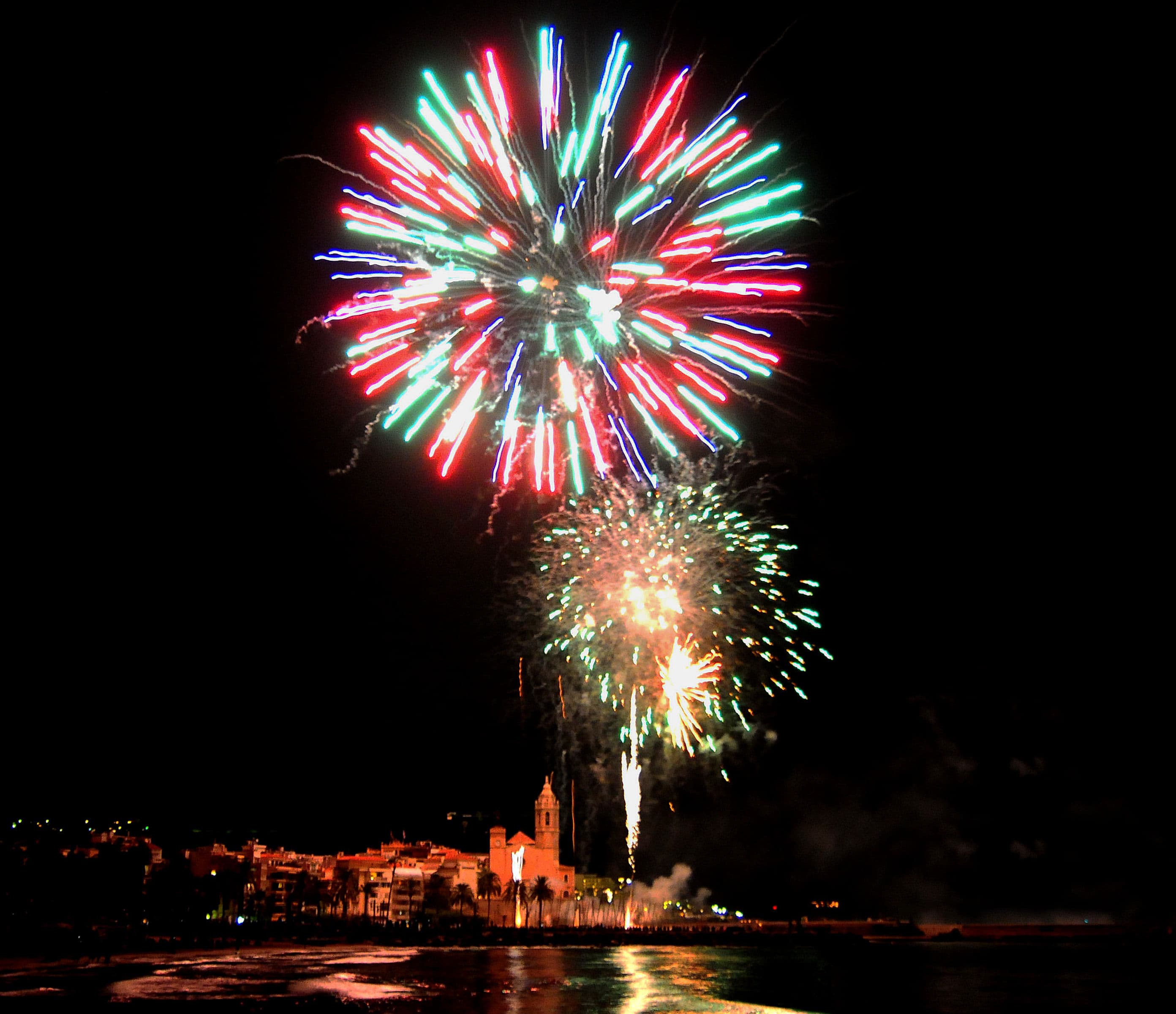
The Festa Major de Sant Bartomeu is the celebration Sitgetans truly call their own — not a tourist event like Carnival. It is the town's most deep-rooted festival, declared a Festivity of National Interest in Catalonia, with the Ball de Diables documented since 1853. Free and street-level: its heart is the 36 hours spanning 23 and 24 August.
The locals' festival, not the tourists'
Sitges has two major festivals and they could not be more different. Carnival (February) has held the title of Festa d'Interès Turístic Nacional since 1978: up to 300,000 spectators, 44 floats, a spectacle built for visitors. The Festa Major de Sant Bartomeu is the other side of the coin: a Festa Patrimonial d'Interès Nacional, the label the Generalitat reserves for a community's intangible heritage. That official distinction codifies the difference — tourism versus the town's own civic ritual. Records of the festival go back to 1353 in the books of the Pia Almoina (Arxiu de la Catedral de Barcelona), and it is driven by the neighbourhood colles, which pass each dance from generation to generation. That is why it belongs to the people of here: the séquito, the dances and the missa major are not a performance for cameras, but the rituals through which Sitges recognises itself every August. It was declared of National Interest in 1991 and of heritage status in 2016.
Sant Bartomeu (24 Aug) and the '36 hours'
The patron saint's day falls on 24 August, but the festival stretches over more than a week (19 to 26 August in 2026; confirm the calendar on the official website). The core is what locals call the 36 hours of the 23rd and 24th — a ritual sequence barely changed in over 150 years. On the afternoon of the 23rd the grallers enter the streets, and at 23:00 the fireworks begin. The 24th opens at 6:00 with La Matinal, a street procession that distributes flowers through the town; at 10:30 comes l'Ofici, the missa major attended by civil and ecclesiastical authorities; and at 19:30 the Processó Cívica sets off — the centrepiece of the whole festival. We recommend planning the entire day of the 24th, because the early morning and morning hours hold the most distinctive events and almost no one from outside rises early enough to catch them. Note: since 2025 the official name is Festa Major de Sant Bartomeu i Santa Tecla, but Santa Tecla is celebrated separately, on 22 and 23 September.
The Seguici Popular and the Processó Cívica
The afternoon Processó Cívica of the 24th brings the full popular séquito into the streets in a fixed order that every local knows by name. Leading the way is the Drac de Sitges, the only sea dragon in Catalonia: built in 1922 by local artist Agustí Ferrer i Pino, it first appeared stepping off a boat on that 23 August. Accompanying it are the Gegants (Vells, Nous, Americanos, Moros), l'Àliga, els Capgrossos, the Moixiganga (an athletic-religious dance representing the Passion, one of Sitges' most singular traditions), els Bastoners, the Ball de Gitanes, els Cercolets and the three colles de diables. Behind them comes the tabernacle of Sant Bartomeu. It is a slow procession and a very crowded one: to get a good view, position yourself at a corner along the route well in advance and do not expect to move through the crowd once it starts. If you are travelling with children or find dense crowds overwhelming, La Matinal at 6:00 is far more manageable than the afternoon procession.
August at full capacity and the train home
The festival coincides with the August peak and the town fills to bursting. The car parks at Vinyet, Poble Sec, Hospital, Sant Sebastià and Aiguadolç fill up quickly, making the R2 Sud train (Rodalies, 35–40 minutes to Barcelona) almost essential. One important warning: Renfe reinforces the R2 service in summer, but only during daytime hours (outbound 9–13h, return 16–20h); there is no extra service at night for the fireworks on the 23rd, which is the most crowded night of the whole festival. After the display the platforms become saturated and return trains run over an hour late. A taxi to Barcelona is not cheap (around 40 km, considerably more than an urban fare, with night and public holiday surcharges) and is scarce due to demand. One final reminder: even though it is August and the fireworks launch from the sea, this is not a beach party. The plan is séquito, diables, fireworks and verbena in the streets.
Frequently asked questions
Is the Festa Major de Sitges free?
When are the fireworks and where is the best place to watch them?
What is the Ball de Diables and is it dangerous?
Will there be castells at the Festa Major?
Some links on this page are affiliate links: if you book through them, Andelaria may earn a commission at no extra cost to you. Transparency & affiliate policy
Book tickets and tours: Festa Major de Sitges (Sant Bartomeu)Plan your trip
Book the essentials for your trip to Sitges.
Other places in Sitges
Església de Sant Bartomeu i Santa Tecla
monumentoThe church on the rock between two beaches, the symbol of Sitges.
Museu del Cau Ferrat
museoSantiago Rusiñol's house-studio, a Modernist gem with works by El Greco.
Platja de la Ribera
playaThe main town beach, beside the promenade and old quarter.
Passeig Marítim
paseoSeafront promenade with palms, terraces and the El Greco statue.
Platja de Sant Sebastià
playaQuieter beach on the far side of the church, family-friendly.
Palau de Maricel
monumentoSeafront Noucentista palace with decorated halls and Mediterranean views, a venue for concerts and weddings.
Revetlla de Sant Joan
fiestaThe Revetlla de Sant Joan is the free, open-access midsummer fire festival on the night of 23–24 June (the 24th is a public holiday throughout Catalonia). In Sitges it unfolds on the beaches, with the Flama del Canigó, coca de Sant Joan, cava and firecrackers until dawn.
Carnaval de Sitges
fiestaThe Carnaval de Sitges is the town's biggest street party: free, open to all, and drawing over 200,000 visitors (municipal figure). Documented since 1586 and revived in 1976, it is today Catalonia's most internationally recognised carnival, featuring two nocturnal rúas, a drag gala, and an unmistakable LGBTQ+ spirit.
Festival de Cine Fantástico de Sitges
fiestaThe Sitges Film Festival is the world's oldest fantastic film festival (since 1968) and a global benchmark for the genre alongside Fantasia and Fantastic Fest. Ten days in October with over 200 horror, fantasy and science fiction films. Screenings are ticketed: individual tickets and passes available on the official website.
Similar places in other cities
Revetlla de Sant Joan
BarcelonaOn the night of June 23rd to 24th, Barcelona catches fire: more than 92,000 people packed the beaches in 2025 (Guàrdia Urbana). Free street parties across all ten districts, coca de Sant Joan, cava, firecrackers and the Flama del Canigó brought down from the Pyrenees. June 24th is a public holiday throughout Catalonia. Here's how to enjoy it without nasty surprises.
La Mercè
BarcelonaLa Mercè is Barcelona's biggest festival, free and massive: it draws between 1.5 and 2 million people around 24 September, the feast day of the city's co-patron saint. Hundreds of free events take over the whole city, from castells, correfoc and gegants to the BAM festival and the Piromusical fireworks at Montjuïc, with no ticket required. The exact programme is published every year at barcelona.cat/lamerce.
Primavera Sound
BarcelonaPrimavera Sound is a paid mega-festival that fills Barcelona's Parc del Fòrum in early June. Founded in 2001, it now draws around 75,000 people a day with an international lineup of indie, electronic, hip hop and pop. It isn't free: you get in with a full pass or a day ticket, and it usually sells out months ahead.