La Mercè
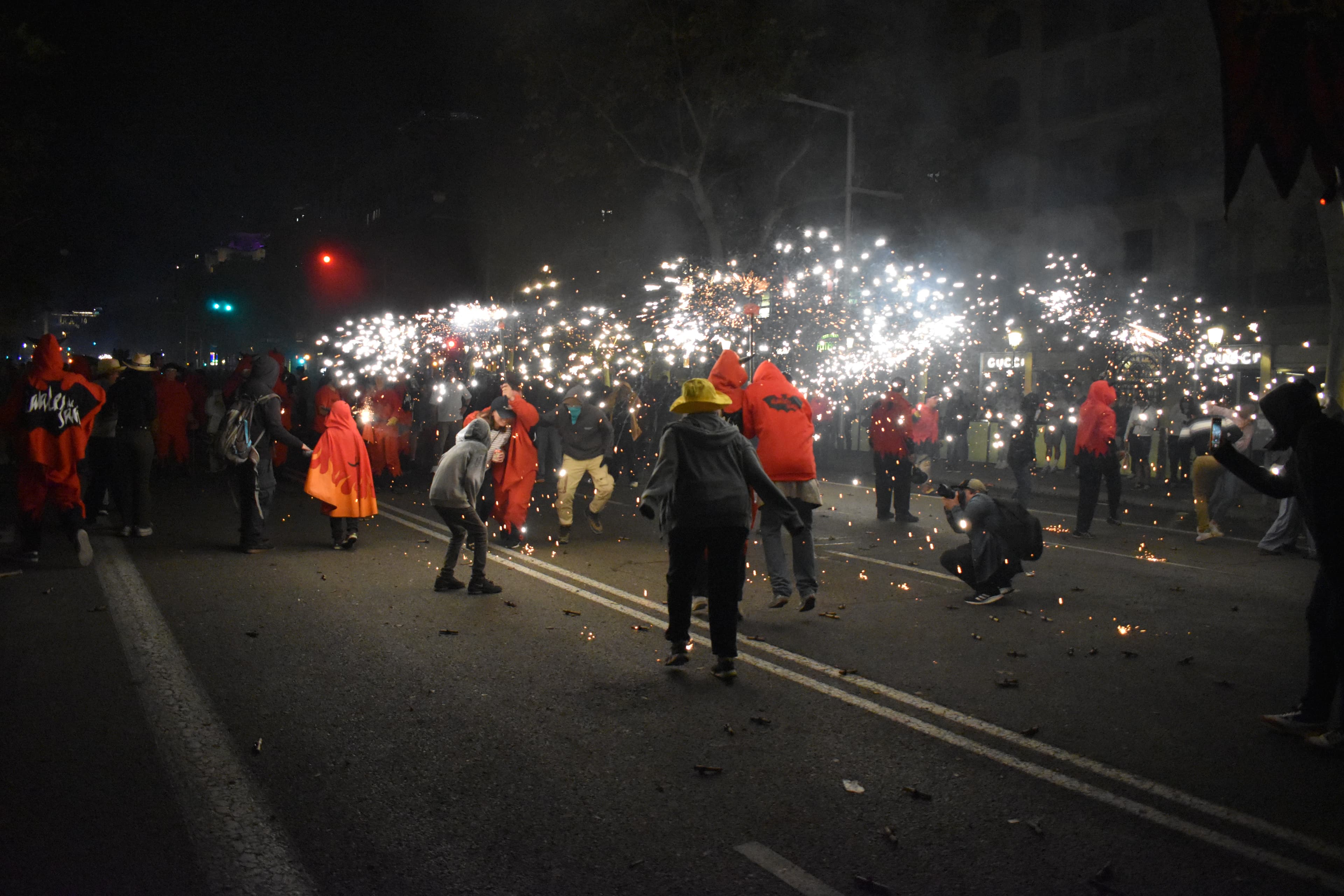
La Mercè is Barcelona's greatest festival, centred around 24 September (a local public holiday). Five days, over 500 free and open-access events: castellers, gegants, correfoc, concerts and a closing piromusical. Everything happens in the street, no tickets required. Check dates and the line-up for the next edition at barcelona.cat/lamerce.
From a vow against locusts to a civic celebration
La Mercè honours the Mare de Déu de la Mercè, co-patron of Barcelona alongside Santa Eulàlia. The patronage dates to 1687, when the Consell de Cent — the city's municipal government — entrusted Barcelona to the Virgin during a locust plague and, once it passed, proclaimed her patron saint. Pope Pius IX formally ratified the patronage in 1868, nearly two centuries after the original municipal vow. The festival as we know it today was born in 1871, when councillor Francesc de Paula Rius i Taulet transformed the religious celebration into a civic event with its own programme. The modern correfoc, though rooted in medieval autos sacramentals, was reinvented in 1979 alongside the democratic revival of popular festivities. One thing to know: don't expect a solemn procession. La Mercè is a secular, street-level, loud celebration; if you're looking for quiet reflection, the mass at the Basílica de la Mercè is the exception, not the rule.
Programme: 500+ events, all free
The heart of La Mercè is hundreds of free activities spread across squares, parks and streets throughout several districts. The programme typically revolves around four strands: MAC (Mercè Arts de Carrer, street theatre), BAM (indie and alternative music), Música Mercè (headline concerts) and traditional Catalan culture — castellers, gegants, sardanes and the correfoc. The diada castellera brings together the city's colles, the cavalcada de gegants winds through the centre, and the correfoc fills the Eixample with fire and bangers. The concert line-up and exact dates change every year, and there's always a different guest city, so don't assume any particular artist will be there — always check barcelona.cat/lamerce. Critical tip: the big concerts fill up well before they start. If you're heading to one of the headline acts, get there at least an hour early or you'll be watching from the back, standing on your toes.
Where to catch the key events
Each event has its own fixed venue. Gegants and castellers are centred on Plaça de Sant Jaume, the institutional heart of the festival, where a mapping projection is also displayed on the façade of the Ajuntament. The main correfoc runs through the Eixample, along Passeig de Gràcia and Rambla de Catalunya. The closing piromusical wraps up the week — but note that the location isn't always the same: for years it was held in front of the Font Màgica de Montjuïc (Av. Reina Maria Cristina), but construction works may shift it to the beach (Bogatell/Poblenou area). Always confirm the exact location in the official programme before deciding where to position yourself. Critical tip: the best spots for the piromusical fill up one or two hours beforehand. Avoid standing directly under the fireworks if you're bringing children or a dog — noise levels are high and exits get gridlocked once it's over.
Practical tips: transport and crowds
TMB reinforces services on the key nights (correfoc and piromusical): in recent editions the metro has run 24 hours and the Nitbus every 20 minutes. Check the year's specific plan at tmb.cat, as the reinforced lines depend on where the piromusical takes place — Montjuïc and the beach require very different routes. After the big events, avoid the nearest metro entrance — it will be packed. Walk two or three stops and board at a less busy station. For the correfoc, dress properly: long-sleeved cotton top, long trousers, a scarf around your neck, a cap and closed sports shoes; the sparks burn and synthetic fabrics melt. Watch your valuables — pickpockets are active around Las Ramblas and Plaça de Sant Jaume throughout the festival, so keep cash in zipped pockets. September in Barcelona is still hot: stay hydrated and find shade if you're queueing during the day.
Frequently asked questions
Is La Mercè free?
When does La Mercè take place?
Where are the fireworks?
What should I wear to the correfoc?
Some links on this page are affiliate links: if you book through them, Andelaria may earn a commission at no extra cost to you. Transparency & affiliate policy
Book tickets and tours: La MercèPlan your trip
Book the essentials for your trip to Barcelona.
Other places in Barcelona
Sagrada Família
monumentoGaudí's unfinished basilica, under construction since 1882 and a UNESCO World Heritage Site. Its forest of columns and coloured stained glass is a unique experience; book your ticket in advance.
Park Güell
parqueGaudí's modernista park on the Carmel hill, with the wavy trencadís-tiled bench terrace and views over the whole city. The monumental area has timed, capacity-limited tickets.
Casa Batlló
monumentoGaudí's most fantastical house on Passeig de Gràcia, with its bone-and-scale façade and a roof evoking the dragon of Saint George. A jewel of modernisme in the heart of the Eixample.
Barri Gòtic
barrioThe medieval heart of the Ciutat Vella: stone alleys, the cathedral, remains of the Roman wall and hidden squares. The best place to get lost on foot in Barcelona.
Mercat de la Boqueria
mercadoThe city's most famous market, just off the Rambla: stalls of fruit, ham, fish and bar counters for tapas. Crowded but authentic if you go early in the morning.
Montjuïc
miradorThe hill above the harbour, with its castle, gardens, the MNAC museum, the 1992 Olympic legacy and the Magic Fountain. The best lookout over the skyline and the sea at sunset.
La Barceloneta
playaThe old fishermen's quarter and its urban beach, the most central in the city. A seafront promenade, beach bars and rice dishes facing the Mediterranean, minutes from the Gothic Quarter.
Revetlla de Sant Joan
fiestaOn the night of June 23rd to 24th, Barcelona catches fire: more than 92,000 people packed the beaches in 2025 (Guàrdia Urbana). Free street parties across all ten districts, coca de Sant Joan, cava, firecrackers and the Flama del Canigó brought down from the Pyrenees. June 24th is a public holiday throughout Catalonia. Here's how to enjoy it without nasty surprises.
Primavera Sound
fiestaPrimavera Sound is a paid mega-festival that fills Barcelona's Parc del Fòrum in early June. Founded in 2001, it now draws around 75,000 people a day with an international lineup of indie, electronic, hip hop and pop. It isn't free: you get in with a full pass or a day ticket, and it usually sells out months ahead.
Festa Major de Gràcia
fiestaThe Festa Major de Gràcia is Barcelona's most iconic neighbourhood festival — and it's completely free. From 15 to 21 August 2026 (with the pregó on Friday 14), 23 streets in the barrio compete with themed decorations that local residents spend months building from recycled materials. Over 600 free activities: concerts, castells, correfoc and gegants.
Santa Eulàlia
fiestaSanta Eulàlia, co-patron of Barcelona alongside the Mare de Déu de la Mercè, gives her name to the city's winter festa major: four days around 12 February with gegants, castells, correfoc and sardanes in the Barri Gòtic. Nearly a hundred events, all free and open to the public, and far less crowded than La Mercè.
Sónar
fiestaSónar is Barcelona's electronic music and multimedia art festival, founded in 1994 and now a global benchmark with over 30 editions. It is a ticketed event held normally in mid-June, combining live performances, DJ sets, installations, and the technology congress Sónar+D. Dates and lineups are announced each year at sonar.es.
Similar places in other cities
Revetlla de Sant Joan
SitgesThe Revetlla de Sant Joan is the free, open-access midsummer fire festival on the night of 23–24 June (the 24th is a public holiday throughout Catalonia). In Sitges it unfolds on the beaches, with the Flama del Canigó, coca de Sant Joan, cava and firecrackers until dawn.
Carnaval de Sitges
SitgesThe Carnaval de Sitges is the town's biggest street party: free, open to all, and drawing over 200,000 visitors (municipal figure). Documented since 1586 and revived in 1976, it is today Catalonia's most internationally recognised carnival, featuring two nocturnal rúas, a drag gala, and an unmistakable LGBTQ+ spirit.
Festival de Cine Fantástico de Sitges
SitgesThe Sitges Film Festival is the world's oldest fantastic film festival (since 1968) and a global benchmark for the genre alongside Fantasia and Fantastic Fest. Ten days in October with over 200 horror, fantasy and science fiction films. Screenings are ticketed: individual tickets and passes available on the official website.