Mercat de la Boqueria
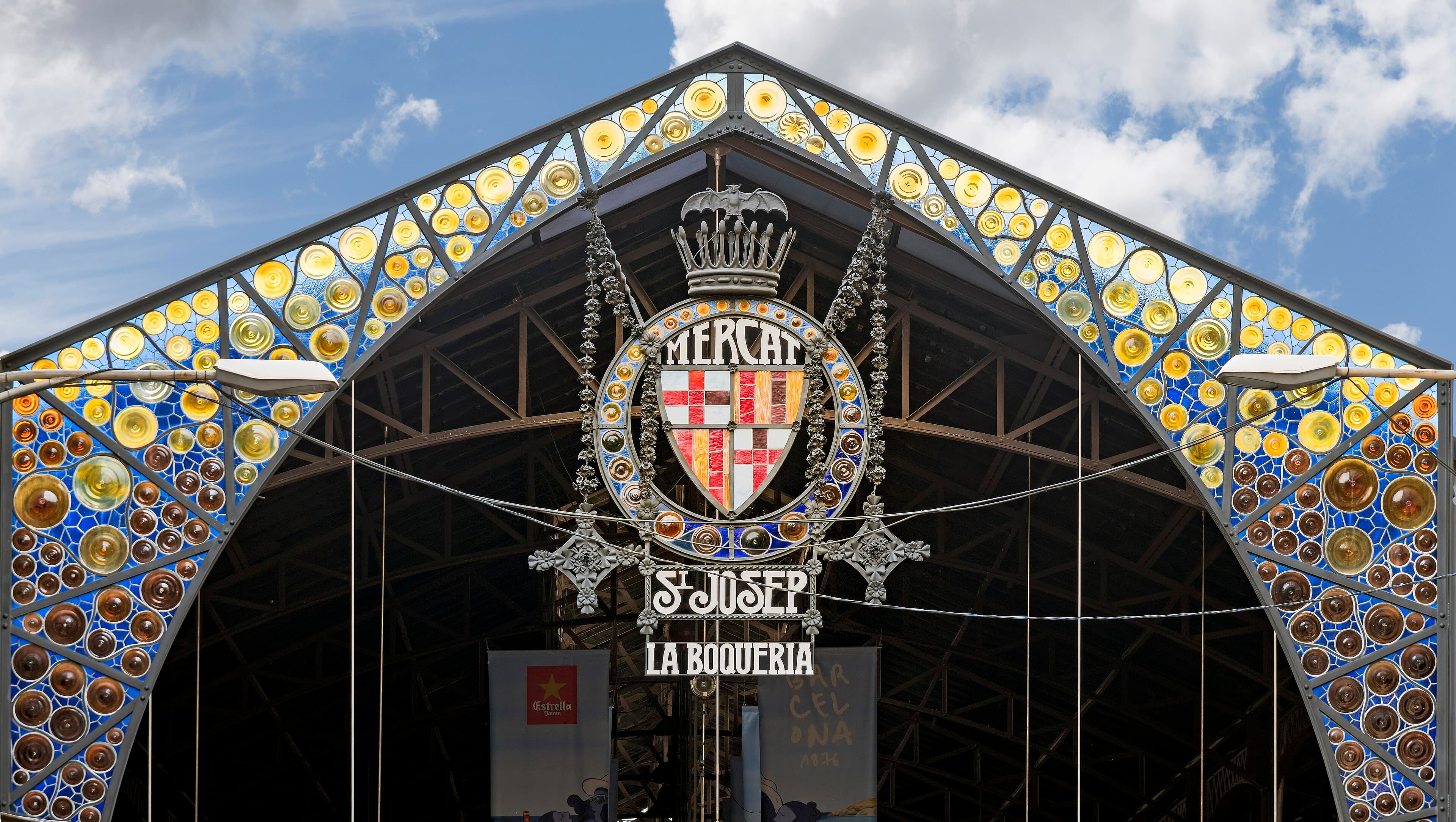
The city's most famous market, just off the Rambla: stalls of fruit, ham, fish and bar counters for tapas. Crowded but authentic if you go early in the morning.
What it is and why it's genuinely worth visiting
La Boqueria is no tourist-built market: its first documented mention dates to 1217, when meat stalls already lined the Llano de la Boqueria beside one of the old city gates. That makes it one of the oldest continuously documented markets in Europe. The current building was raised on the site of the Sant Josep convent, burned down in 1835; traders moved in in 1836, and the iron canopy with its Modernista entrance arch was finished in 1913-1914. The name itself comes from the Old Catalan "boc" (goat): "boqueria" literally meant a meat-cutting table. Today it holds over 300 active stalls and was named the world's best market by CNN in 2017. A detail almost no one notices: right in front of the main entrance, set into the pavement of La Rambla, is a circular mosaic by Joan Miró from 1976 that visitors walk over without realising. It's worth visiting not just for the food, but as a living piece of Barcelona's history.
Entry, opening hours and how to beat the crowds
Entry to the market is free: you pay nothing just to walk between the stalls. The toilets on the -1 level are free with a purchase receipt, or €0.50 without. The market is open Monday to Saturday from 8:00 to 20:30, closed Sundays and public holidays; inside there is an Information Point open Monday to Saturday from 9:00 to 15:00 (tel. 93 318 20 17). The trick to seeing it properly is to go early: before 9:00, when vendors are restocking and the tourist crowds haven't yet arrived. Avoid the 12:00-15:00 slot in summer, which is the most congested, and opt for a weekday over Saturday. No advance reservation is needed to enter the market; only guided gastronomic tours are booked separately. Note for 2026-2027: renovation works are underway (roof renewal, wider aisles, reconstruction of the fish island), but the market remains open - expect some cordoned-off areas and noise.
How to get there and tips from those who've been
The easiest way is the metro: Line L3 (green), station Liceu, with a direct exit facing the main entrance. Coming from Plaça Catalunya (L1 red line, FGC or Rodalies), it's a 5-minute walk down La Rambla. By bus, lines 59, V13 and the night bus N9 stop on La Rambla. If you're already in the Gothic Quarter or El Raval, access is immediate from La Rambla, 91. Drivers can use the 450-space car park at C/ Floristes de la Rambla, 8, though in the city centre the metro almost always makes more sense. For time: a quick tour looking at stalls and having something to eat takes 45-60 minutes; if you want to shop, eat at the bar and take your time, allow 1.5-2 hours. A tip from regulars: the most authentic and affordable stalls tend to be at the back, away from the Rambla entrance, where the most tourist-oriented stands are concentrated.
Frequently asked questions
How much does it cost to enter La Boqueria? Do I need to book?
How long does a visit take?
What is the best time to avoid the crowds?
Some links on this page are affiliate links: if you book through them, Andelaria may earn a commission at no extra cost to you. Transparency & affiliate policy
Book tickets and tours: Mercat de la BoqueriaPlan your trip
Book the essentials for your trip to Barcelona.
Other places in Barcelona
Sagrada Família
monumentoGaudí's unfinished basilica, under construction since 1882 and a UNESCO World Heritage Site. Its forest of columns and coloured stained glass is a unique experience; book your ticket in advance.
Park Güell
parqueGaudí's modernista park on the Carmel hill, with the wavy trencadís-tiled bench terrace and views over the whole city. The monumental area has timed, capacity-limited tickets.
Casa Batlló
monumentoGaudí's most fantastical house on Passeig de Gràcia, with its bone-and-scale façade and a roof evoking the dragon of Saint George. A jewel of modernisme in the heart of the Eixample.
Barri Gòtic
barrioThe medieval heart of the Ciutat Vella: stone alleys, the cathedral, remains of the Roman wall and hidden squares. The best place to get lost on foot in Barcelona.
Montjuïc
miradorThe hill above the harbour, with its castle, gardens, the MNAC museum, the 1992 Olympic legacy and the Magic Fountain. The best lookout over the skyline and the sea at sunset.
La Barceloneta
playaThe old fishermen's quarter and its urban beach, the most central in the city. A seafront promenade, beach bars and rice dishes facing the Mediterranean, minutes from the Gothic Quarter.
Revetlla de Sant Joan
fiestaOn the night of June 23rd to 24th, Barcelona catches fire: more than 92,000 people packed the beaches in 2025 (Guàrdia Urbana). Free street parties across all ten districts, coca de Sant Joan, cava, firecrackers and the Flama del Canigó brought down from the Pyrenees. June 24th is a public holiday throughout Catalonia. Here's how to enjoy it without nasty surprises.
Primavera Sound
fiestaPrimavera Sound is a paid mega-festival that fills Barcelona's Parc del Fòrum in early June. Founded in 2001, it now draws around 75,000 people a day with an international lineup of indie, electronic, hip hop and pop. It isn't free: you get in with a full pass or a day ticket, and it usually sells out months ahead.
Festa Major de Gràcia
fiestaThe Festa Major de Gràcia is Barcelona's most iconic neighbourhood festival — and it's completely free. From 15 to 21 August 2026 (with the pregó on Friday 14), 23 streets in the barrio compete with themed decorations that local residents spend months building from recycled materials. Over 600 free activities: concerts, castells, correfoc and gegants.
Santa Eulàlia
fiestaSanta Eulàlia, co-patron of Barcelona alongside the Mare de Déu de la Mercè, gives her name to the city's winter festa major: four days around 12 February with gegants, castells, correfoc and sardanes in the Barri Gòtic. Nearly a hundred events, all free and open to the public, and far less crowded than La Mercè.
Sónar
fiestaSónar is Barcelona's electronic music and multimedia art festival, founded in 1994 and now a global benchmark with over 30 editions. It is a ticketed event held normally in mid-June, combining live performances, DJ sets, installations, and the technology congress Sónar+D. Dates and lineups are announced each year at sonar.es.
La Mercè
fiestaLa Mercè is Barcelona's greatest festival, centred around 24 September (a local public holiday). Five days, over 500 free and open-access events: castellers, gegants, correfoc, concerts and a closing piromusical. Everything happens in the street, no tickets required. Check dates and the line-up for the next edition at barcelona.cat/lamerce.
Similar places in other cities
Mercado Central
ValenciaOne of the largest working food markets in Europe, inaugurated in 1928 inside a magnificent Art Nouveau building with tiled domes and stained glass. More than 300 stalls sell Valencian oranges, fresh fish, garden vegetables and horchata. Entry to the building is free.
Mercado do Bolhão
PortoA two-storey municipal market, restored in 2022, with fresh-produce stalls, tinned fish, wines and tascas to eat at.
Time Out Market (Mercado da Ribeira)
LisboaThe former Cais do Sodré market turned food hall with stalls from renowned chefs and Lisbon cooking.