Time Out Market (Mercado da Ribeira)
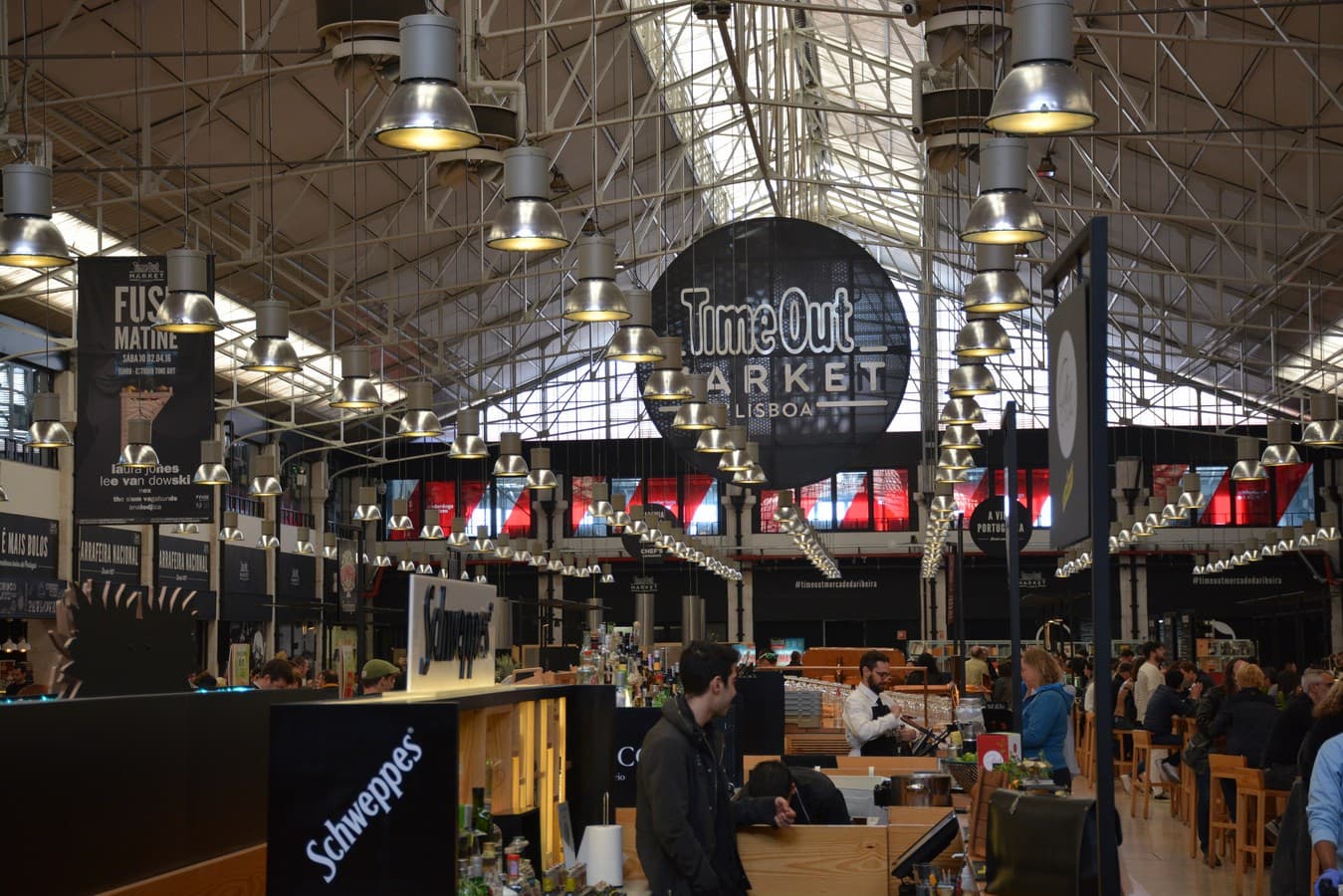
The former Cais do Sodré market turned food hall with stalls from renowned chefs and Lisbon cooking.
What it is and why it's genuinely worth it
Time Out Market occupies the western wing of Mercado da Ribeira, an 1882 building designed by Ressano García — the same engineer who laid out Avenida da Liberdade. The real draw isn't the architecture but the curation: when it opened in May 2014 it was the world's first food market whose stalls were tested and approved by Time Out Lisboa critics, so nothing falls below four stars. Around 26 restaurants surround communal tables: you order at whichever counter you like and grab a seat wherever you find one. One detail that often gets overlooked: the eastern wing is still a traditional food market — fish, meat, flowers — busiest in the mornings. Cross it early and you see the Lisbon that actually shops. And below ground, during the 2013 renovation, workers uncovered the walls of a Roman smelting works from the ancient port of Olisipo.
Prices, hours and how to skip the crowds
Entry is free: no ticket, no booking — you only pay at the individual stalls. That said, food prices are above the Lisbon average, and recent reviews consistently flag it as expensive for a market, so go in with that expectation. Open Sunday to Wednesday 10:00–00:00, Thursday to Saturday until 02:00. No table reservations: it's first come, first served. For a relaxed meal, avoid weekend lunch (13:00–15:00) and dinner (20:00–22:00), when finding a seat is hardest. The best windows are weekday mid-morning (10:00–12:30) or mid-afternoon (15:30–18:00). Thursday and Friday nights get lively late, with a more local than tourist crowd well into the small hours. One to two hours is plenty to browse and eat; add time if you want to explore the traditional market wing or catch a concert in the events space.
How to get there and tips from someone who's been
The easiest option is the metro: Green Line, Cais do Sodré station. Exit and the market is right across Avenida 24 de Julho. Suburban trains and Fertagus also stop at Cais do Sodré, and several bus lines stop nearby (check current routes on Carris or Moovit, as these change). Tram 28 doesn't stop at the door: its nearest stop is Praça Luís de Camões in Chiado, around 10 minutes' walk downhill towards the river (on-board fare €3.30). From Chiado or Baixa you can also walk in 10–15 minutes along the Tagus waterfront. The address is Avenida 24 de Julho, s/n. My tip: arrive mid-morning, take a turn through the traditional market wing before eating, and earmark a table as soon as you walk in. No works or closures have been reported for 2026, but if you're visiting on a national holiday, confirm hours at timeout.pt/time-out-market-lisboa.
Frequently asked questions
Do I need to pay or book in advance to enter Time Out Market?
How long do I need for the visit?
What is the best time to avoid crowds?
Some links on this page are affiliate links: if you book through them, Andelaria may earn a commission at no extra cost to you. Transparency & affiliate policy
Book tickets and tours: Time Out Market (Mercado da Ribeira)Plan your trip
Book the essentials for your trip to Lisboa.
Other places in Lisboa
Torre de Belém
monumento16th-century Manueline fortified tower on the Tagus, a UNESCO World Heritage site and symbol of the Age of Discoveries.
Mosteiro dos Jerónimos
monumentoManueline-Gothic masterpiece in Belém, a UNESCO site, home to the cloister and the tomb of Vasco da Gama.
Castelo de São Jorge
monumentoMedieval castle atop the Alfama hill, with ramparts, peacocks and the finest panorama over the city and river.
Alfama
barrioLisbon's oldest quarter, a maze of lanes that survived the 1755 earthquake and the birthplace of fado.
Praça do Comércio
plazaThe grand riverside square of the Baixa, opening onto the Tagus beneath the Arco da Rua Augusta and the equestrian statue of King José I.
Miradouro da Senhora do Monte
miradorLisbon's highest viewpoint, in Graça, with a 180º view over the castle, Baixa and Tagus, perfect at sunset.
Festas de Santo Antonio de Lisboa
fiestaThe Festas de Santo António are Lisbon's biggest celebration: free and open throughout June, with the main night falling on the 12th to 13th. Neighbourhood arraiais with sardinha assada, the Marchas Populares along Avenida da Liberdade (each bairro competes) and the collective Casamentos de Santo António at the Sé. Over 40 events, nearly all at no cost.
Festas de Lisboa
fiestaThe Festas de Lisboa honour Santo António (who died on 13 June 1231) throughout the entire month of June, with the climax on the night of the 12th. Free and open to all: neighbourhood arraiais with grilled sardines, manjericos and the Marchas Populares along Avenida da Liberdade since 1932.
NOS Alive
fiestaNOS Alive is one of Portugal's biggest music festivals. A ticketed event (day passes or full festival passes), it takes place every July at the Passeio Marítimo de Algés (Oeiras), on the banks of the Tagus river just a few minutes by train from central Lisbon. Rock, indie, pop and electronic music since 2007.
Natal em Lisboa
fiestaChristmas transforms Lisbon into one of Europe's grandest light spectacles: around 182 km of LED lights across 46 points in the Baixa and Chiado, switched on from late November through 6 January. Markets, an ice rink and New Year's Eve fireworks over the Tagus — all free and outdoors.
Similar places in other cities
Mercado do Bolhão
PortoA two-storey municipal market, restored in 2022, with fresh-produce stalls, tinned fish, wines and tascas to eat at.
Mercado Central
ValenciaOne of the largest working food markets in Europe, inaugurated in 1928 inside a magnificent Art Nouveau building with tiled domes and stained glass. More than 300 stalls sell Valencian oranges, fresh fish, garden vegetables and horchata. Entry to the building is free.
Mercat de la Boqueria
BarcelonaThe city's most famous market, just off the Rambla: stalls of fruit, ham, fish and bar counters for tapas. Crowded but authentic if you go early in the morning.