Torre de Belém
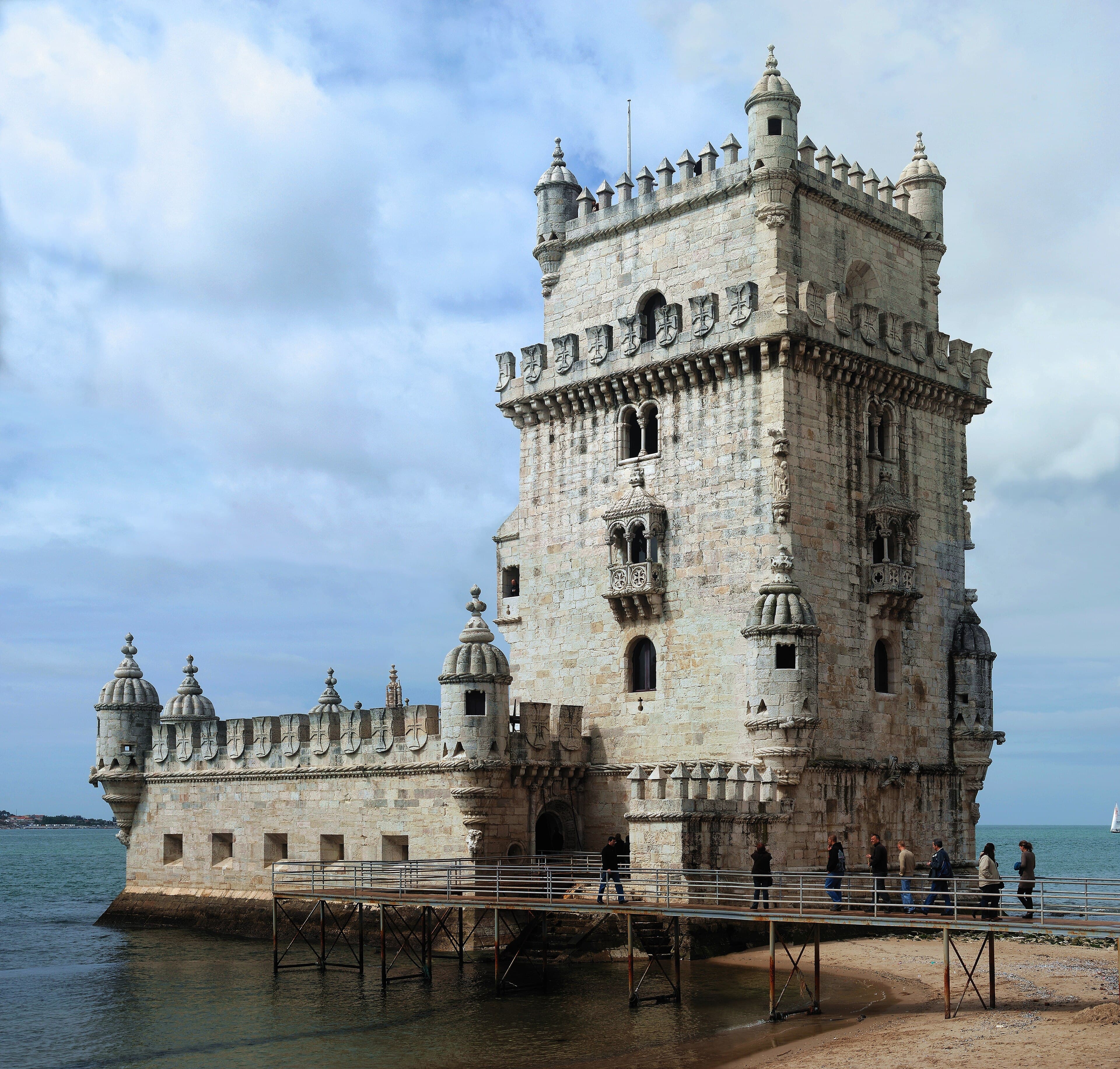
16th-century Manueline fortified tower on the Tagus, a UNESCO World Heritage site and symbol of the Age of Discoveries.
What it is and why it's worth a visit
The Tower of Belém was built between 1515 and 1519 on the orders of King Manuel I, under the direction of Francisco de Arruda, to guard the entrance to the Tagus estuary at Lisbon. It is one of the defining icons of Manueline architecture: armillary spheres, the Cross of the Order of Christ and rope knots carved in stone, combined with octagonal turrets topped by conical mudejar-influenced domes. It has been a UNESCO World Heritage Site since 1983 and is one of the 7 Wonders of Portugal. Look for the detail almost nobody notices: at the base, a corbel hides a sculpted rhinoceros, inspired by the first live rhinoceros to arrive in Portugal in 1513, barely two years before construction began. One important note: the tower was closed for nearly a year for its most thorough restoration since 1998 (€1.05 million) and reopened on 27 May 2026. If your visit is after that date it is open again, but it is worth checking the current status on museusemonumentos.pt before you go.
Tickets, opening hours and how to skip the queues
The adult ticket at the box office costs €8; visitors aged 13 to 24 and over 65 pay a reduced rate (check the exact amount on the official website after reopening), and children under 12 enter free. There is a combined ticket with the Jerónimos Monastery for €12 per adult, excellent value since the two sites are just 10 minutes apart on foot. With the Lisboa Card entry is free, as it is on the first Sunday of every month. Note: torrebelem.com shows reseller prices (up to €15) including handling fees; the official box-office price is €8. Opening hours after the reopening are 9:30 to 17:30 (last entry at 17:00), and it is closed on Mondays, 1 January, Easter Sunday, 1 May, 13 June (Lisbon Day) and 25 December. The big novelty in 2026 is the capacity limit: a maximum of 900 visitors per day, in groups of 60 every 30 minutes, which has eliminated hours-long queues. Online pre-booking is therefore almost essential — tickets can sell out. Book at museusemonumentos.pt and aim for the first slot of the day.
How to get there and tips from those who've been
The most convenient and picturesque option is tram 15E (modern, articulated and air-conditioned) from Praça da Figueira or Praça do Comércio to the Belém stop — about 20 minutes from the centre. Buses 723, 728, 729 and 751 also serve the area, with the 728 running the full length of the riverfront. Another quick and affordable alternative is the suburban train from Cais do Sodré to Belém station (5–8 minutes), a 10-minute walk from the tower. The metro does not reach Belém directly. For public transport you can now pay with contactless card, Apple Pay or Google Pay directly on the turnstiles and validators: no Viva Viagem card needed. Allow 45 to 60 minutes for the interior, as the tower is not large and the spiral staircase is narrow and steep (not suitable for reduced mobility); with the terrace and views over the Tagus, an hour is enough. Large backpacks are not allowed, but there is a cloakroom, and photography without flash is permitted. If you can, go first thing and combine the visit with the Jerónimos Monastery to make the most of the morning.
Frequently asked questions
How much does entry cost and is booking required?
How long does a visit take?
What is the best time to avoid crowds?
Some links on this page are affiliate links: if you book through them, Andelaria may earn a commission at no extra cost to you. Transparency & affiliate policy
Book tickets and tours: Torre de BelémPlan your trip
Book the essentials for your trip to Lisboa.
Other places in Lisboa
Mosteiro dos Jerónimos
monumentoManueline-Gothic masterpiece in Belém, a UNESCO site, home to the cloister and the tomb of Vasco da Gama.
Castelo de São Jorge
monumentoMedieval castle atop the Alfama hill, with ramparts, peacocks and the finest panorama over the city and river.
Alfama
barrioLisbon's oldest quarter, a maze of lanes that survived the 1755 earthquake and the birthplace of fado.
Praça do Comércio
plazaThe grand riverside square of the Baixa, opening onto the Tagus beneath the Arco da Rua Augusta and the equestrian statue of King José I.
Time Out Market (Mercado da Ribeira)
mercadoThe former Cais do Sodré market turned food hall with stalls from renowned chefs and Lisbon cooking.
Miradouro da Senhora do Monte
miradorLisbon's highest viewpoint, in Graça, with a 180º view over the castle, Baixa and Tagus, perfect at sunset.
Festas de Santo Antonio de Lisboa
fiestaThe Festas de Santo António are Lisbon's biggest celebration: free and open throughout June, with the main night falling on the 12th to 13th. Neighbourhood arraiais with sardinha assada, the Marchas Populares along Avenida da Liberdade (each bairro competes) and the collective Casamentos de Santo António at the Sé. Over 40 events, nearly all at no cost.
Festas de Lisboa
fiestaThe Festas de Lisboa honour Santo António (who died on 13 June 1231) throughout the entire month of June, with the climax on the night of the 12th. Free and open to all: neighbourhood arraiais with grilled sardines, manjericos and the Marchas Populares along Avenida da Liberdade since 1932.
NOS Alive
fiestaNOS Alive is one of Portugal's biggest music festivals. A ticketed event (day passes or full festival passes), it takes place every July at the Passeio Marítimo de Algés (Oeiras), on the banks of the Tagus river just a few minutes by train from central Lisbon. Rock, indie, pop and electronic music since 2007.
Natal em Lisboa
fiestaChristmas transforms Lisbon into one of Europe's grandest light spectacles: around 182 km of LED lights across 46 points in the Baixa and Chiado, switched on from late November through 6 January. Markets, an ice rink and New Year's Eve fireworks over the Tagus — all free and outdoors.
Similar places in other cities
Torre dos Clérigos
PortoA 75 m baroque bell tower designed by Nasoni; 240 steps lead to the best panorama over Porto's rooftops.
La Alhambra
GranadaNasrid palace-fortress of the kingdom of al-Andalus, taken by the Reyes Católicos in 1492 and declared a UNESCO World Heritage Site in 1984.
El Peine del Viento
San SebastiánThree Corten steel sculptures by Eduardo Chillida (1977) anchored in the rocks at the far end of Ondarreta beach, where the city merges with the Cantabrian Sea. Architect Luis Peña Ganchegui designed the surroundings with granite paving and water jets that emerge with the tides. The defining masterpiece of 20th-century Basque art.