Torre dos Clérigos
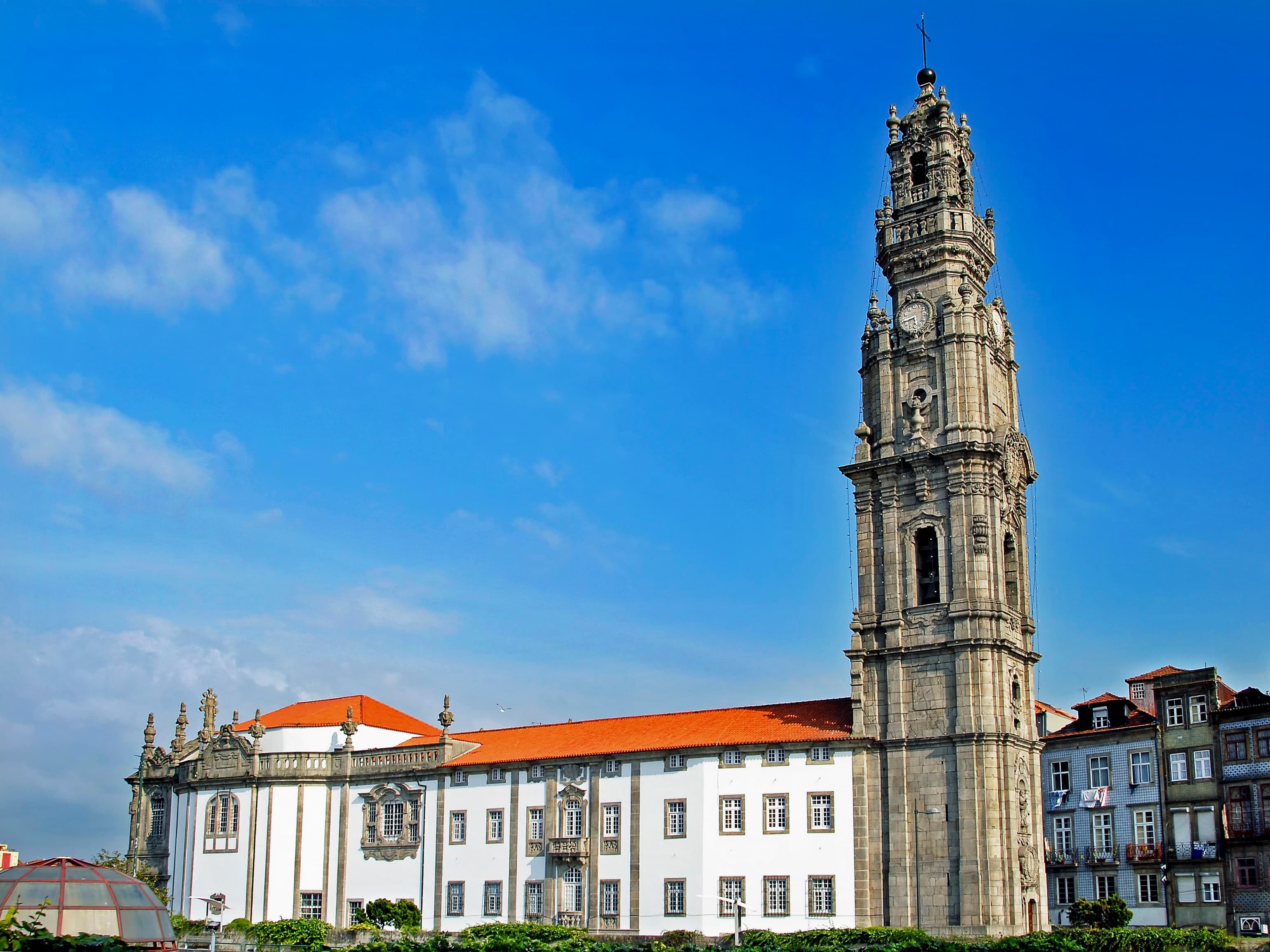
A 75 m baroque bell tower designed by Nasoni; 240 steps lead to the best panorama over Porto's rooftops.
What it is and why the climb is genuinely worth it
Torre dos Clérigos is Porto's most visited monument, drawing over 1.5 million visitors a year — and it's easy to see why. Italian architect Nicolau Nasoni arrived in Portugal in 1725 and left behind his most iconic work: a 75.6-metre tower built between 1731 and 1763, a construction that took thirty-one years. The original plan called for two towers, but the money ran out and only one was ever built. The church, which is free to enter, has an unusually oval nave — a rare choice for the era, pure Italian Baroque. Nasoni grew so attached to the place that he asked to be buried inside, with no gravestone or epitaph. What most visitors come for is the climb: 225 spiral steps to the top, rewarded with one of the best views in the city — rooftops, the River Douro and church spires laid out like a map. The staircase is tight and steep, but the panorama at the summit makes every step worthwhile.
Tickets, opening hours and how to beat the queues
Entry to the church is free; what you pay for is the combined tower-and-museum ticket. There is a reduced rate for students with a valid card and free entry for children under 10. During summer, Easter and Christmas, a cheaper night ticket is available between 19:00 and 23:00. With the Porto Card you get 50% off the daytime admission. Since official prices can differ from what other guides quote, check the current amount at torredosclerigos.pt before you go. Regular opening hours are 09:00 to 19:00 every day, extended to 23:00 in high season; last entry is always 30 minutes before closing. To dodge the worst crowds, arrive at opening time (09:00) or after 16:00, and avoid the 11:00–12:00 and 13:30–15:00 slots. In July and August, book online — capacity is limited by the narrow staircase. Note: there is only a 5-minute grace period after your reserved time, and late-comers forfeit their ticket with no refund.
How to get there and tips from those who've already climbed it
The tower is right in the city centre on Rua de São Filipe de Nery. By metro, São Bento and Aliados stations (Yellow line) are a 6–8 minute walk away, and Trindade is about 15 minutes. São Bento railway station is 10 minutes on foot, and from the Cathedral (Sé) you can reach the tower in under 10 minutes via Rua Dom Afonso Henriques. Several STCP bus lines (200, 300, 305, 507, 600, 601, 602 and 703) stop at the nearby Cordoaria / Clérigos stop, around 300 metres away. If you're driving, SABA Praça Park is right next door. Allow 45 to 90 minutes for the full visit (church, museum and tower); just going up and coming back down takes 20–30 minutes. Practical notes worth knowing: large bags and backpacks are not allowed in the museum or tower (free left luggage is available subject to availability), there is no lift and the upper sections are very narrow — not ideal if you have claustrophobia or limited mobility. In summer the stone staircase gets very hot, so bring water and wear comfortable clothes. For those who cannot climb, a multisensory space on the ground floor, open since 2015, recreates the views from the top.
Frequently asked questions
How much does entry cost and do I need to book in advance?
How long does the visit take?
What is the best time to avoid queues?
Some links on this page are affiliate links: if you book through them, Andelaria may earn a commission at no extra cost to you. Transparency & affiliate policy
Book tickets and tours: Torre dos ClérigosPlan your trip
Book the essentials for your trip to Porto.
Other places in Porto
Ribeira
barrioThe Douro-side old town, a UNESCO site, with its colourful houses, terraces and the quay beneath the bridge.
Ponte Dom Luís I
puenteDouble-deck iron bridge from 1886 by a disciple of Eiffel; its upper deck is walkable with the city's finest view.
Caves de Vinho do Porto (Vila Nova de Gaia)
bodegasThe historic port-wine cellars across the river —Sandeman, Cálem, Graham's, Taylor's— with guided tours and tasting.
Livraria Lello
libreriaA 1906 neo-Gothic bookshop with its famous red staircase, one of the world's most beautiful; entry is deductible against a book purchase.
Estação de São Bento
estacionA railway station whose hall is clad in some 20,000 tiles depicting battles and historical scenes of Portugal.
Mercado do Bolhão
mercadoA two-storey municipal market, restored in 2022, with fresh-produce stalls, tinned fish, wines and tascas to eat at.
Festa de São João do Porto
fiestaThe Festa de São João do Porto — free and open to all — turns the night of 23–24 June into Portugal's most intense street party. At midnight, fireworks burst over the Douro (16 minutes in 2025) while the entire city takes to the streets with plastic hammers, sardines, and basil.
Super Bock Super Rock
fiestaSuper Bock Super Rock is a paid festival born in July 1995 and one of Portugal's longest-running. From 2010 it was held every July near Praia do Meco (Sesimbra). After 30 years, in 2026 it reinvents itself as a series of standalone concerts. Check dates and tickets on the official website.
São Martinho do Porto
fiestaSão Martinho is celebrated across Portugal on 11 November with the magusto: chestnuts roasted over fire and new wine. In Porto the festival is urban and free, with castanhas vendors along Santa Catarina and Bolhão, and neighbourhood magustos open to all in areas like Bonfim and Cedofeita.
Similar places in other cities
Torre de Belém
Lisboa16th-century Manueline fortified tower on the Tagus, a UNESCO World Heritage site and symbol of the Age of Discoveries.
Mosteiro dos Jerónimos
LisboaManueline-Gothic masterpiece in Belém, a UNESCO site, home to the cloister and the tomb of Vasco da Gama.
Castelo de São Jorge
LisboaMedieval castle atop the Alfama hill, with ramparts, peacocks and the finest panorama over the city and river.