Festa de São João do Porto
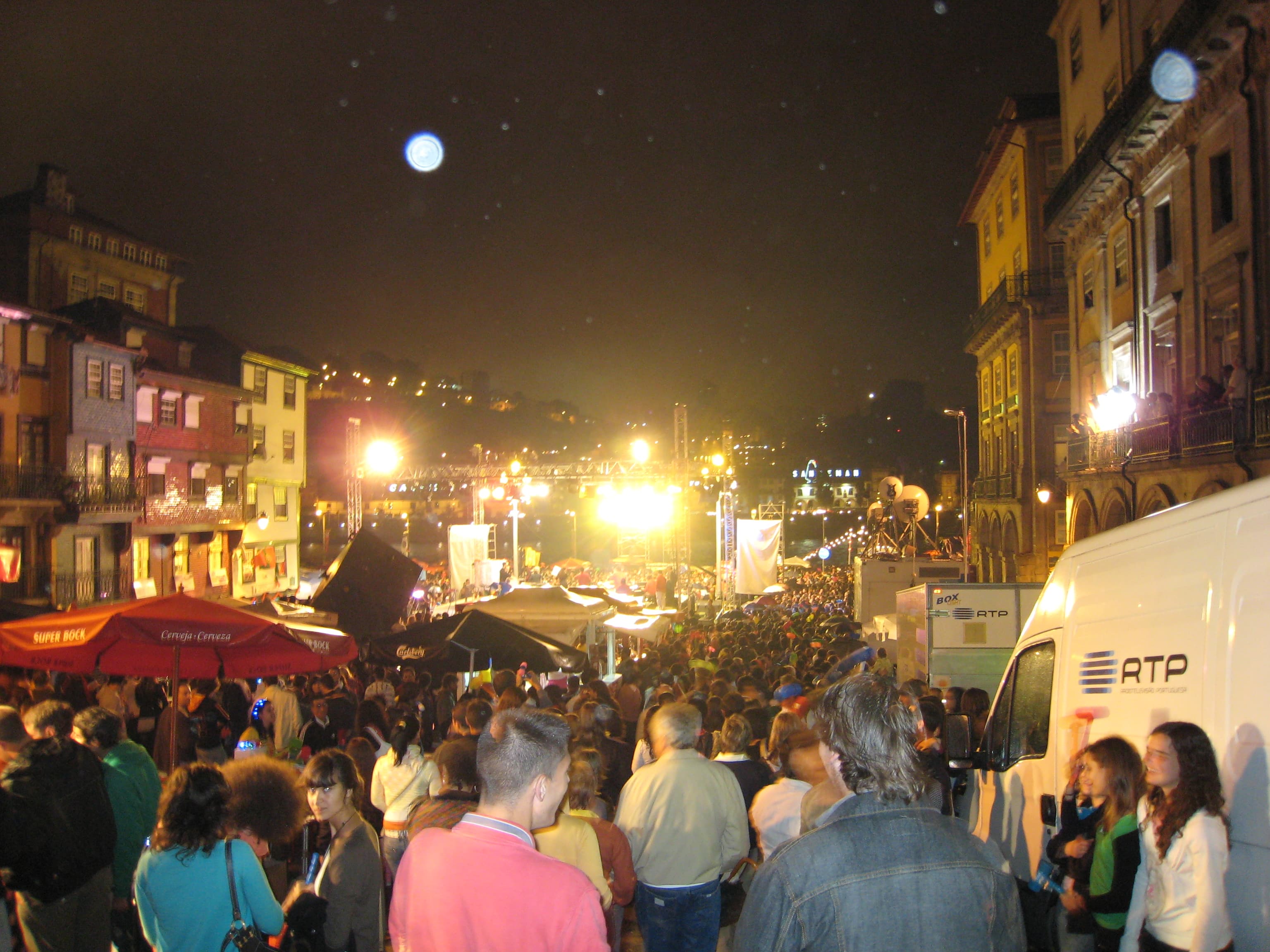
The Festa de São João do Porto — free and open to all — turns the night of 23–24 June into Portugal's most intense street party. At midnight, fireworks burst over the Douro (16 minutes in 2025) while the entire city takes to the streets with plastic hammers, sardines, and basil.
Why Porto celebrates the shortest night
The night of 23–24 June marks both the summer solstice — celebrated across Europe with bonfires since pre-Christian times — and the Christian feast of St John the Baptist's birth, which the Church layered over ancient fertility rites. Curiously, São João is not Porto's official patron saint (that honour belongs to Nossa Senhora da Vandoma), yet he's the one who claimed the festival. The chronicler Fernão Lopes (15th century) already described the people of Porto holding great celebrations on the eve, referring to events from the 14th century. By 1851, the gathering drew around 25,000 people. On 24 June was enshrined as a municipal holiday by popular referendum in 1911, during the First Republic — celebrated more as a solstice than a religious feast. Tip: this is a full night on the streets, not a single event; rest in the afternoon if you want to last until dawn.
Hammers, alho-porro, balloons, and fireworks over the Douro
The martelinho de plástico — that small plastic hammer with a squeaker that everyone uses to tap each other on the head — is not an ancient tradition: it was invented in 1963 by Manuel António Boaventura at a factory in Rio Tinto. It replaced the alho-porro (leek), the phallic fertility symbol once rubbed on passers-by's noses, which still survives in some hands. Manjericos (basil) and grilled sardines (imported from Lisbon in the 1940s, not centuries-old) round out the ritual. Paper balloons with burning wicks are banned due to wildfire risk: fines range from €140 to €5,000, and when permitted, they're only allowed within a set window (21:45–01:00). The highlight is the midnight fireworks over the Douro between Ponte Dom Luís I and Ponte da Arrábida (16 minutes in 2025; previous editions ran around 12). Tip: don't launch balloons — 90% of fires that night are caused by them.
Where to watch: viewpoints and neighbourhoods
For the fireworks without fighting for river space, elevated viewpoints win: Serra do Pilar in Gaia (180°+ panorama over the bridges), Miradouro da Vitória (Cathedral, Bolsa, Douro), and Alameda das Fontainhas, the traditional epicentre above the river. Ribeira is the bustling heart along the waterfront, with martelinhos and manjericos on sale everywhere; it fills up fast, so arrive before 20:00 if you want a spot. Miragaia kicks off its festarolas before midnight and keeps going past 1am; Cedofeita, the trendiest neighbourhood, fills with rusgas (street bands) and has its own stage. Avenida dos Aliados hosts the main stage. Gaia's riverbank, across from Ribeira, offers more space and less crowding. The unwritten tradition: after the fireworks, walk toward Foz do Douro or Matosinhos to watch the sunrise by the sea.
Getting there, night metro, and safety
Sá Carneiro Airport (OPO) is 11 km away; metro Line E (violet) reaches the city centre in around 30 minutes. From Spain, flying is fastest (~1h15); by land there are bus services (ALSA, Flixbus, Rede Expressos, 7h40+). Renfe has announced a high-speed rail link between Madrid and Porto, expected in 2026 — check renfe.com for actual availability. On the night of São João, all metro lines run until 06:00 with double trains from 20:00; Line E keeps its regular schedule and closes around 01:00. Ponte Luís I is suspended between 23:30 and 01:00 for the fireworks. In 2025 the festival drew around 1.5 million people: PSP police reinforce their operation and the bridge's lower deck closes from 22:30 to 01:00. Critical tip: pickpockets target crowds and public transport — wear your bag crossbody at the front and keep your phone in your pocket. A light layer is useful (overnight lows of 14–16°C).
Frequently asked questions
When and where does the Festa de São João do Porto take place?
What time are the fireworks and where is the best place to watch?
Can I launch paper balloons (balões) at São João?
How does the metro run on the night of São João?
Some links on this page are affiliate links: if you book through them, Andelaria may earn a commission at no extra cost to you. Transparency & affiliate policy
Book tickets and tours: Festa de São João do PortoPlan your trip
Book the essentials for your trip to Porto.
Other places in Porto
Ribeira
barrioThe Douro-side old town, a UNESCO site, with its colourful houses, terraces and the quay beneath the bridge.
Ponte Dom Luís I
puenteDouble-deck iron bridge from 1886 by a disciple of Eiffel; its upper deck is walkable with the city's finest view.
Caves de Vinho do Porto (Vila Nova de Gaia)
bodegasThe historic port-wine cellars across the river —Sandeman, Cálem, Graham's, Taylor's— with guided tours and tasting.
Livraria Lello
libreriaA 1906 neo-Gothic bookshop with its famous red staircase, one of the world's most beautiful; entry is deductible against a book purchase.
Torre dos Clérigos
monumentoA 75 m baroque bell tower designed by Nasoni; 240 steps lead to the best panorama over Porto's rooftops.
Estação de São Bento
estacionA railway station whose hall is clad in some 20,000 tiles depicting battles and historical scenes of Portugal.
Mercado do Bolhão
mercadoA two-storey municipal market, restored in 2022, with fresh-produce stalls, tinned fish, wines and tascas to eat at.
Super Bock Super Rock
fiestaSuper Bock Super Rock is a paid festival born in July 1995 and one of Portugal's longest-running. From 2010 it was held every July near Praia do Meco (Sesimbra). After 30 years, in 2026 it reinvents itself as a series of standalone concerts. Check dates and tickets on the official website.
São Martinho do Porto
fiestaSão Martinho is celebrated across Portugal on 11 November with the magusto: chestnuts roasted over fire and new wine. In Porto the festival is urban and free, with castanhas vendors along Santa Catarina and Bolhão, and neighbourhood magustos open to all in areas like Bonfim and Cedofeita.
Natal no Porto
fiestaPorto's Christmas celebrations are free and open to all: every 29 November, Avenida dos Aliados lights up with a videomapping show on the City Hall facade and a live concert. Through 6 January, 94 streets glow with LED lights, Christmas markets fill Palácio de Cristal and Batalha, and the Ribeira reflects in the Douro.
Similar places in other cities
Festas de Sao Pedro de Sintra
SintraThe Festas de São Pedro de Sintra are the town's biggest local celebration, free to attend and held around 28–29 June in honour of São Pedro, patron of the freguesia of São Pedro de Penaferrim. At its heart is the Feira de São Pedro, one of Portugal's oldest traditional fairs, with arraial, sardinha assada and a religious procession.
Festival das Noites de Sintra
SintraThe Sintra Festival is Portugal's oldest music festival: born in 1957 as the Jornadas Musicais de Sintra, it fills the UNESCO-listed palaces and churches of Sintra with classical music every June. It is a ticketed event, with entries available through Ticketline, plus a handful of free concerts with limited capacity. Check dates and the full programme on the official website.
Feira do Artesanato de Sintra
SintraThe Feira de Artesanato de Sintra is a free municipal craft fair that the Câmara de Sintra organises in August in the Jardim da Correnteza, next to the Vila Velha. It brings together artisans from the concelho with handmade pieces: ceramics, cork and embroidery. Free entry, open morning to afternoon. Check dates and the programme on the official website.