Ponte Dom Luís I
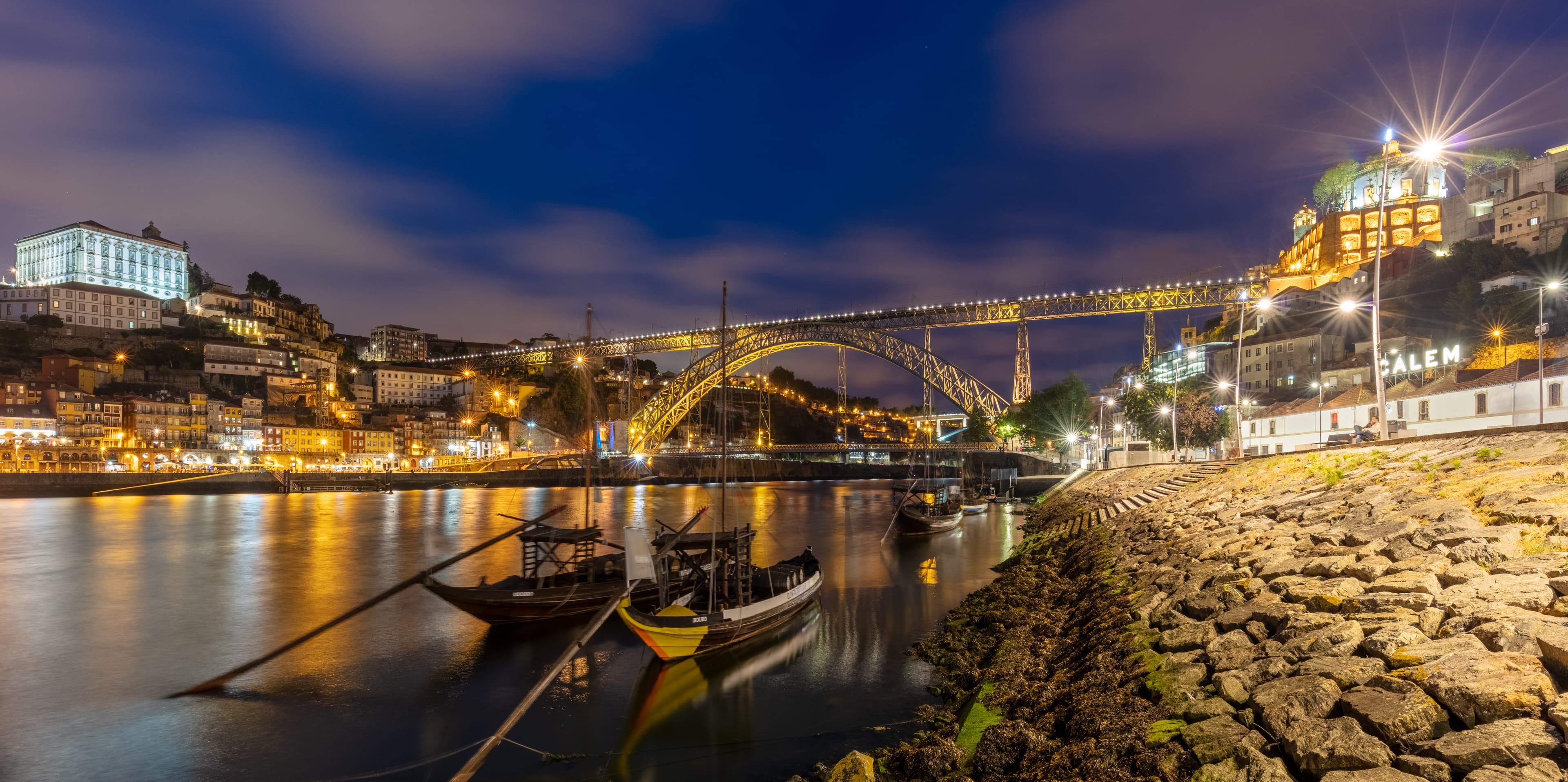
Double-deck iron bridge from 1886 by a disciple of Eiffel; its upper deck is walkable with the city's finest view.
An 'Eiffel cousin' over the Douro
The Ponte Dom Luís I is one of those structures you see in photos before visiting Porto that, in person, is even more impressive. It's a double-deck wrought-iron bridge inaugurated in 1886, with a central arch spanning 172 metres — for decades the largest wrought-iron arch in the world (not surpassed until 2017, by a bridge in China). It was designed by Théophile Seyrig, an engineer who had been a partner of Gustave Eiffel: it is therefore a cousin of the Eiffel Tower, same school but a different firm, not a direct Eiffel project. It's genuinely worth it because this isn't a bridge to admire from afar — it's one to cross: the upper deck sits 60 metres above the river and you walk alongside the yellow metro line, with the best possible view of the Ribeira, the Gaia wine lodges and the Douro. It is part of the Historic Centre of Porto, a UNESCO World Heritage Site since 1996.
Tickets, opening hours and how to beat the crowds
Good news: crossing on foot is completely free on both decks, 365 days a year at any hour. There's no online booking or ticket to manage — you just show up and walk. The only optional cost is the Gaia Cable Car, which climbs from the riverside up to the upper deck level; it costs around €6 one-way and €9 return, but it's worth confirming the exact price at the booth or on the official Gaia website as it varies by season. To dodge the crowds, the best time is early morning, before 9:00, when the upper deck is almost empty. Sunset (golden hour) offers the best light for photos and the liveliest atmosphere, but also more tourists. If you want comfort, avoid summer weekends between 11:00 and 19:00. At night the bridge is illuminated and looks stunning from the riverbank.
How to get there and tips from those who've been
Public transport is the recommended option; parking in the Ribeira is very limited and expensive. By metro, the D line (yellow) is the most practical: get off at Jardim do Morro (Gaia side) for direct access to the upper deck, or at São Bento or Aliados (Porto side) and walk 10–15 minutes down to the Ribeira and the lower deck. Bus lines 900, 901 and 906 run along the lower deck. On foot from the Ribeira you arrive in just 5 minutes. How long should you allow? If you just want to cross, budget 20–30 minutes to go over the top and return via the bottom with photo stops; including the Serra do Pilar viewpoint and a stroll through Gaia, allow 1.5–2 hours. Three warnings from those who've already crossed: the upper deck is very exposed to wind — bring a jacket even in summer; respect the metro tracks and don't stop on the rail lane; and if you plan to cross via the top, check metrodoporto.pt for any temporary closures due to maintenance.
Frequently asked questions
Do you need to pay or book a ticket to cross the Ponte Dom Luís I?
How long do I need to visit it?
What is the best time to visit?
Some links on this page are affiliate links: if you book through them, Andelaria may earn a commission at no extra cost to you. Transparency & affiliate policy
Book tickets and tours: Ponte Dom Luís IPlan your trip
Book the essentials for your trip to Porto.
Other places in Porto
Ribeira
barrioThe Douro-side old town, a UNESCO site, with its colourful houses, terraces and the quay beneath the bridge.
Caves de Vinho do Porto (Vila Nova de Gaia)
bodegasThe historic port-wine cellars across the river —Sandeman, Cálem, Graham's, Taylor's— with guided tours and tasting.
Livraria Lello
libreriaA 1906 neo-Gothic bookshop with its famous red staircase, one of the world's most beautiful; entry is deductible against a book purchase.
Torre dos Clérigos
monumentoA 75 m baroque bell tower designed by Nasoni; 240 steps lead to the best panorama over Porto's rooftops.
Estação de São Bento
estacionA railway station whose hall is clad in some 20,000 tiles depicting battles and historical scenes of Portugal.
Mercado do Bolhão
mercadoA two-storey municipal market, restored in 2022, with fresh-produce stalls, tinned fish, wines and tascas to eat at.
Festa de São João do Porto
fiestaThe Festa de São João do Porto — free and open to all — turns the night of 23–24 June into Portugal's most intense street party. At midnight, fireworks burst over the Douro (16 minutes in 2025) while the entire city takes to the streets with plastic hammers, sardines, and basil.
Super Bock Super Rock
fiestaSuper Bock Super Rock is a paid festival born in July 1995 and one of Portugal's longest-running. From 2010 it was held every July near Praia do Meco (Sesimbra). After 30 years, in 2026 it reinvents itself as a series of standalone concerts. Check dates and tickets on the official website.
São Martinho do Porto
fiestaSão Martinho is celebrated across Portugal on 11 November with the magusto: chestnuts roasted over fire and new wine. In Porto the festival is urban and free, with castanhas vendors along Santa Catarina and Bolhão, and neighbourhood magustos open to all in areas like Bonfim and Cedofeita.
Similar places in other cities
Puente Romano
CórdobaBuilt in the 1st century BC on the orders of Augustus, this 16-arch bridge over the Guadalquivir was for twenty centuries the only southern entrance to the city. It offers the most photogenic view of Córdoba: the Mosque tower silhouetted against the sky at sunrise or sunset. Today it is pedestrian-only.
Cases de l'Onyar i Pont de les Peixateries Velles
GironaThe colourful houses over the river and the red iron bridge built by Eiffel's firm in 1877. Girona's definitive postcard view.