Castelo de São Jorge
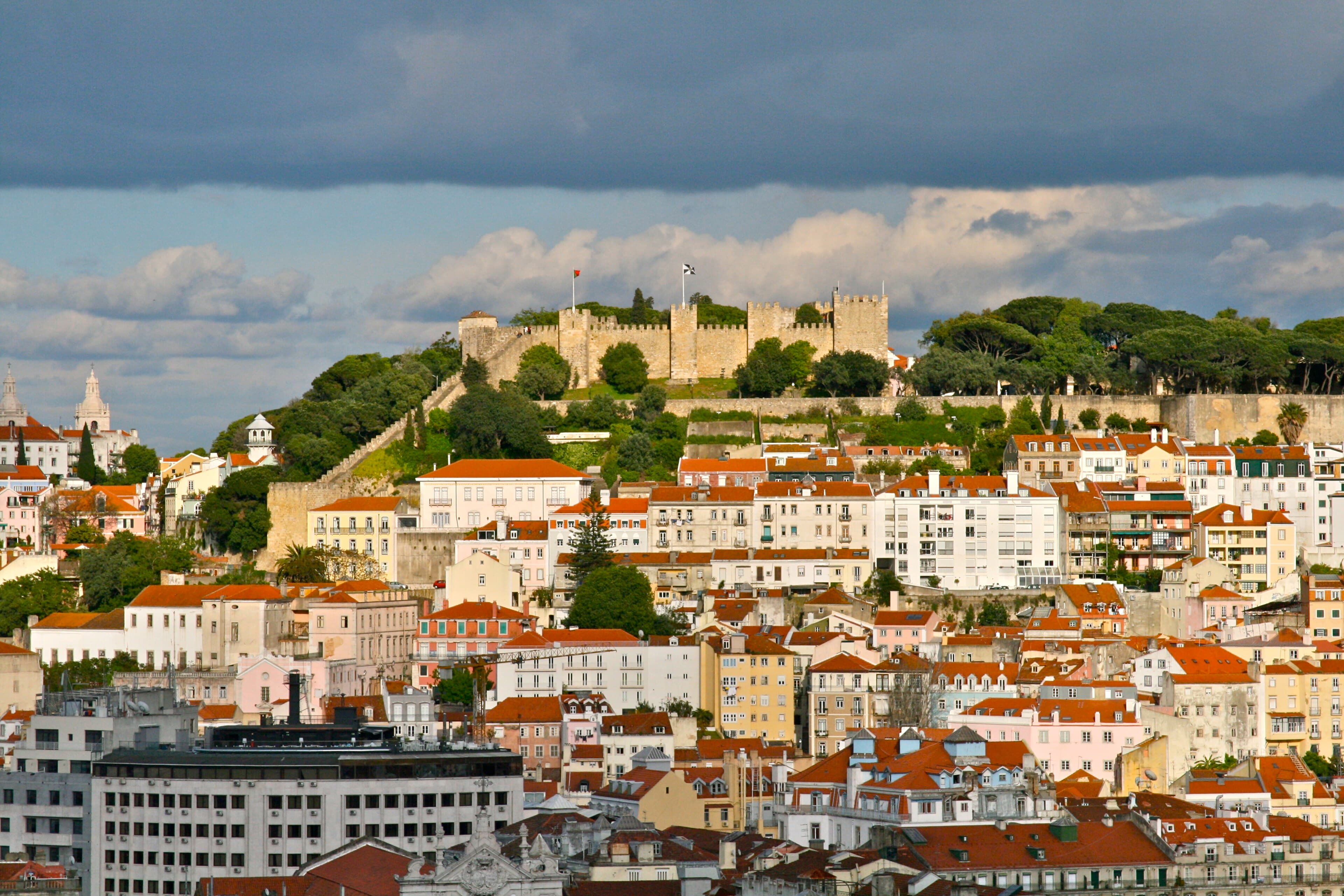
Medieval castle atop the Alfama hill, with ramparts, peacocks and the finest panorama over the city and river.
What you'll really see (and an honest caveat)
The Castelo de São Jorge crowns Alfama's highest hill and, with over two million visitors a year, is Portugal's most visited monument. Its real trump card isn't the architecture — it's the view. From the battlements you have all of Lisbon at your feet: the Tagus, the 25 de Abril Bridge and Alfama's rooftops cascading toward the river. There's one detail almost nobody mentions: what you see is not an intact medieval castle. Between 1938 and 1940, under Salazar's Estado Novo, the castle was heavily reconstructed — battlements and towers were added to give it that imposing silhouette. It is a 20th-century recreation built on authentic foundations (there was a hillfort from the 7th–2nd centuries BC and a Moorish alcazaba in the 10th century). Portugal's kings lived here for around 400 years, until Manuel I moved the court to the riverside in the 16th century. History lovers should not skip the free guided tour included in the ticket — it's the only way to enter the excavated archaeological site.
Tickets, opening hours and how to avoid queues
The adult ticket (26+) is around €17; young visitors aged 13–25 pay €8.50; seniors (65+) €14; and children under 12 enter free. If you have the Lisboa Card, entry is included. Always buy on the official website (castelodesaojorge.pt) or at the box office: documented scams with ticket touts operate around the entrance. In high season (1 March–31 October) it opens 09:00–21:00 (last entry 20:30); in low season (1 November–February), 09:00–18:00. It opens seven days a week and only closes on 1 January, 1 May and 24–25 and 31 December. The trick to avoid crowds? Arrive at 09:00 sharp: cruise-ship groups start arriving from 10:30–11:00. Weekdays are better than weekends, and in July–August avoid the midday peak (10:00–14:00). Buying online saves you the box-office queue, especially in summer. Note: the battlements and towers close slightly earlier than the monument in high season for safety reasons.
How to get there and tips from those who've been
You're heading up a seriously steep hill, so choose your route wisely. The most direct option is bus 737 from Praça da Figueira: it drops you at the Castelo stop (Chão da Feira) and it's a 2-minute walk. Tram 28E is the iconic choice, but it's packed and a hotspot for pickpockets — get off at Largo Portas do Sol or Santa Luzia (5 minutes on foot) and wear your bag across your chest at the front. The 12E from Praça da Figueira tends to be less crowded. By metro, the nearest stations are Rossio or Martim Moniz (Green Line, ~11–12 minutes on foot), but remember there's no metro on the hill itself. From Baixa-Chiado it's about 15 minutes uphill, though free public lifts (Chão do Loureiro) save you almost all the elevation gain. Allow 1.5–2 hours for the battlements, towers and gardens, or 2.5–3 hours if you do the guided tour and the Camera Obscura in Torre Ulisses (360° live views, works only in natural light during central hours). The ground is uneven cobblestone with steep ramps: comfortable footwear is essential and it is not recommended for wheelchair users without assistance.
Frequently asked questions
How much does the ticket cost and where can I buy it?
How much time do I need for the visit?
What is the best time to avoid crowds?
Some links on this page are affiliate links: if you book through them, Andelaria may earn a commission at no extra cost to you. Transparency & affiliate policy
Book tickets and tours: Castelo de São JorgePlan your trip
Book the essentials for your trip to Lisboa.
Other places in Lisboa
Torre de Belém
monumento16th-century Manueline fortified tower on the Tagus, a UNESCO World Heritage site and symbol of the Age of Discoveries.
Mosteiro dos Jerónimos
monumentoManueline-Gothic masterpiece in Belém, a UNESCO site, home to the cloister and the tomb of Vasco da Gama.
Alfama
barrioLisbon's oldest quarter, a maze of lanes that survived the 1755 earthquake and the birthplace of fado.
Praça do Comércio
plazaThe grand riverside square of the Baixa, opening onto the Tagus beneath the Arco da Rua Augusta and the equestrian statue of King José I.
Time Out Market (Mercado da Ribeira)
mercadoThe former Cais do Sodré market turned food hall with stalls from renowned chefs and Lisbon cooking.
Miradouro da Senhora do Monte
miradorLisbon's highest viewpoint, in Graça, with a 180º view over the castle, Baixa and Tagus, perfect at sunset.
Festas de Santo Antonio de Lisboa
fiestaThe Festas de Santo António are Lisbon's biggest celebration: free and open throughout June, with the main night falling on the 12th to 13th. Neighbourhood arraiais with sardinha assada, the Marchas Populares along Avenida da Liberdade (each bairro competes) and the collective Casamentos de Santo António at the Sé. Over 40 events, nearly all at no cost.
Festas de Lisboa
fiestaThe Festas de Lisboa honour Santo António (who died on 13 June 1231) throughout the entire month of June, with the climax on the night of the 12th. Free and open to all: neighbourhood arraiais with grilled sardines, manjericos and the Marchas Populares along Avenida da Liberdade since 1932.
NOS Alive
fiestaNOS Alive is one of Portugal's biggest music festivals. A ticketed event (day passes or full festival passes), it takes place every July at the Passeio Marítimo de Algés (Oeiras), on the banks of the Tagus river just a few minutes by train from central Lisbon. Rock, indie, pop and electronic music since 2007.
Natal em Lisboa
fiestaChristmas transforms Lisbon into one of Europe's grandest light spectacles: around 182 km of LED lights across 46 points in the Baixa and Chiado, switched on from late November through 6 January. Markets, an ice rink and New Year's Eve fireworks over the Tagus — all free and outdoors.
Similar places in other cities
Torre dos Clérigos
PortoA 75 m baroque bell tower designed by Nasoni; 240 steps lead to the best panorama over Porto's rooftops.
La Alhambra
GranadaNasrid palace-fortress of the kingdom of al-Andalus, taken by the Reyes Católicos in 1492 and declared a UNESCO World Heritage Site in 1984.
El Peine del Viento
San SebastiánThree Corten steel sculptures by Eduardo Chillida (1977) anchored in the rocks at the far end of Ondarreta beach, where the city merges with the Cantabrian Sea. Architect Luis Peña Ganchegui designed the surroundings with granite paving and water jets that emerge with the tides. The defining masterpiece of 20th-century Basque art.