La Alhambra
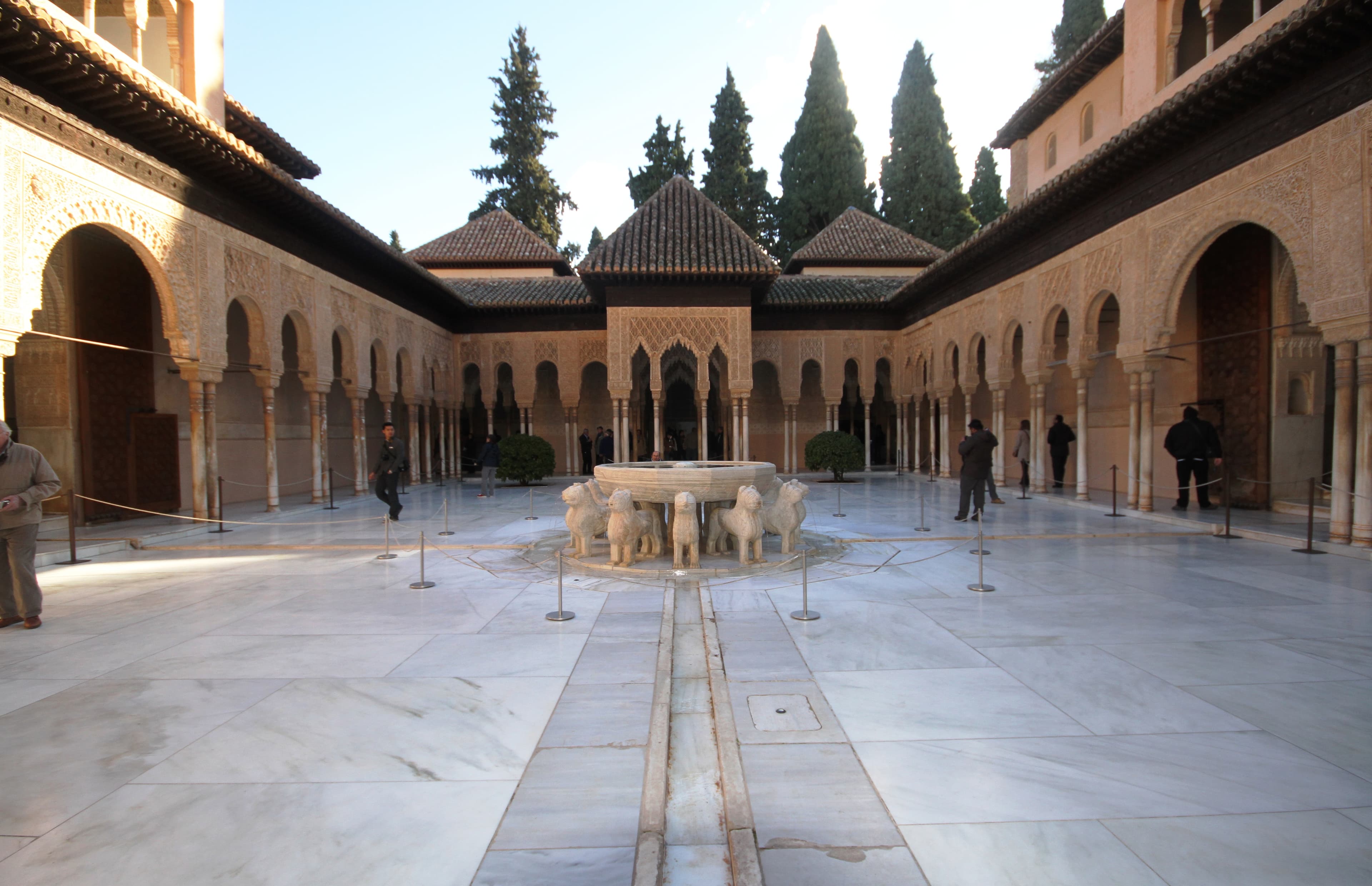
Nasrid palace-fortress of the kingdom of al-Andalus, taken by the Reyes Católicos in 1492 and declared a UNESCO World Heritage Site in 1984.
Who built it and when
The complex began in 1238, when Muhammad I ibn al-Ahmar, founder of the Nasrid dynasty, moved his court to the hill of the Sabika and raised the first fortress. The palaces we admire today are fourteenth-century works: Yusuf I (1333–1354) built the Tower and the Palacio de Comares, and his son Muhammad V completed the celebrated Patio de los Leones between 1362 and 1391, the pinnacle of Andalusian art. In 1492 the Reyes Católicos received the keys after Boabdil's surrender, and in the sixteenth century Carlos V added his Renaissance palace — square in plan with a circular courtyard — alongside the Nasrid halls.
What there is to see inside the complex
The visit is divided into four zones. The Alcazaba is the oldest military bastion, with the Torre de la Vela and views across the Albaicín and Sierra Nevada. The Palacios Nazaríes link the Mexuar, the Patio de Comares with its pool of myrtle reflections, and the Patio de los Leones, with its twelve-lion marble fountain and honeycomb muqarnas ceilings. The Partal offers terraced gardens and a portico mirrored in water. Beyond the main perimeter, the Generalife was the sultans' country retreat, with the Patio de la Acequia and its jets of water. Allow a good three hours to take it all in at a leisurely pace.
How to book tickets
The general admission ticket costs 22,27 € and covers the Alcazaba, Palacios Nazaríes and Generalife. When you buy, you choose a 30-minute entry window for the Palacios Nazaríes: this is the only strictly timed moment in the complex, and if you miss it you will be turned away without a refund. Tickets sell out weeks in advance, especially in spring and summer, so book ahead on the official site tickets.alhambra-patronato.es. Bring the ID or passport you used when purchasing, and arrive at the complex at least an hour before your allocated slot. The early morning hours offer better light and fewer crowds.
Frequently asked questions
Do you need to buy tickets in advance?
How long does a visit take?
Are there many slopes and steps?
Some links on this page are affiliate links: if you book through them, Andelaria may earn a commission at no extra cost to you. Transparency & affiliate policy
Book tickets and tours: La AlhambraPlan your trip
Book the essentials for your trip to Granada.
Other places in Granada
El Albaicín y el Mirador de San Nicolás
barrioFormer Moorish quarter of steep streets, a World Heritage Site since 1994, whose Mirador de San Nicolás offers the classic view of the Alhambra against Sierra Nevada.
Catedral de Granada y Capilla Real
catedralA Renaissance complex beside the Capilla Real, begun in 1505, which houses the tombs of the Reyes Católicos Isabel and Fernando.
Sacromonte
barrioA Romani quarter of whitewashed cave dwellings hewn into the hillside of the valle de Valparaíso, birthplace of zambra flamenco since the sixteenth century.
Jardines del Generalife
jardinSummer retreat of the Nasrid sultans, built in the early fourteenth century, whose Patio de la Acequia blends water, jets and gardens in perfect harmony.
Fiestas del Corpus de Granada
fiestaCorpus Christi is Granada's biggest festival: a full week of free fairground festivities centred on a Thursday with a moveable date (60 days after Easter, almost always between late May and early June). The procession of the Custodia, fairground casetas in Almanjáyar, the Tarasca figure and the satirical Carocas panels in Bib-Rambla.
Semana Santa de Granada
fiestaGranada's Semana Santa brings together 32 brotherhoods, 58 floats and more than 2,000 costaleros, and holds the title of Festival of International Tourist Interest. It is free and open to anyone on the street. Its hallmark is quiet devotion: the Silencio de la Madrugá moves through darkness to the beat of a single drum, with the Alhambra as a backdrop.
Festival Internacional de Música y Danza de Granada
fiestaFounded in 1952, the Granada International Festival of Music and Dance is one of the oldest classical music festivals in Europe. Every summer, between June and July, it stages classical music, flamenco, and dance at the Palacio de Carlos V and the Generalife, within the Alhambra. It is a ticketed event: entry must be purchased in advance.
Festival Internacional de Jazz de Granada
fiestaThe Granada International Jazz Festival, founded in 1980, is one of Europe's longest-running jazz festivals and the only Spanish member of the Europe Jazz Network. Each November it brings international artists to the Teatro Isabel la Católica, alongside over 70 free parallel concerts in bars and clubs. Main programme concerts are ticketed, sold per show.
Similar places in other cities
Torre de Belém
Lisboa16th-century Manueline fortified tower on the Tagus, a UNESCO World Heritage site and symbol of the Age of Discoveries.
Mosteiro dos Jerónimos
LisboaManueline-Gothic masterpiece in Belém, a UNESCO site, home to the cloister and the tomb of Vasco da Gama.
Castelo de São Jorge
LisboaMedieval castle atop the Alfama hill, with ramparts, peacocks and the finest panorama over the city and river.