Catedral de Granada y Capilla Real
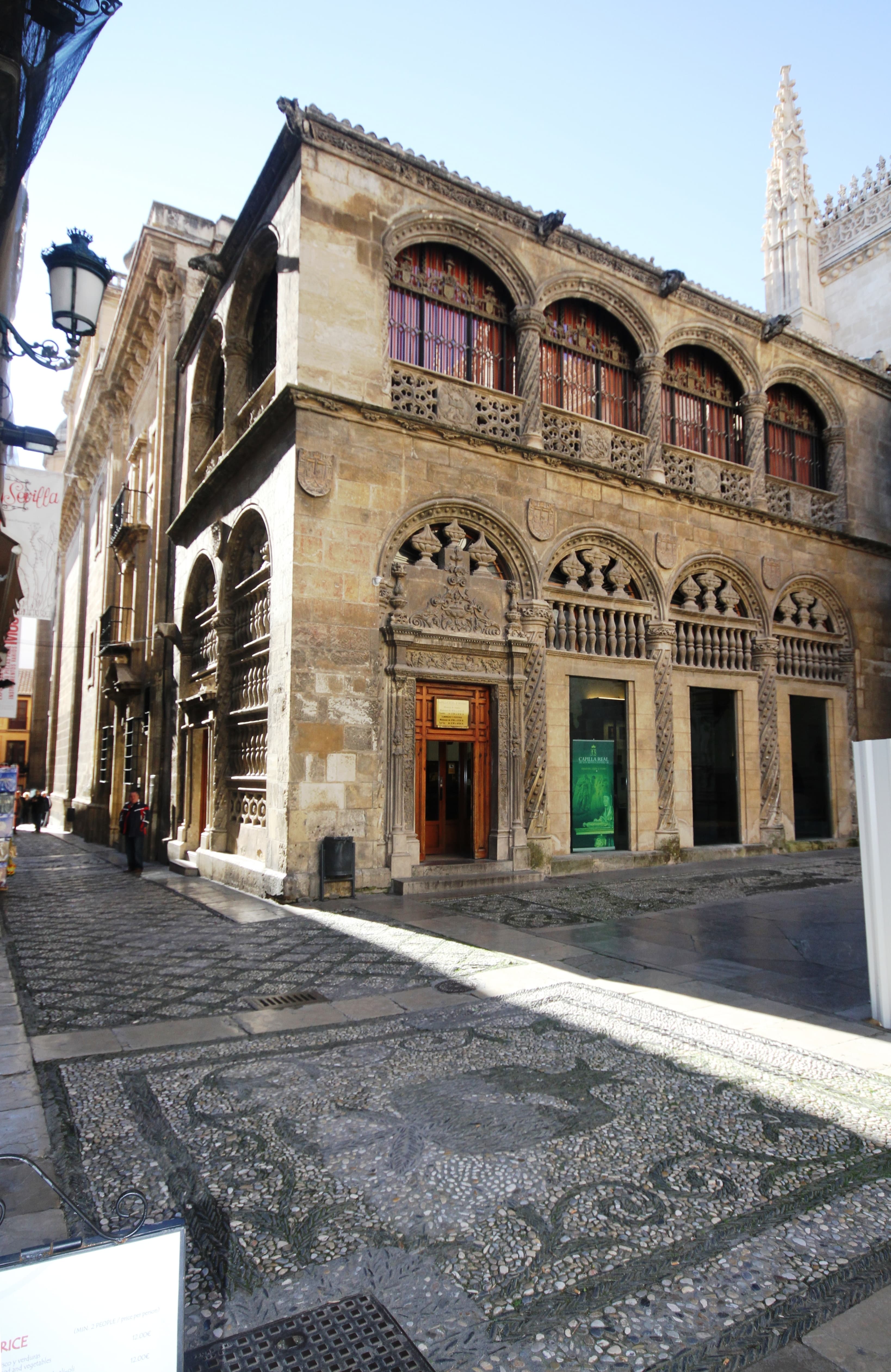
A Renaissance complex beside the Capilla Real, begun in 1505, which houses the tombs of the Reyes Católicos Isabel and Fernando.
Four centuries of construction and kings
The Capilla Real was born of a royal charter signed by the Reyes Católicos on 13 September 1504, and was built between 1505 and 1517 under Enrique Egas in a late-Gothic style with Renaissance touches. Alongside it, the Catedral de la Encarnación was begun in 1523 to an initially Gothic design by Egas that Diego de Siloé converted to full Renaissance from 1528 onwards, with a five-nave plan and an imposing circular Capilla Mayor. The main façade, with its Baroque lines, is the work of Alonso Cano, who was involved from 1667. Construction of the cathedral stretched over more than 180 years, which accounts for the mixture of architectural languages visible as you walk through it today.
Tombs, crypt and altarpieces
In the transept of the Capilla Real stand two pairs of Carrara marble tombs. The one of Isabel and Fernando was carved by the Italian Domenico Fancelli, considered his masterpiece; the tomb of Juana I and Felipe el Hermoso is the work of the Spaniard Bartolomé Ordóñez. Beneath them, in a plain crypt, lie five lead coffins containing the remains of both royal couples and the Infante Miguel de la Paz, grandson of the Reyes Católicos. The sacristy-museum holds Isabel's sceptre and crown, Fernando's sword, and Flemish panel paintings from the royal collection including works by Memling, Botticelli and Bouts. In the adjoining Cathedral, the height of the Capilla Mayor and the Baroque organ are particularly striking.
How to visit and ticket prices
The two monuments have separate entrances. The Capilla Real is entered from Calle Oficios, a pedestrianised street beside the old Lonja; the general admission costs around 7 euros, with a reduced rate of around 5 euros and free entry for children; a complimentary audio guide is available to download. It opens Monday to Saturday from 10:00 to 18:30, with reduced hours on Sundays. The Cathedral has its own separate admission of around 7 euros, rising to 10 euros during the Kerygma exhibition in 2026 (8 May to 28 November). Allow 60 to 90 minutes to see both spaces properly. The best time to visit is first thing in the morning, before tour groups arrive; photography of the tombs is not permitted. It is right in the city centre, a short walk from the Alcaicería and the Gran Vía.
Frequently asked questions
Is it necessary to book in advance?
How long do I need to see both monuments?
Is the visit accessible?
Some links on this page are affiliate links: if you book through them, Andelaria may earn a commission at no extra cost to you. Transparency & affiliate policy
Book tickets and tours: Catedral de Granada y Capilla RealPlan your trip
Book the essentials for your trip to Granada.
Other places in Granada
La Alhambra
monumentoNasrid palace-fortress of the kingdom of al-Andalus, taken by the Reyes Católicos in 1492 and declared a UNESCO World Heritage Site in 1984.
El Albaicín y el Mirador de San Nicolás
barrioFormer Moorish quarter of steep streets, a World Heritage Site since 1994, whose Mirador de San Nicolás offers the classic view of the Alhambra against Sierra Nevada.
Sacromonte
barrioA Romani quarter of whitewashed cave dwellings hewn into the hillside of the valle de Valparaíso, birthplace of zambra flamenco since the sixteenth century.
Jardines del Generalife
jardinSummer retreat of the Nasrid sultans, built in the early fourteenth century, whose Patio de la Acequia blends water, jets and gardens in perfect harmony.
Fiestas del Corpus de Granada
fiestaCorpus Christi is Granada's biggest festival: a full week of free fairground festivities centred on a Thursday with a moveable date (60 days after Easter, almost always between late May and early June). The procession of the Custodia, fairground casetas in Almanjáyar, the Tarasca figure and the satirical Carocas panels in Bib-Rambla.
Semana Santa de Granada
fiestaGranada's Semana Santa brings together 32 brotherhoods, 58 floats and more than 2,000 costaleros, and holds the title of Festival of International Tourist Interest. It is free and open to anyone on the street. Its hallmark is quiet devotion: the Silencio de la Madrugá moves through darkness to the beat of a single drum, with the Alhambra as a backdrop.
Festival Internacional de Música y Danza de Granada
fiestaFounded in 1952, the Granada International Festival of Music and Dance is one of the oldest classical music festivals in Europe. Every summer, between June and July, it stages classical music, flamenco, and dance at the Palacio de Carlos V and the Generalife, within the Alhambra. It is a ticketed event: entry must be purchased in advance.
Festival Internacional de Jazz de Granada
fiestaThe Granada International Jazz Festival, founded in 1980, is one of Europe's longest-running jazz festivals and the only Spanish member of the Europe Jazz Network. Each November it brings international artists to the Teatro Isabel la Católica, alongside over 70 free parallel concerts in bars and clubs. Main programme concerts are ticketed, sold per show.
Similar places in other cities
Catedral de la Encarnación (La Manquita)
MálagaA Renaissance cathedral begun in 1528 on the site of the former main mosque, with Gothic and Baroque touches. Málaga locals call it 'La Manquita' because its south tower was never finished; the north tower reaches 84 metres, the second tallest in Andalusia after the Giralda. Entrance: €6; with rooftop access: €10.
Mezquita-Catedral de Córdoba
CórdobaDeclared a UNESCO World Heritage Site, the Mosque-Cathedral is Córdoba's most iconic monument. Built from the year 786 onwards by Abd al-Rahman I on the site of a Visigoth basilica, it was for centuries the second-largest mosque in the world. Its forest of 856 two-tone columns of jasper and marble is an unforgettable sight.
Catedral de Sevilla y La Giralda
SevillaThe largest Gothic cathedral in the world and the third-largest church by floor area, built on the site of the former Almohad mosque. La Giralda, its 97-metre bell tower, is Seville's undisputed symbol. Inside lies the tomb of Christopher Columbus. The ticket includes access to the tower, which has no steps — only ramps.