Festival Internacional de Jazz de Granada
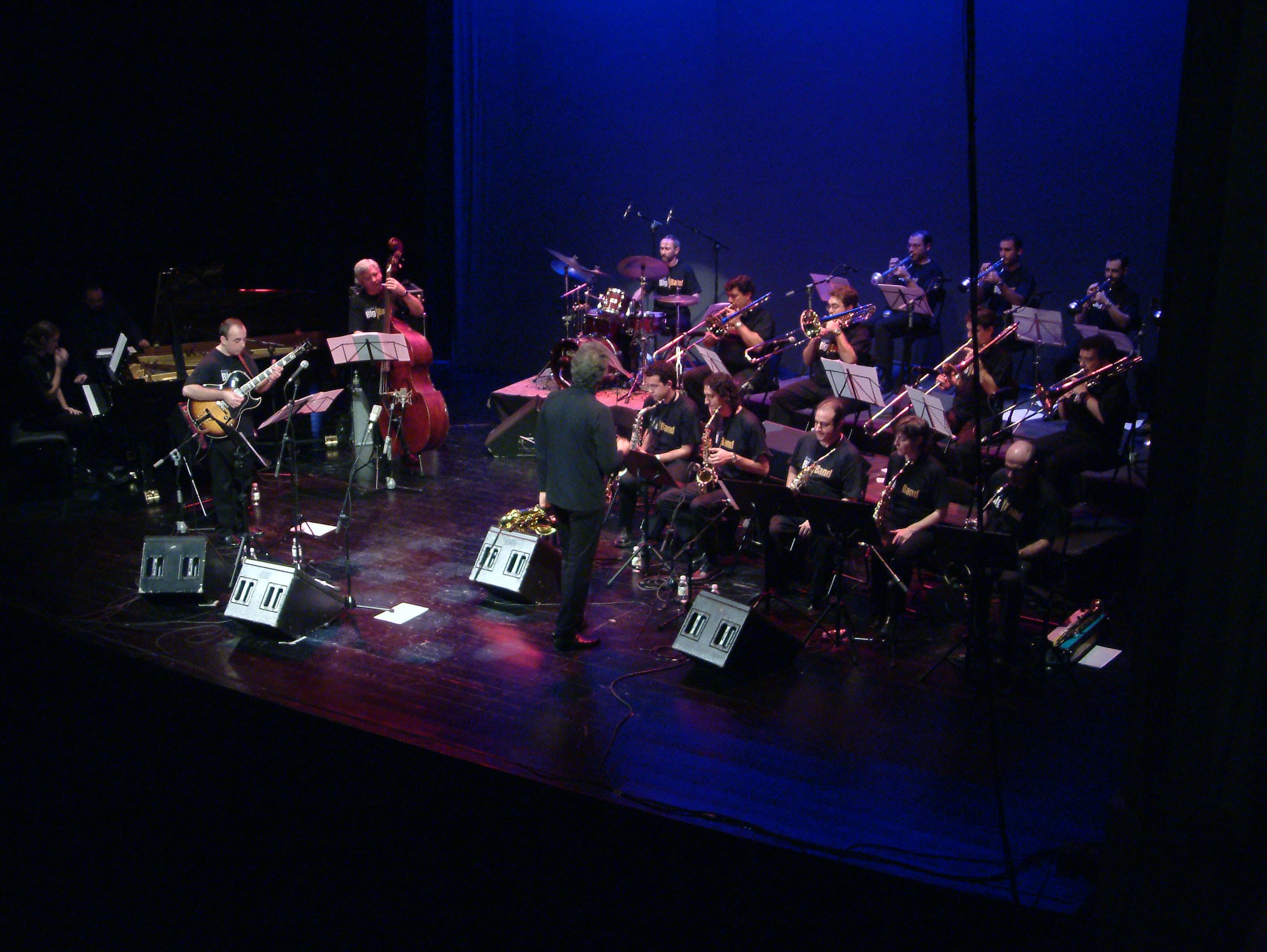
The Granada International Jazz Festival, founded in 1980, is one of Europe's longest-running jazz festivals and the only Spanish member of the Europe Jazz Network. Each November it brings international artists to the Teatro Isabel la Católica, alongside over 70 free parallel concerts in bars and clubs. Main programme concerts are ticketed, sold per show.
A veteran festival and its stages
It was born in 1980 under local promoter José Mª Ojeda, with barely three days of programming, and today it is one of the oldest jazz festivals in Europe and the only Spanish festival in the Europe Jazz Network. Since 2018 it has been directed by María José Huertas, the first woman to lead a jazz festival in Spain. The main stage is the Teatro Isabel la Católica, right in the city centre; the 44th edition (2024) added the Teatro de La Chumbera, in the Sacromonte, for the closing concert with the Alhambra as a backdrop. The festival has also used the metro as an unusual venue. Beyond the official programme, Granada has its own club scene: the historic reference is Eshavira (Calle Postigo de la Cuna 2, since 1989), a jazz and flamenco fusion venue that has hosted Enrique Morente, Jorge Pardo and Pepe Habichuela.
What you'll hear: from contemporary to fusion
The lineup blends contemporary jazz, fusion and classic styles, featuring both international and Spanish artists. In its largest editions (2005 and 2006) the festival stretched to 27 days and over 70 performances. The Teatro Isabel la Católica has welcomed top-tier names: in 1988, for example, the Oscar Peterson Trio, Miles Davis, the Chick Corea Electric Band and Paquito D'Rivera with Tete Montoliu all performed there. The 45th edition (2025) brought Tony Momrelle, Harold López-Nussa with Grégoire Maret, Brandee Younger, Jazzmeia Horn and the Richard Bona Asante Trio. Each year's lineup is announced around September at jazzengranada.es — don't rely on unofficial previews. Practical tip: main concerts usually start at 21:00 (doors at 20:30) and the venues are intimate; at the Teatro Isabel la Católica, the stalls offer better acoustics than the upper gallery.
Tickets and prices
The core programme is ticketed: Central Programme tickets are sold per show through Redentradas and the Teatro Isabel la Católica box office. As a historical reference (44th–45th editions, not confirmed prices for future editions), stalls seats were around €18, upper gallery I around €12 and upper gallery II around €10; a 'Stalls Pass' covering six concerts was also available. Check jazzengranada.es/venta-de-entradas for real prices and availability each year. Practical tip: the pass and concerts by better-known artists sell out fast — sometimes within days of going on sale — so buy as soon as the lineup drops. Also worth knowing: 'Jazz en Paralelo' (over 70 concerts in bars, clubs and public spaces) is entirely free. Travelling on a budget? You can experience almost the entire festival without paying, saving one or two main concerts as a treat.
Granada in November: weather and the Alhambra
November is low season and a great time to combine jazz and sightseeing without the crowds. Days are cool but pleasant (highs of 14–18 °C), though nights drop to 5–8 °C — pack layers and a compact umbrella, since it is one of the rainier months (52–80 mm, in short bursts rather than steady drizzle). The Alhambra opens on winter hours (08:30–18:00, last entry 17:00); the general adult ticket costs €22.27 (2026) and includes the Palacios Nazaríes, Alcazaba, Generalife and Partal. Practical tip: Palacios Nazaríes tickets sell out weeks in advance, so book at tickets.alhambra-patronato.es (the only official site; they charge ~6% online) well before your trip — do not leave it to the last minute even in low season. Night visits to the Generalife only run until 14 November. The nearest major airport is Málaga (AGP): about 1h30 by car via the A-92, or around 2 hours by direct ALSA bus.
Frequently asked questions
When does the Granada Jazz Festival take place?
Is the festival free?
How much do tickets cost?
Can I combine the festival with a visit to the Alhambra?
Some links on this page are affiliate links: if you book through them, Andelaria may earn a commission at no extra cost to you. Transparency & affiliate policy
Book tickets and tours: Festival Internacional de Jazz de GranadaPlan your trip
Book the essentials for your trip to Granada.
Other places in Granada
La Alhambra
monumentoNasrid palace-fortress of the kingdom of al-Andalus, taken by the Reyes Católicos in 1492 and declared a UNESCO World Heritage Site in 1984.
El Albaicín y el Mirador de San Nicolás
barrioFormer Moorish quarter of steep streets, a World Heritage Site since 1994, whose Mirador de San Nicolás offers the classic view of the Alhambra against Sierra Nevada.
Catedral de Granada y Capilla Real
catedralA Renaissance complex beside the Capilla Real, begun in 1505, which houses the tombs of the Reyes Católicos Isabel and Fernando.
Sacromonte
barrioA Romani quarter of whitewashed cave dwellings hewn into the hillside of the valle de Valparaíso, birthplace of zambra flamenco since the sixteenth century.
Jardines del Generalife
jardinSummer retreat of the Nasrid sultans, built in the early fourteenth century, whose Patio de la Acequia blends water, jets and gardens in perfect harmony.
Fiestas del Corpus de Granada
fiestaCorpus Christi is Granada's biggest festival: a full week of free fairground festivities centred on a Thursday with a moveable date (60 days after Easter, almost always between late May and early June). The procession of the Custodia, fairground casetas in Almanjáyar, the Tarasca figure and the satirical Carocas panels in Bib-Rambla.
Semana Santa de Granada
fiestaGranada's Semana Santa brings together 32 brotherhoods, 58 floats and more than 2,000 costaleros, and holds the title of Festival of International Tourist Interest. It is free and open to anyone on the street. Its hallmark is quiet devotion: the Silencio de la Madrugá moves through darkness to the beat of a single drum, with the Alhambra as a backdrop.
Festival Internacional de Música y Danza de Granada
fiestaFounded in 1952, the Granada International Festival of Music and Dance is one of the oldest classical music festivals in Europe. Every summer, between June and July, it stages classical music, flamenco, and dance at the Palacio de Carlos V and the Generalife, within the Alhambra. It is a ticketed event: entry must be purchased in advance.
Similar places in other cities
Semana Santa en Málaga
MálagaMálaga's Holy Week fills the historic centre with floats weighing up to 4,200 kg, carried by hundreds of men and women bearers. It is free and street-based: from Palm Sunday to Easter Sunday (in 2026, 29 March to 5 April). Its distinctive sound — bugles and drums — was born here in 1911.
Feria de Málaga (Feria de Agosto)
MálagaThe Feria de Málaga is actually two free fairs in one: the daytime fair in the city centre (Calle Larios, 12:00–18:00) and the nighttime fair at the Real del Cortijo de Torres, with around 120 casetas (marquees) with free entry. In 2026 it runs from 15 to 22 August, commemorating the entry of the Catholic Monarchs into Málaga in 1487.
Festival de Málaga — Cine en Español
MálagaThe Málaga Festival is Spain's leading Spanish-language film festival after San Sebastián. Its 29th edition ran from 6 to 15 March 2026 and drew around 111,000 attendees. It is a ticketed event: galas and screenings require a paid entry, except for the free summer programme Cine Abierto.