Barri Gòtic
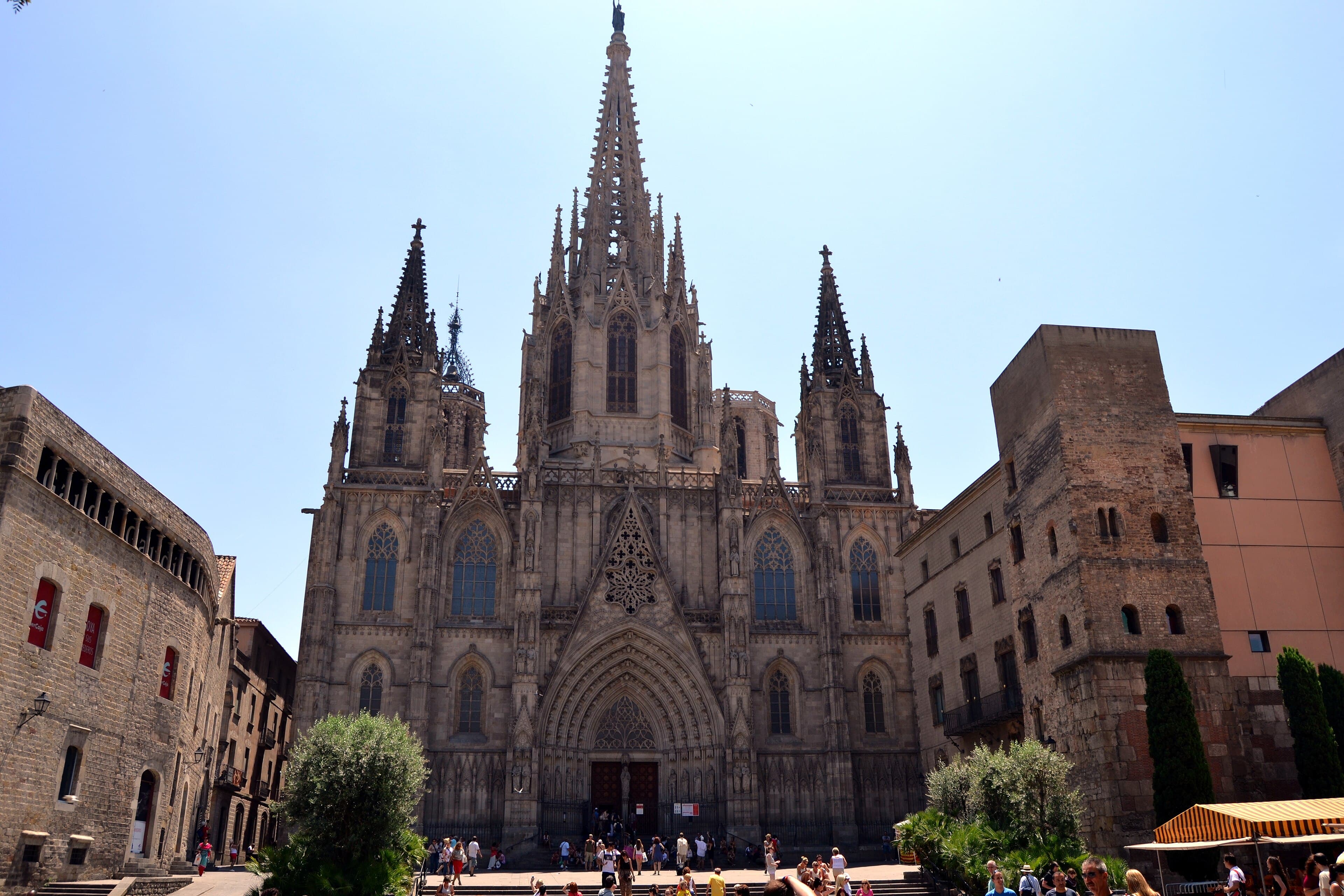
The medieval heart of the Ciutat Vella: stone alleys, the cathedral, remains of the Roman wall and hidden squares. The best place to get lost on foot in Barcelona.
What is the Barri Gòtic and why it's worth your time
The Barri Gòtic is Barcelona's old town, a labyrinth of alleyways built over the ancient Roman settlement of Barcino, founded around 10–15 BC. Walking its streets is free, 24 hours a day, year-round — there's no ticket booth for the neighbourhood itself. One thing almost nobody mentions: the name 'Barri Gòtic' is not medieval. Architect Adolfo Florensa coined it as a tourist slogan in the 1920s. In 1927 he himself catalogued just five genuinely Gothic structures in the entire district; between 1927 and 1970 neo-Gothic elements were added, façades were relocated from other parts of the city, and streets were pedestrianised to craft the 'medieval' image you see today. The iconic Pont del Bisbe, built in 1928, is entirely modern. Knowing this doesn't diminish the charm — it makes the neighbourhood more fascinating. Authentic remains are very much here: Roman wall fragments from the 1st century AD beside the Cathedral and at the Plaça de la Vila de Madrid, and the axis of the ancient forum at the Plaça de Sant Jaume.
Tickets, prices and how to skip the queues
The neighbourhood is free; its monuments are not. The Cathedral of Santa Creu i Santa Eulàlia offers FREE access to the nave and cloister during worship hours (Mon–Fri 08:30–12:30 and 18:00–19:30; Sat and Sun morning and afternoon), and a paid tourist visit covering the choir, chapter house and rooftop terrace at around €16 — check the exact price at tickets.catedralbcn.org before you go. The cloister is home to thirteen white geese symbolising the 13 years of Saint Eulalia's life. The MUHBA at Plaça del Rei (spectacular underground Roman ruins) costs €7 combined entry, €5 reduced, free for under-16s; it's free for everyone on the first Sunday of the month and on all other Sundays from 15:00. The Temple of Augustus with its four Roman columns is free; the Roman Funerary Way (Via Sepulcral Romana), €2; and the Basilica of Santa Maria del Pi, €8 (€6 reduced). In high season, book the Cathedral visit and MUHBA tickets on their official websites to skip the queue.
How to get there and tips from someone who's been
The quickest option is metro L4 (yellow line), Jaume I station, about 3 minutes from the heart of the neighbourhood. From La Rambla side you have Liceu (L3, green), and to the north Urquinaona (L1, red). By bus, the Via Laietana–Argenteria stop is 1 minute away, served by lines 47, 59, H14, H16, V15 and V17, and night buses N4, N8, N24 and N28. From Catalunya station (FGC and RENFE Rodalies) it's an 8-minute walk, and the neighbourhood borders Las Ramblas to the west. To dodge the crowds, go early (08:30–10:00): fewer people and beautiful morning light in the alleyways. Monday to Wednesday is much quieter; avoid Saturdays 11:00–14:00 and mid-morning cruise-ship hours in summer (10:00–13:00), as the port is just 5 minutes away. Two serious warnings: the Barri Gòtic tops Barcelona's pickpocket statistics, so wear your backpack on your front and keep valuables out of reach; and the cobbled streets are uneven for reduced mobility, although MUHBA and the Cathedral have accessible entrances.
Frequently asked questions
Is there an entrance fee for the Barri Gòtic?
How much time do I need to visit it?
What is the best time to avoid the crowds?
Some links on this page are affiliate links: if you book through them, Andelaria may earn a commission at no extra cost to you. Transparency & affiliate policy
Book tickets and tours: Barri GòticPlan your trip
Book the essentials for your trip to Barcelona.
Other places in Barcelona
Sagrada Família
monumentoGaudí's unfinished basilica, under construction since 1882 and a UNESCO World Heritage Site. Its forest of columns and coloured stained glass is a unique experience; book your ticket in advance.
Park Güell
parqueGaudí's modernista park on the Carmel hill, with the wavy trencadís-tiled bench terrace and views over the whole city. The monumental area has timed, capacity-limited tickets.
Casa Batlló
monumentoGaudí's most fantastical house on Passeig de Gràcia, with its bone-and-scale façade and a roof evoking the dragon of Saint George. A jewel of modernisme in the heart of the Eixample.
Mercat de la Boqueria
mercadoThe city's most famous market, just off the Rambla: stalls of fruit, ham, fish and bar counters for tapas. Crowded but authentic if you go early in the morning.
Montjuïc
miradorThe hill above the harbour, with its castle, gardens, the MNAC museum, the 1992 Olympic legacy and the Magic Fountain. The best lookout over the skyline and the sea at sunset.
La Barceloneta
playaThe old fishermen's quarter and its urban beach, the most central in the city. A seafront promenade, beach bars and rice dishes facing the Mediterranean, minutes from the Gothic Quarter.
Revetlla de Sant Joan
fiestaOn the night of June 23rd to 24th, Barcelona catches fire: more than 92,000 people packed the beaches in 2025 (Guàrdia Urbana). Free street parties across all ten districts, coca de Sant Joan, cava, firecrackers and the Flama del Canigó brought down from the Pyrenees. June 24th is a public holiday throughout Catalonia. Here's how to enjoy it without nasty surprises.
Primavera Sound
fiestaPrimavera Sound is a paid mega-festival that fills Barcelona's Parc del Fòrum in early June. Founded in 2001, it now draws around 75,000 people a day with an international lineup of indie, electronic, hip hop and pop. It isn't free: you get in with a full pass or a day ticket, and it usually sells out months ahead.
Festa Major de Gràcia
fiestaThe Festa Major de Gràcia is Barcelona's most iconic neighbourhood festival — and it's completely free. From 15 to 21 August 2026 (with the pregó on Friday 14), 23 streets in the barrio compete with themed decorations that local residents spend months building from recycled materials. Over 600 free activities: concerts, castells, correfoc and gegants.
Santa Eulàlia
fiestaSanta Eulàlia, co-patron of Barcelona alongside the Mare de Déu de la Mercè, gives her name to the city's winter festa major: four days around 12 February with gegants, castells, correfoc and sardanes in the Barri Gòtic. Nearly a hundred events, all free and open to the public, and far less crowded than La Mercè.
Sónar
fiestaSónar is Barcelona's electronic music and multimedia art festival, founded in 1994 and now a global benchmark with over 30 editions. It is a ticketed event held normally in mid-June, combining live performances, DJ sets, installations, and the technology congress Sónar+D. Dates and lineups are announced each year at sonar.es.
La Mercè
fiestaLa Mercè is Barcelona's greatest festival, centred around 24 September (a local public holiday). Five days, over 500 free and open-access events: castellers, gegants, correfoc, concerts and a closing piromusical. Everything happens in the street, no tickets required. Check dates and the line-up for the next edition at barcelona.cat/lamerce.
Similar places in other cities
El Serrallo
TarragonaFishermen's quarter with the best seafood and the afternoon fish auction.
El Call (barrio judío)
GironaOne of the best-preserved medieval Jewish quarters in Europe: very narrow stone alleys and the Museum of Jewish History.
Barrio del Carmen
ValenciaThe medieval heart of Valencia, with streets dating back to Roman and medieval times, Arab towers such as the Torres de Quart and Torres de Serranos, art galleries and tapas bars. It's the epicentre of Valencian street art and the city's liveliest neighbourhood after dark, buzzing from the afternoon right through to dawn.