Casa Batlló
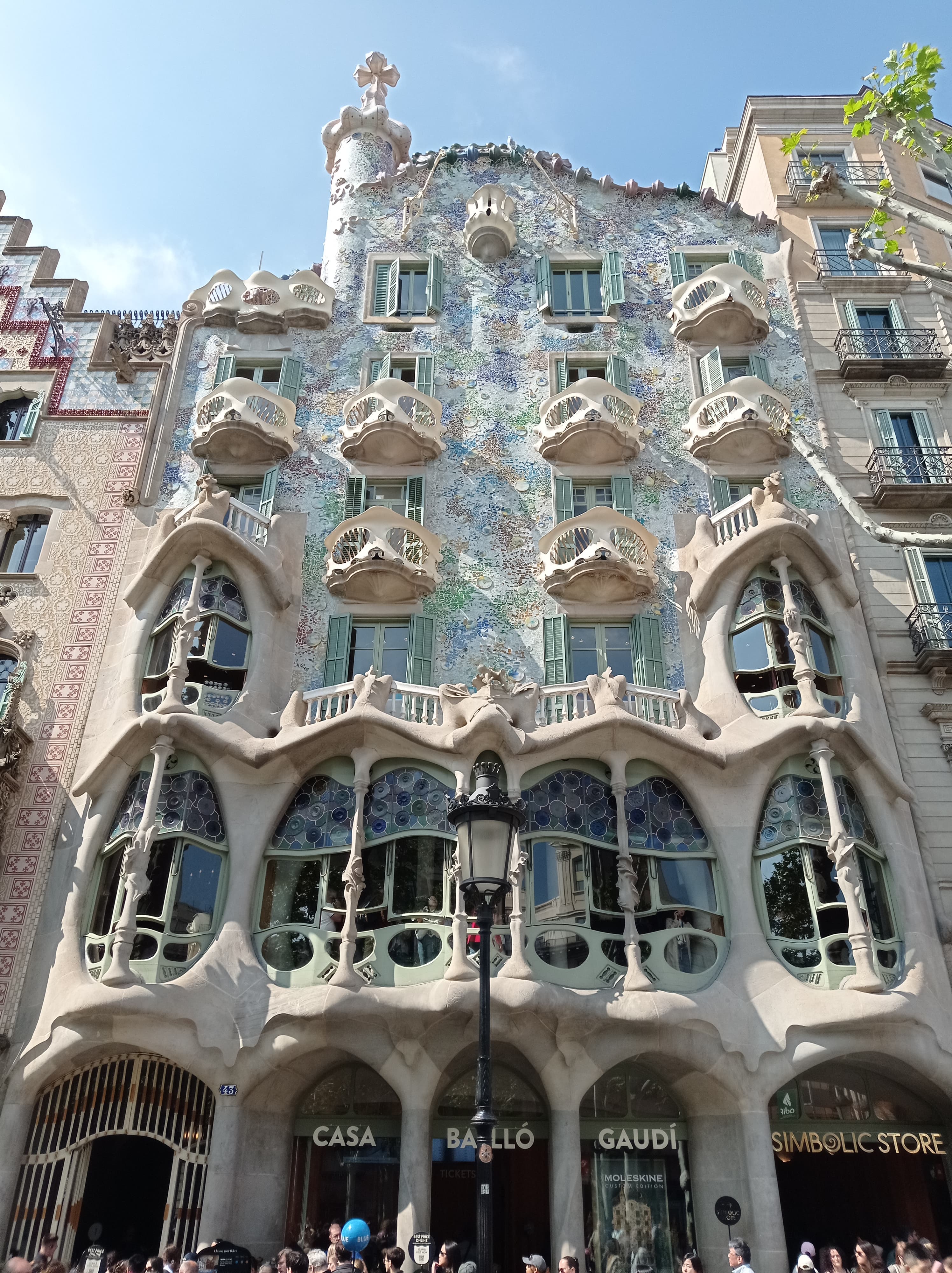
Gaudí's most fantastical house on Passeig de Gràcia, with its bone-and-scale façade and a roof evoking the dragon of Saint George. A jewel of modernisme in the heart of the Eixample.
The essentials
- Tickets
- desde 25 €
A remodel, not a new build
Casa Batlló wasn't built from scratch: between 1904 and 1906 Gaudí reworked an 1877 building that already stood on the plot. The client was Josep Batlló, a textile industrialist who at first wanted to knock it down and in the end settled for a full overhaul. Gaudí tore out the whole ground floor, widened the light well, added a top floor for the laundry rooms and rebuilt the façade and the roof, while the Batlló family kept living on the noble floor. The result is 32 metres tall, six storeys, at number 43 of Passeig de Gràcia. UNESCO listed it as a World Heritage Site in 1984.
Bones, scales and a dragon on the roof
The façade is what stops everyone on the pavement. The columns and balconies are shaped like bones —which is why locals call it «la casa dels ossos», the house of bones— and the wall is clad in trencadís and ceramic discs that change tone as the sun moves, with a ripple Gaudí shaped by hand until it reminded him of the sea. The noble-floor gallery rises ten metres, with five stained-glass bays held up by eight bone-like columns. Up top, the roof is a scaled vault mimicking a dragon's back, pierced by the four-armed cross: the usual reading is the legend of Saint George driving his lance into the beast. Inside, the staircase climbs like a spine and the light well is tiled in blues that lighten from top to bottom, so the daylight reaches every floor evenly.
Price, hours and tickets
Entry is by timed ticket bought online only, with several tiers depending on what's included. The general visit with audioguide is around €29; the packages adding the rooftop, private rooms or skip-the-line access climb past €50. Children up to 12 enter free, and buying ahead is cheaper than at the door. The house opens every day from 9:00 to 22:30, with a daytime visit and also a night version in summer. Since fares and slots are adjusted by season, confirm them at casabatllo.es before you go (official site, checked in 2026).
When to go and what to pair it with
We recommend the first morning slot or the night visit: mid-afternoon is when it fills up most and it's hard to shoot photos without people in the frame. The house sits on the same side of Passeig de Gràcia as Casa Amatller, right next door, and five minutes' walk from La Pedrera, so the Eixample modernisme works well as one morning on foot; book all three with separate times, since all run on limited capacity. One honest note: the façade is free to enjoy from the street, and if you only want the photo you don't need a ticket. But the light well and the dragon roof are only seen from inside.
Frequently asked questions
How much does a ticket to Casa Batlló cost?
What are Casa Batlló's opening hours?
How long does it take to visit Casa Batlló?
Do I need to book the ticket online?
How do I get to Casa Batlló by metro?
Some links on this page are affiliate links: if you book through them, Andelaria may earn a commission at no extra cost to you. Transparency & affiliate policy
Book tickets and tours: Casa Batlló· desde 25 €Plan your trip
Book the essentials for your trip to Barcelona.
Other places in Barcelona
Sagrada Família
monumentoGaudí's unfinished basilica, under construction since 1882 and a UNESCO World Heritage Site. Its forest of columns and coloured stained glass is a unique experience; book your ticket in advance.
Park Güell
parqueGaudí's modernista park on the Carmel hill, with the wavy trencadís-tiled bench terrace and views over the whole city. The monumental area has timed, capacity-limited tickets.
Barri Gòtic
barrioThe medieval heart of the Ciutat Vella: stone alleys, the cathedral, remains of the Roman wall and hidden squares. The best place to get lost on foot in Barcelona.
Mercat de la Boqueria
mercadoThe city's most famous market, just off the Rambla: stalls of fruit, ham, fish and bar counters for tapas. Crowded but authentic if you go early in the morning.
Montjuïc
miradorThe hill above the harbour, with its castle, gardens, the MNAC museum, the 1992 Olympic legacy and the Magic Fountain. The best lookout over the skyline and the sea at sunset.
La Barceloneta
playaThe old fishermen's quarter and its urban beach, the most central in the city. A seafront promenade, beach bars and rice dishes facing the Mediterranean, minutes from the Gothic Quarter.
Revetlla de Sant Joan
fiestaOn the night of June 23rd to 24th, Barcelona catches fire: more than 92,000 people packed the beaches in 2025 (Guàrdia Urbana). Free street parties across all ten districts, coca de Sant Joan, cava, firecrackers and the Flama del Canigó brought down from the Pyrenees. June 24th is a public holiday throughout Catalonia. Here's how to enjoy it without nasty surprises.
Primavera Sound
fiestaPrimavera Sound is a paid mega-festival that fills Barcelona's Parc del Fòrum in early June. Founded in 2001, it now draws around 75,000 people a day with an international lineup of indie, electronic, hip hop and pop. It isn't free: you get in with a full pass or a day ticket, and it usually sells out months ahead.
Festa Major de Gràcia
fiestaThe Festa Major de Gràcia is Barcelona's most iconic neighbourhood festival — and it's completely free. From 15 to 21 August 2026 (with the pregó on Friday 14), 23 streets in the barrio compete with themed decorations that local residents spend months building from recycled materials. Over 600 free activities: concerts, castells, correfoc and gegants.
Santa Eulàlia
fiestaSanta Eulàlia, co-patron of Barcelona alongside the Mare de Déu de la Mercè, gives her name to the city's winter festa major: four days around 12 February with gegants, castells, correfoc and sardanes in the Barri Gòtic. Nearly a hundred events, all free and open to the public, and far less crowded than La Mercè.
Sónar
fiestaSónar is Barcelona's electronic music and multimedia art festival, founded in 1994 and now a global benchmark with over 30 editions. It is a ticketed event held normally in mid-June, combining live performances, DJ sets, installations, and the technology congress Sónar+D. Dates and lineups are announced each year at sonar.es.
La Mercè
fiestaLa Mercè is Barcelona's greatest festival, centred around 24 September (a local public holiday). Five days, over 500 free and open-access events: castellers, gegants, correfoc, concerts and a closing piromusical. Everything happens in the street, no tickets required. Check dates and the line-up for the next edition at barcelona.cat/lamerce.
Similar places in other cities
Església de Sant Bartomeu i Santa Tecla
SitgesThe church on the rock between two beaches, the symbol of Sitges.
Palau de Maricel
SitgesSeafront Noucentista palace with decorated halls and Mediterranean views, a venue for concerts and weddings.
Anfiteatro Romano de Tarragona
Tarragona2nd-century seafront amphitheatre where bishop Fructuós was martyred in 259.