Sónar
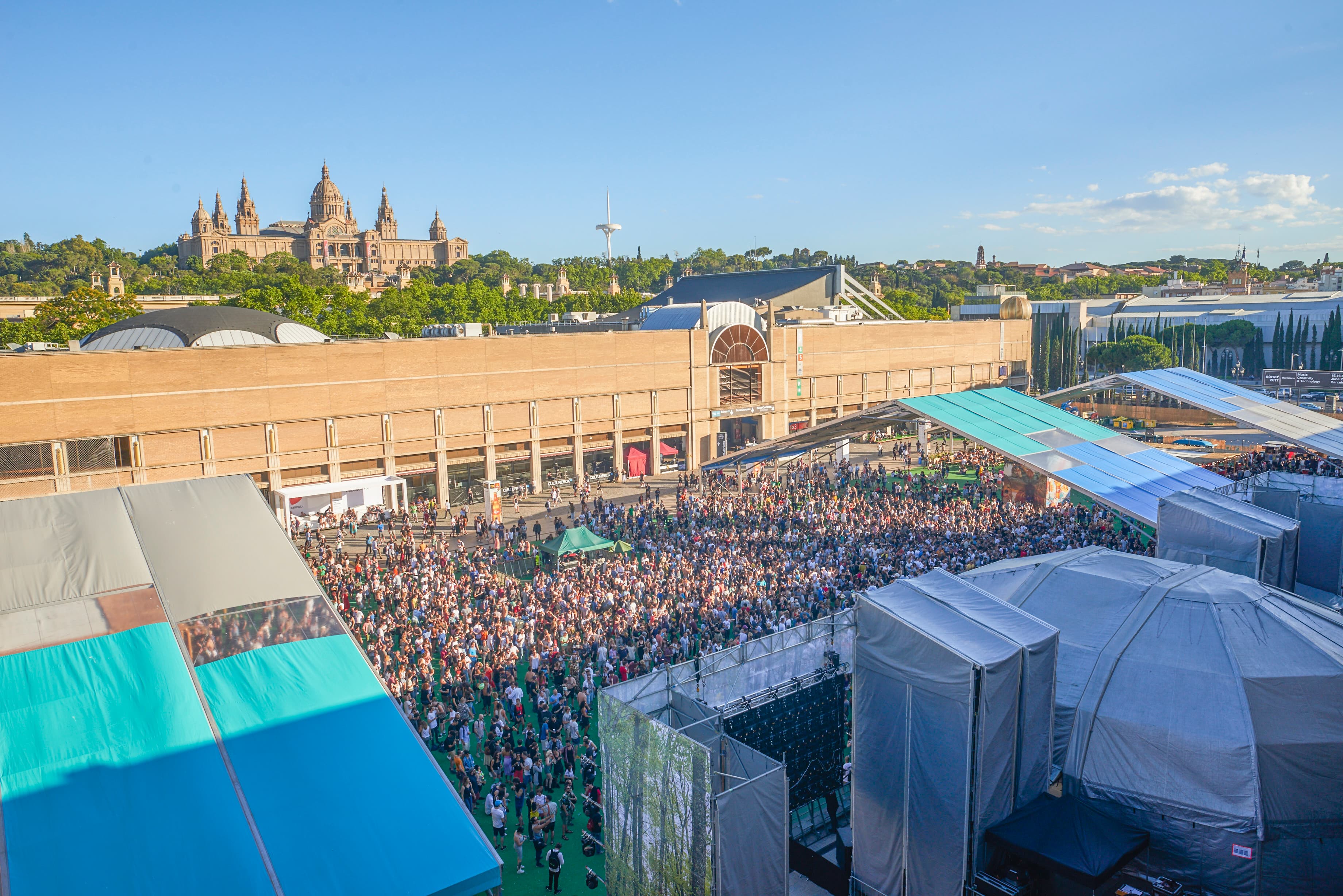
Sónar is Barcelona's electronic music and multimedia art festival, founded in 1994 and now a global benchmark with over 30 editions. It is a ticketed event held normally in mid-June, combining live performances, DJ sets, installations, and the technology congress Sónar+D. Dates and lineups are announced each year at sonar.es.
What it is and where it comes from
Sónar was born in Barcelona in June 1994, founded by Ricard Robles, Enric Palau and Sergi Caballero under the official name Festival Internacional de Música Avanzada y Arte Multimedia. That first edition, split between the CCCB and Sala Apolo, drew around 6,000 people and featured artists such as Laurent Garnier, Sven Väth and Holger Czukay. Since then it has never stopped growing: in 2025 it broke records with 161,000 attendees across Sónar Week. It is electronic music, yes — but with an experimental, discovery-driven edge that sets it apart from a straight-up club festival. The model has been exported to more than 100 international editions across 34 cities, from Tokyo to Reykjavik. Key tip: don't come expecting only big hits; some of the most interesting moments happen in rare live sets and emerging acts you won't find on any other bill.
Format, stages and Sónar+D
Historically Sónar split into two blocks: Sónar by Day (showcases, installations, emerging talent, a relaxed and cultural atmosphere) and Sónar by Night (major headliners in techno, house and bass until dawn, with spectacular production). Worth noting: from 2026 that format changes — both blocks merge into a single venue with a continuous session — so check the structure for your year at sonar.es. Stages typically include SonarVillage, SonarHall, SonarClub, SonarLab, SonarPark and the circular SonarCar, each with its own character. Running alongside is Sónar+D, the creativity, technology and AI congress featuring talks, workshops and installations, which requires a separate ticket. Key tip: the night programme is intense and long — pace yourself, stay hydrated and don't try to see everything. If the experimental side is what draws you, the daytime block and Sónar+D deliver more with far less crowd pressure.
Tickets, dates and venues
Sónar is a ticketed event: you need a pass to enter the site and there is no free access. It is normally held in mid-June across roughly three days (Thursday to Saturday). Historically it used two venues — Fira Montjuïc for the day and Fira Gran Via in L'Hospitalet de Llobregat for the night — although from 2026 the festival consolidates into a single site at Fira Gran Via; always verify the current venue before making plans. Multi-day passes and single-day tickets are available, with pricing that varies by edition, plus a separate ticket for Sónar+D. Exact dates, the full lineup and official pricing are published each year at sonar.es, its only reliable source. Key tip: buy only through sonar.es or authorised sales points — resale on social media is a minefield for scams. And book early: ticket prices usually rise in tiers as the lineup is revealed.
Getting there and practical tips
Take the metro and leave the car behind. For Fira Gran Via (L'Hospitalet), your reference is the L9 Sud line: the Fira and Europa|Fira stops put you a couple of minutes from the entrance, and the L9 connects directly to the airport with no transfers. For the former Montjuïc venue, access was via Espanya (L1/L3). Key tip on the way back: late at night, taxis and rideshares are nearly impossible to find due to simultaneous demand, so rely on the metro and check its real timetable on the TMB website for each day — Saturday nights usually run continuously, but on weekdays services end earlier. On accommodation: during Sónar Week the city fills up and prices spike, so book months in advance. And always check the re-entry policy and the venue's payment system on the official website, as both can change from one edition to the next.
Frequently asked questions
Is Sónar free to attend?
When does Sónar take place?
What is the difference between Sónar by Day and Sónar by Night?
How do I get to the venue and get back late at night?
Some links on this page are affiliate links: if you book through them, Andelaria may earn a commission at no extra cost to you. Transparency & affiliate policy
Book tickets and tours: SónarPlan your trip
Book the essentials for your trip to Barcelona.
Other places in Barcelona
Sagrada Família
monumentoGaudí's unfinished basilica, under construction since 1882 and a UNESCO World Heritage Site. Its forest of columns and coloured stained glass is a unique experience; book your ticket in advance.
Park Güell
parqueGaudí's modernista park on the Carmel hill, with the wavy trencadís-tiled bench terrace and views over the whole city. The monumental area has timed, capacity-limited tickets.
Casa Batlló
monumentoGaudí's most fantastical house on Passeig de Gràcia, with its bone-and-scale façade and a roof evoking the dragon of Saint George. A jewel of modernisme in the heart of the Eixample.
Barri Gòtic
barrioThe medieval heart of the Ciutat Vella: stone alleys, the cathedral, remains of the Roman wall and hidden squares. The best place to get lost on foot in Barcelona.
Mercat de la Boqueria
mercadoThe city's most famous market, just off the Rambla: stalls of fruit, ham, fish and bar counters for tapas. Crowded but authentic if you go early in the morning.
Montjuïc
miradorThe hill above the harbour, with its castle, gardens, the MNAC museum, the 1992 Olympic legacy and the Magic Fountain. The best lookout over the skyline and the sea at sunset.
La Barceloneta
playaThe old fishermen's quarter and its urban beach, the most central in the city. A seafront promenade, beach bars and rice dishes facing the Mediterranean, minutes from the Gothic Quarter.
Revetlla de Sant Joan
fiestaOn the night of June 23rd to 24th, Barcelona catches fire: more than 92,000 people packed the beaches in 2025 (Guàrdia Urbana). Free street parties across all ten districts, coca de Sant Joan, cava, firecrackers and the Flama del Canigó brought down from the Pyrenees. June 24th is a public holiday throughout Catalonia. Here's how to enjoy it without nasty surprises.
Primavera Sound
fiestaPrimavera Sound is a paid mega-festival that fills Barcelona's Parc del Fòrum in early June. Founded in 2001, it now draws around 75,000 people a day with an international lineup of indie, electronic, hip hop and pop. It isn't free: you get in with a full pass or a day ticket, and it usually sells out months ahead.
Festa Major de Gràcia
fiestaThe Festa Major de Gràcia is Barcelona's most iconic neighbourhood festival — and it's completely free. From 15 to 21 August 2026 (with the pregó on Friday 14), 23 streets in the barrio compete with themed decorations that local residents spend months building from recycled materials. Over 600 free activities: concerts, castells, correfoc and gegants.
Santa Eulàlia
fiestaSanta Eulàlia, co-patron of Barcelona alongside the Mare de Déu de la Mercè, gives her name to the city's winter festa major: four days around 12 February with gegants, castells, correfoc and sardanes in the Barri Gòtic. Nearly a hundred events, all free and open to the public, and far less crowded than La Mercè.
La Mercè
fiestaLa Mercè is Barcelona's greatest festival, centred around 24 September (a local public holiday). Five days, over 500 free and open-access events: castellers, gegants, correfoc, concerts and a closing piromusical. Everything happens in the street, no tickets required. Check dates and the line-up for the next edition at barcelona.cat/lamerce.
Similar places in other cities
Revetlla de Sant Joan
SitgesThe Revetlla de Sant Joan is the free, open-access midsummer fire festival on the night of 23–24 June (the 24th is a public holiday throughout Catalonia). In Sitges it unfolds on the beaches, with the Flama del Canigó, coca de Sant Joan, cava and firecrackers until dawn.
Carnaval de Sitges
SitgesThe Carnaval de Sitges is the town's biggest street party: free, open to all, and drawing over 200,000 visitors (municipal figure). Documented since 1586 and revived in 1976, it is today Catalonia's most internationally recognised carnival, featuring two nocturnal rúas, a drag gala, and an unmistakable LGBTQ+ spirit.
Festival de Cine Fantástico de Sitges
SitgesThe Sitges Film Festival is the world's oldest fantastic film festival (since 1968) and a global benchmark for the genre alongside Fantasia and Fantastic Fest. Ten days in October with over 200 horror, fantasy and science fiction films. Screenings are ticketed: individual tickets and passes available on the official website.