El Call (barrio judío)
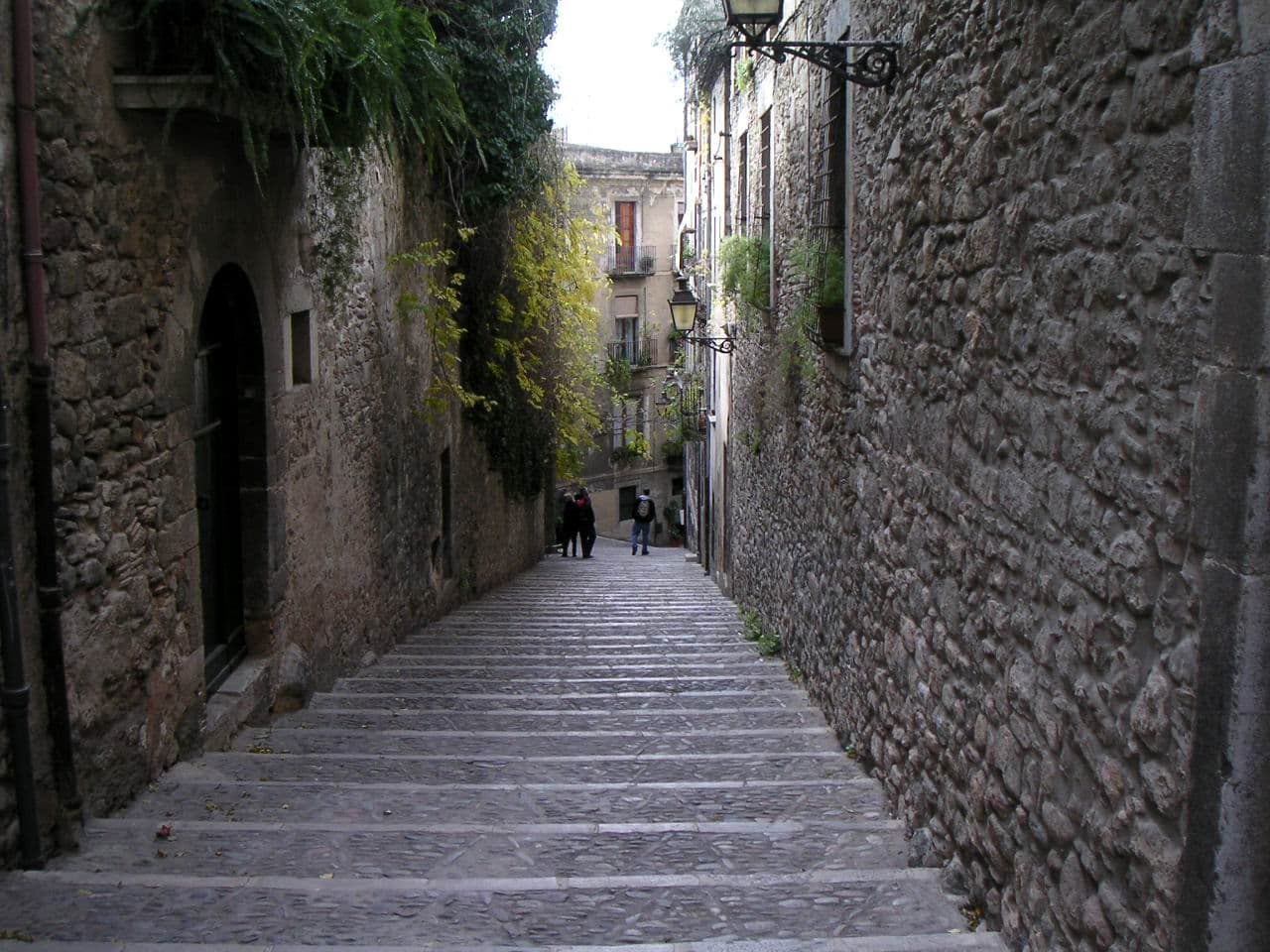
One of the best-preserved medieval Jewish quarters in Europe: very narrow stone alleys and the Museum of Jewish History.
The essentials
- Tickets
- barrio gratis · museo desde 4 €
A Jewish quarter twelve centuries old around Carrer de la Força
A document from the year 888 already records around 25 Jewish families living in Girona. Three centuries later, by the 12th century, the community numbered close to 800 people clustered around Carrer de la Força, the old Roman road that crosses the old town beside the cathedral. From this core came figures such as the physician and Kabbalist Moses ben Nahman —Nahmanides—, born in the city around 1194. The Catalan word "call", from the Hebrew kahal (community), is the one used here to name the quarter.
Stone alleys and the Museum of Jewish History
What you walk today is a web of very narrow alleys, stone staircases and courtyards that barely let the light through; that is why the series Game of Thrones filmed Arya Stark's chases through the streets of Braavos here in its sixth season. The interpretation centre is the Museu d'Història dels Jueus, at Carrer de la Força 8, inside a former synagogue. Its rooms explain the life of the community, the trades, Girona's Kabbalah and the expulsion of 1492. You don't need to enter the museum to see the quarter: wandering the alleys is free and open at any hour.
Hours, price and how to get there
Walking the quarter is free; you only pay if you enter the museum. According to the official site (girona.cat/call, consulted in 2026), general admission is around €4–6 and the reduced rate €2–3, with free entry on the first Sunday of each month and for under-16s. The museum opens Tuesday to Saturday 10am–6pm (until 7pm in July and August) and Mondays, Sundays and holidays 10am–2pm, with last entry 30 minutes before closing; it shuts on 1 and 6 January and 25 and 26 December. As fares and hours change, confirm them at girona.cat/call before you go. You get there on foot only: the Call sits inside the old town, about a ten-minute walk from Girona station across the Onyar.
Our tip and what to combine it with
We recommend going first thing in the morning or late in the afternoon: at midday the narrowest alleys fill with tour groups and it gets hard to move, and the low light of early and late hours brings out the stone better. The Call sits right beside Girona Cathedral and the Banys Àrabs, so the sensible thing is to string the three together in one morning, as they are a few minutes apart on foot. A tip for getting pleasantly lost: Carrer de Sant Llorenç, one of the most photographed covered streets in the quarter, branches off Carrer de la Força.
Frequently asked questions
How much does it cost to visit Girona's Call?
What are the opening hours of the Museu d'Història dels Jueus?
How long does it take to see the Call?
Where is the Call and how do you get there?
Some links on this page are affiliate links: if you book through them, Andelaria may earn a commission at no extra cost to you. Transparency & affiliate policy
Book tickets and tours: El Call (barrio judío)· barrio gratis · museo desde 4 €Plan your trip
Book the essentials for your trip to Girona.
Other places in Girona
Catedral de Girona (Santa María)
monumentoThe cathedral with the widest Gothic nave in the world, atop 90 Baroque steps. Inside, the famous 11th-century Tapestry of Creation.
Banys Àrabs
monumentoDespite the name, these are 12th-century Romanesque baths inspired by hammams. The cold room with its domed octagonal lantern is the most photographed.
Cases de l'Onyar i Pont de les Peixateries Velles
puenteThe colourful houses over the river and the red iron bridge built by Eiffel's firm in 1877. Girona's definitive postcard view.
Basílica de Sant Feliu
monumentoRomanesque-Gothic church with a bell tower truncated by lightning, the tallest in the city. It holds Roman early-Christian sarcophagi.
Passeig de la Muralla
miradorFree walk along the top of the old Carolingian walls, with towers to climb and the best views over the rooftops and surrounding hills.
Revetlla de Sant Joan
fiestaThe Nit de Sant Joan is free and open to all, lighting up Girona on the night of 23–24 June (the 24th is a public holiday across Catalonia). Bonfires blaze in neighbourhoods and squares, the Flama del Canigó arrives at the Plaça del Vi, and coca and cava fill the tables: an inland midsummer festival, no beach, right beside the Onyar.
Temps de Flors
fiestaEvery May, Girona's Barri Vell becomes an ephemeral garden: Temps de Flors fills more than 100 spaces across the medieval old town — the cathedral, the Arab baths, private courtyards that only open for the occasion — with around 140 floral installations. Nine days, free admission, and over 400,000 visitors at the last edition.
Fires de Sant Narcís
fiestaThe Fires de Sant Narcís are Girona's Festa Major: roughly ten days in late October, around the 29th, with over 200 free events. Documented since the 14th century, it is the oldest fair in Catalonia, featuring the famous fira d'atraccions in the Parc de la Devesa and the old town spilling out into the streets.
Navidad en Girona
fiestaDecember turns Girona into one of Catalonia's most beautiful postcards: the Barri Vell and the bridges over the Onyar are lit up from late November, there's a free Christmas market in the Plaça de la Independència, and the Cathedral can be visited without queues — all with tourism at its lowest and crisp, dry cold.
Similar places in other cities
Barri Gòtic
BarcelonaThe medieval heart of the Ciutat Vella: stone alleys, the cathedral, remains of the Roman wall and hidden squares. The best place to get lost on foot in Barcelona.
El Serrallo
TarragonaFishermen's quarter with the best seafood and the afternoon fish auction.
Barrio del Carmen
ValenciaThe medieval heart of Valencia, with streets dating back to Roman and medieval times, Arab towers such as the Torres de Quart and Torres de Serranos, art galleries and tapas bars. It's the epicentre of Valencian street art and the city's liveliest neighbourhood after dark, buzzing from the afternoon right through to dawn.