Revetlla de Sant Joan
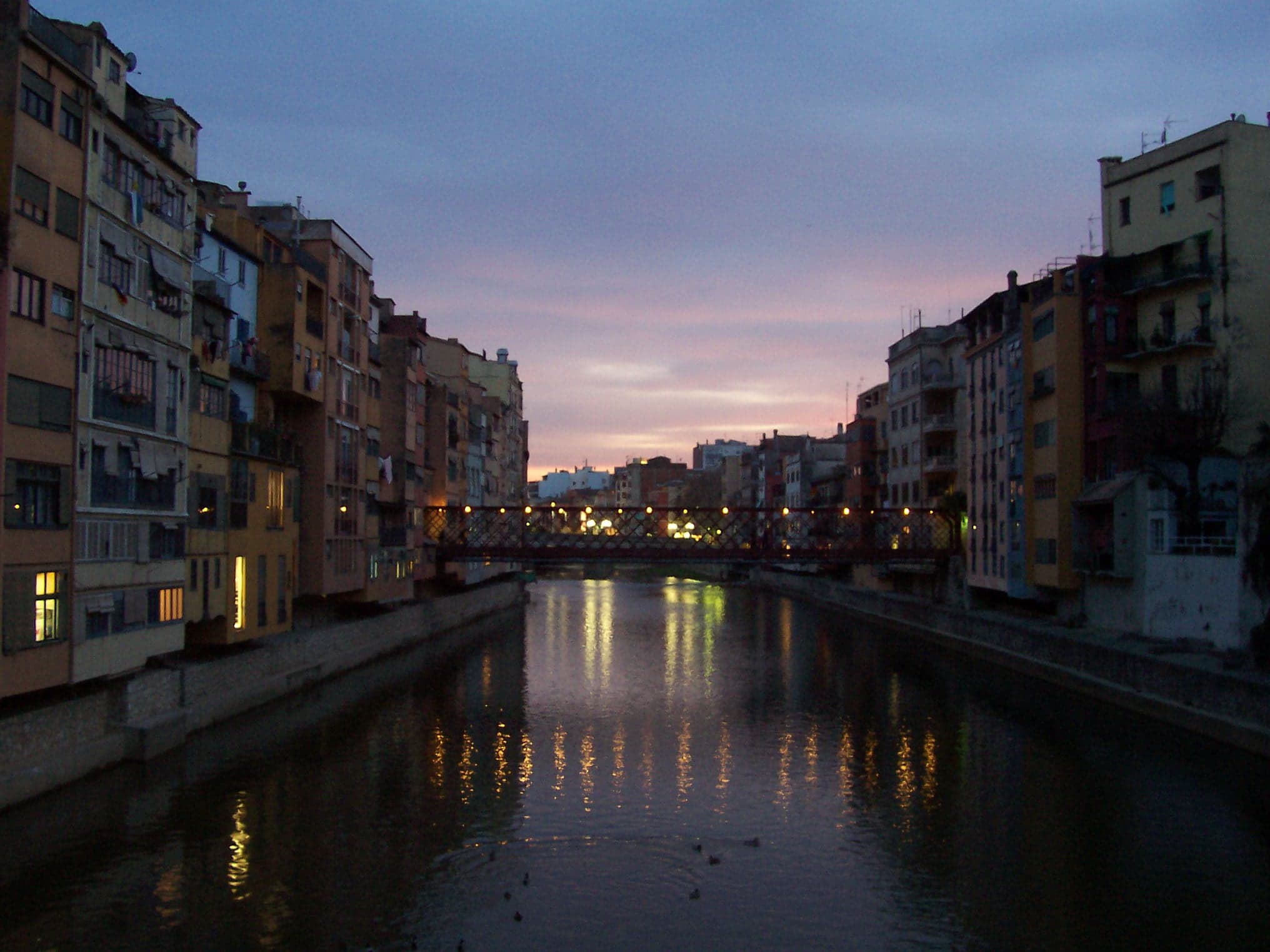
The Nit de Sant Joan is free and open to all, lighting up Girona on the night of 23–24 June (the 24th is a public holiday across Catalonia). Bonfires blaze in neighbourhoods and squares, the Flama del Canigó arrives at the Plaça del Vi, and coca and cava fill the tables: an inland midsummer festival, no beach, right beside the Onyar.
What is the Nit de Sant Joan
This is Catalonia's fire festival, marking the opening of summer on the night of 23–24 June. It has two roots: the ancient Mediterranean solstice bonfires and the Christian feast of the birth of Saint John the Baptist, fixed in the fourth century as six months before Christmas (Luke 1:26–36). One common misconception is worth clearing up: the 2026 solstice falls on 21 June, so the night of the 23rd is not astronomically the shortest — it is a popular celebration that has shifted a few days. The symbol that binds everything together is the Flama del Canigó: a ritual born in 1955 on the summit of Canigó (2,784 m, eastern Pyrenees). The flame is kindled on 22 June; after an overnight vigil, the descent begins at dawn on the 23rd to light some 3,000 bonfires in more than 350 municipalities across the Països Catalans. This is not decorative folklore: for many people it is a matter of identity and community, far more than an excuse for fireworks.
How it unfolds in Girona
Girona is an inland city, nestled between the Ter, the Onyar and the Güell: there is no beach here, so forget the shoreline bonfires you see on the coast. Fire spreads through neighbourhoods and squares, and the main gathering point is the Parc de la Devesa, the largest urban park in Catalonia (40 ha, over 2,500 century-old plane trees). The centrepiece is the reception of the Flama del Canigó at the Plaça del Vi: the dansa de l'Àliga, the gegants de la Fal·lera, the castells dels Marrecs de Salt, a reading of the manifest and the sharing of the flame among local associations; the ceremony ends with a symbolic illumination of the Cathedral bell tower. At the table, the star is coca de Sant Joan (topped with candied fruit, sugar or cream) alongside cava. A key tip: the old town fills quickly and fireworks echo off stone walls — if you are bringing children, elderly relatives or pets, the quieter revetlles in the neighbourhood squares will suit you better.
Dates, public holiday and programme
The revetlla always falls on the night of 23–24 June, and the 24th (Sant Joan) is a regional public holiday throughout Catalonia: most large shops and supermarkets close, though a neighbourhood store or one in a tourist area may open with reduced hours. Buy your coca and anything else you need on the 23rd. The Flama typically arrives in the afternoon at the Plaça de Catalunya and travels in a cercavila along the Rambla de la Llibertat, the Pont de Sant Agustí, the Plaça de la Independència, carrer de Santa Clara and the Pont de Pedra to the Plaça del Vi. The main popular verbena is held at the Parc de la Guingueta (Fontajau), with a bonfire, live music and free entry. Important note: as an evergreen guide, the line-up, artists and exact timetables change every year. Always confirm the programme for your visit at girona.cat/agenda before you go — never rely on details carried over from previous editions.
Getting there and practical tips
From Barcelona, the fastest option is the high-speed train (AVE/Avant/AVLO) from Sants: roughly 38 minutes on average. The R11 Rodalies service is cheaper but slower (around 80 minutes) and its regular timetable does not cover the early hours. The key question is the return journey: Renfe usually reinforces Rodalies towards the Costa Brava that night with special late trains that do allow a return in the small hours, but timetables change every year — check them at rodalies.gencat.cat. By car, the white parking zone is always free and the blue zone becomes free on the 24th (public holiday), not on the working night of the 23rd; the Devesa and Migdia car parks are free but fill up early. The Parc de la Guingueta revetlla draws thousands of people. On fireworks safety, the official advice is: closed, flat shoes (no heels), fitted cotton clothing (jeans work well), never hold a firework in your hand, and do not approach a dud for at least 30 minutes.
Frequently asked questions
Is there an entrance fee for the Nit de Sant Joan in Girona?
When exactly does it take place, and is the 24th a public holiday?
Are there bonfires on the beach in Girona?
How do I get back to Barcelona in the early hours?
Some links on this page are affiliate links: if you book through them, Andelaria may earn a commission at no extra cost to you. Transparency & affiliate policy
Book tickets and tours: Revetlla de Sant JoanPlan your trip
Book the essentials for your trip to Girona.
Other places in Girona
Catedral de Girona (Santa María)
monumentoThe cathedral with the widest Gothic nave in the world, atop 90 Baroque steps. Inside, the famous 11th-century Tapestry of Creation.
Banys Àrabs
monumentoDespite the name, these are 12th-century Romanesque baths inspired by hammams. The cold room with its domed octagonal lantern is the most photographed.
Cases de l'Onyar i Pont de les Peixateries Velles
puenteThe colourful houses over the river and the red iron bridge built by Eiffel's firm in 1877. Girona's definitive postcard view.
El Call (barrio judío)
barrioOne of the best-preserved medieval Jewish quarters in Europe: very narrow stone alleys and the Museum of Jewish History.
Basílica de Sant Feliu
monumentoRomanesque-Gothic church with a bell tower truncated by lightning, the tallest in the city. It holds Roman early-Christian sarcophagi.
Passeig de la Muralla
miradorFree walk along the top of the old Carolingian walls, with towers to climb and the best views over the rooftops and surrounding hills.
Temps de Flors
fiestaEvery May, Girona's Barri Vell becomes an ephemeral garden: Temps de Flors fills more than 100 spaces across the medieval old town — the cathedral, the Arab baths, private courtyards that only open for the occasion — with around 140 floral installations. Nine days, free admission, and over 400,000 visitors at the last edition.
Fires de Sant Narcís
fiestaThe Fires de Sant Narcís are Girona's Festa Major: roughly ten days in late October, around the 29th, with over 200 free events. Documented since the 14th century, it is the oldest fair in Catalonia, featuring the famous fira d'atraccions in the Parc de la Devesa and the old town spilling out into the streets.
Similar places in other cities
Revetlla de Sant Joan
BarcelonaOn the night of June 23rd to 24th, Barcelona catches fire: more than 92,000 people packed the beaches in 2025 (Guàrdia Urbana). Free street parties across all ten districts, coca de Sant Joan, cava, firecrackers and the Flama del Canigó brought down from the Pyrenees. June 24th is a public holiday throughout Catalonia. Here's how to enjoy it without nasty surprises.
La Mercè
BarcelonaLa Mercè is Barcelona's biggest festival, free and massive: it draws between 1.5 and 2 million people around 24 September, the feast day of the city's co-patron saint. Hundreds of free events take over the whole city, from castells, correfoc and gegants to the BAM festival and the Piromusical fireworks at Montjuïc, with no ticket required. The exact programme is published every year at barcelona.cat/lamerce.
Primavera Sound
BarcelonaPrimavera Sound is a paid mega-festival that fills Barcelona's Parc del Fòrum in early June. Founded in 2001, it now draws around 75,000 people a day with an international lineup of indie, electronic, hip hop and pop. It isn't free: you get in with a full pass or a day ticket, and it usually sells out months ahead.