Tarragonès · España
Tarragona
Ancient Roman Tárraco: a seafront amphitheatre, UNESCO walls and human-tower castells.
By Brandon Quiroz · Verified by the Andelaria editorial team
The essentials
- Best time
- March, May
- Cost per day
- 110€/día
- Must-see
- Anfiteatro Romano de Tarragona
About Tarragona
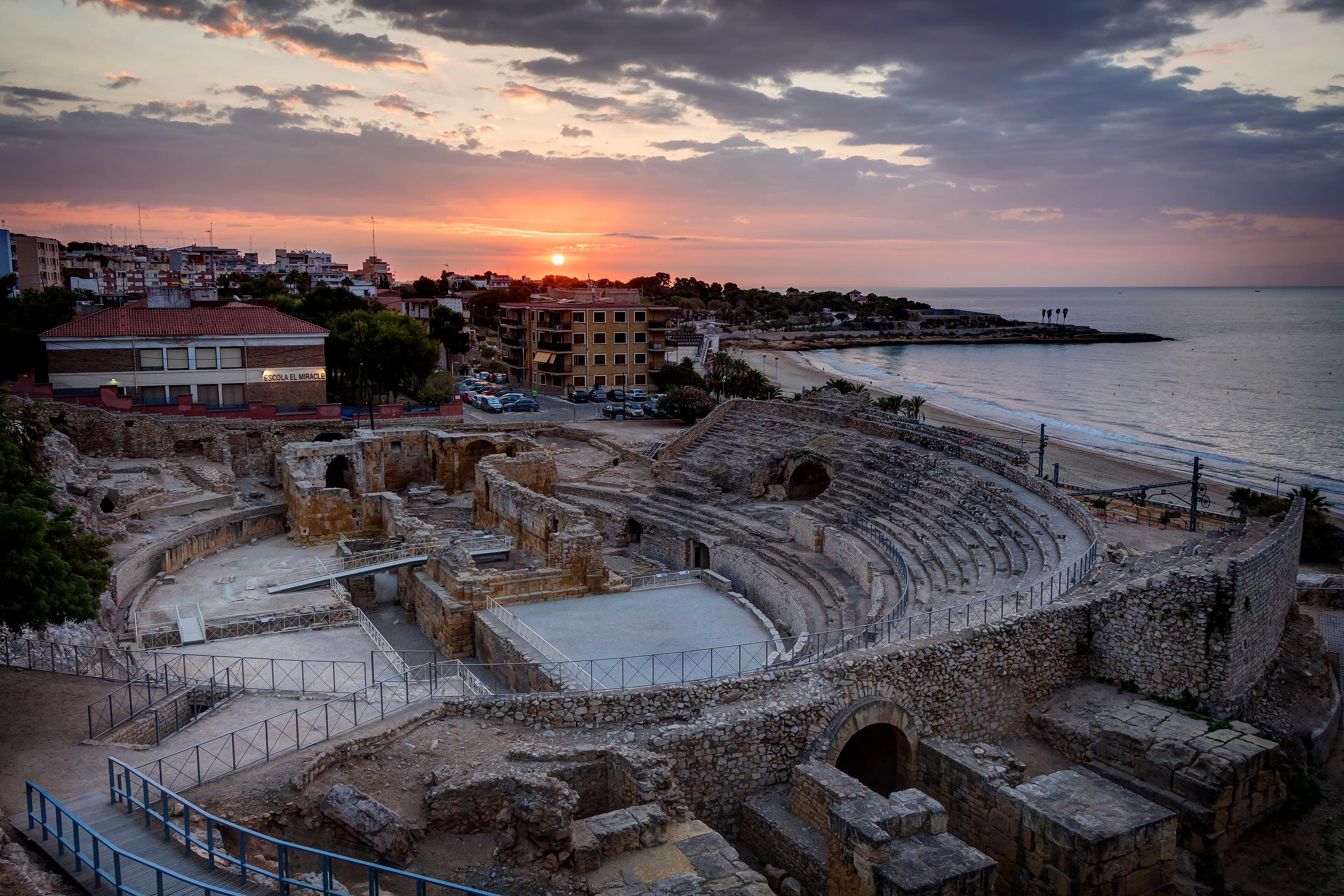
Tarragona is the Barcelona alternative almost nobody books ahead and almost everybody is grateful for. An hour by train from the capital, it holds the most complete Roman ensemble on the peninsula: ancient Tárraco, capital of Hispania Citerior, today a UNESCO World Heritage Site. Its amphitheatre looks straight onto the Mediterranean —a view no other Roman site can match— and within a few hundred metres sit the circus, the provincial forum and nearly a kilometre of walls you can walk along the Passeig Arqueològic. Yet Tarragona is no open-air museum: the Part Alta is a living medieval quarter, its Gothic cathedral crowning a stone staircase, its squares lined with bars where vermouth is still a ritual. Down at the harbour, the fishermen's district of El Serrallo serves the region's best romesco de peix and fish auctioned at the afternoon lonja. In September, the Santa Tecla festival fills the streets with castells, the human towers that are Intangible Heritage and that, in even years, peak at the Concurs de Castells, the largest in the world. For the international traveller, Tarragona delivers in two or three days what Rome charges dearly and with queues: imperial history within reach, urban beaches like Arrabassada, and Catalan food without Barcelona's prices or crowds. Arrive by train, sleep in the Part Alta, and rise early: the amphitheatre at dawn, empty with the sea behind it, is worth the trip.
Guides to plan your trip
How much does a trip to Spain cost
A mid-range trip runs about €90–150 per person per day with a shared hotel; budget style, €50–70. Real breakdown of hotel, food, transport, and entry fees.
Best time to visit Spain
May and October offer the best balance: 19–21 °C and fewer crowds. Summer is hot (interior above 40 °C), winter is cheap. A month-by-month guide based on
What to Do in Tarragona in 3 Days: A Practical Itinerary
3-day Tarragona itinerary: Roman amphitheatre by the sea, Gothic cathedral, Serrallo and beaches. Real prices, no queues, no guesswork.
When to go
Best time to visit: March, May
Best avoided: August
Temperature, rainfall and crowds month by month.
| Month | Temp. | Rain | Crowds | Suitability |
|---|---|---|---|---|
| January | 11°C | 33 mm | Low | 64 |
| February | 12°C | 30 mm | Low | 68 |
| March | 14°C | 32 mm | Low | 74 |
| April | 16°C | 41 mm | Medium | 61 |
| May | 19°C | 47 mm | Medium | 74 |
| June | 23°C | 30 mm | High | 54 |
| July | 26°C | 18 mm | High | 48 |
| August | 26°C | 44 mm | High | 42 |
| September | 23°C | 71 mm | High | 50 |
| October | 19°C | 78 mm | Medium | 67 |
| November | 14°C | 47 mm | Low | 71 |
| December | 12°C | 38 mm | Low | 66 |
Suitability (0-100) computed from temperature, rainfall, crowds and events.
Festivals & events
Revetlla de Sant Joan
The Revetlla de Sant Joan — free and open to all — lights up Tarragona on the night of 23–24 June (the 24th is a public holiday across Catalonia). The Flama del Canigó arrives in the fishermen's quarter of El Serrallo, the bonfire blazes in plaça Corsini, and the beaches fill with fire, firecrackers, coca and cava until dawn.
Festa de Santa Tecla
2026-09-15 → 2026-09-24
Santa Tecla is Tarragona's main festival, held around 23 September in honour of the city's patron saint since the 12th century. It is free and open to all, featuring the richest seguici popular in Catalonia — bestiari, gegants and castellers in a single procession. It holds a double recognition of national interest at both regional and state level.
Tarraco Viva
2026-05-11 → 2026-05-24
Every May, for about two weeks, Tarragona becomes Tárraco again: Tarraco Viva fills the Roman amphitheatre, circus, and forum with gladiators, legionaries, and period markets. It is the most important Roman re-enactment festival in southern Europe, with more than 500 activities and 70% free admission.
Festes de Sant Magí
Sant Magí is Tarragona's Festa Major Petita, the co-patron's festival known as "the water festival." In 2026 it runs from August 8 to 19 (with the 19th as the main day). Its hallmark: the "miraculous" water that portants carry on foot from the Brufaganya. Free and open to all.
Concurs de Castells
2026-10-03 → 2026-10-04
The world's largest human-tower competition, held biennially (even years) at the Tarraco Arena Plaça. Founded in 1932.
Browse by category
What to see & where to eat
Anfiteatro Romano de Tarragona
monumento2nd-century seafront amphitheatre where bishop Fructuós was martyred in 259.
Catedral de Tarragona
monumentoGothic cathedral built over the former temple of Augustus, atop the Part Alta staircase.
Passeig Arqueològic (Murallas)
monumentoWalk between the Roman and medieval walls, nearly 1 km around the old town.
Balcó del Mediterrani
miradorSea balcony at the end of Rambla Nova; touching the railing is said to bring luck.
El Serrallo
barrioFishermen's quarter with the best seafood and the afternoon fish auction.
Some links on this page are affiliate links: if you book through them, Andelaria may earn a commission at no extra cost to you. Transparency & affiliate policy
Book experiences and tours in TarragonaAverage prices
Approx. cost: ~110 €/day · Moderate
| Item | Price |
|---|---|
| Coffee | 1,40 € |
| Small beer | 2,20 € |
| Set lunch menu | 13-16 € |
| Hotel night (avg) | 70-110 € |
| Amphitheatre ticket | 3,30 € |
1-day estimate (1 person): hotel night + set menu + 2 coffees + 1 beer.
Getting there
- Train from Barcelona-Sants in ~1 h (regional) or ~35 min by high-speed to Camp de Tarragona (10 km from the centre).
- Via the AP-7 / A-7 from Barcelona, ~1 h 15 min (100 km).
- Car parks under Rambla Nova and by the harbour; the Part Alta has restricted access.
Plan your trip
Book the essentials for your trip to Tarragona.
Book your visit
Frequently asked questions
How many days do you need for Tarragona?
Is it worth a day trip from Barcelona?
When can you see the castells?
When is the best time to visit Tarragona?
How much does it cost to visit Tarragona per day?
More destinations
- Garraf
Sitges
Modernist seaside town: 17 beaches, a historic LGBTQ+ scene, carnival and a fantastic-film festival.
- Barcelonès
Barcelona
The capital of modernisme: Gaudí and the Sagrada Família, the Gothic Quarter, the Ramblas, Montjuïc and city beaches in Barceloneta.
- Gironès
Girona
Catalan medieval city on the Onyar: colourful riverside houses, a vast cathedral, an intact Jewish quarter and Game of Thrones filming.
- Comunidad Valenciana
Valencia
Calatrava's Ciudad de las Artes, the Art Nouveau Mercado Central, the Jardins del Túria and the Fallas that set the city ablaze every March.
- País Vasco
San Sebastián
La Concha bay, pintxos in the Parte Vieja, Chillida's Peine del Viento and two festivals: Jazzaldia and the Zinemaldia film festival.
- Comunidad de Madrid
Madrid
The art triangle (Prado, Reina Sofía, Thyssen), the taverns of La Latina, and a street life that keeps going late.