Passeig Arqueològic (Murallas)
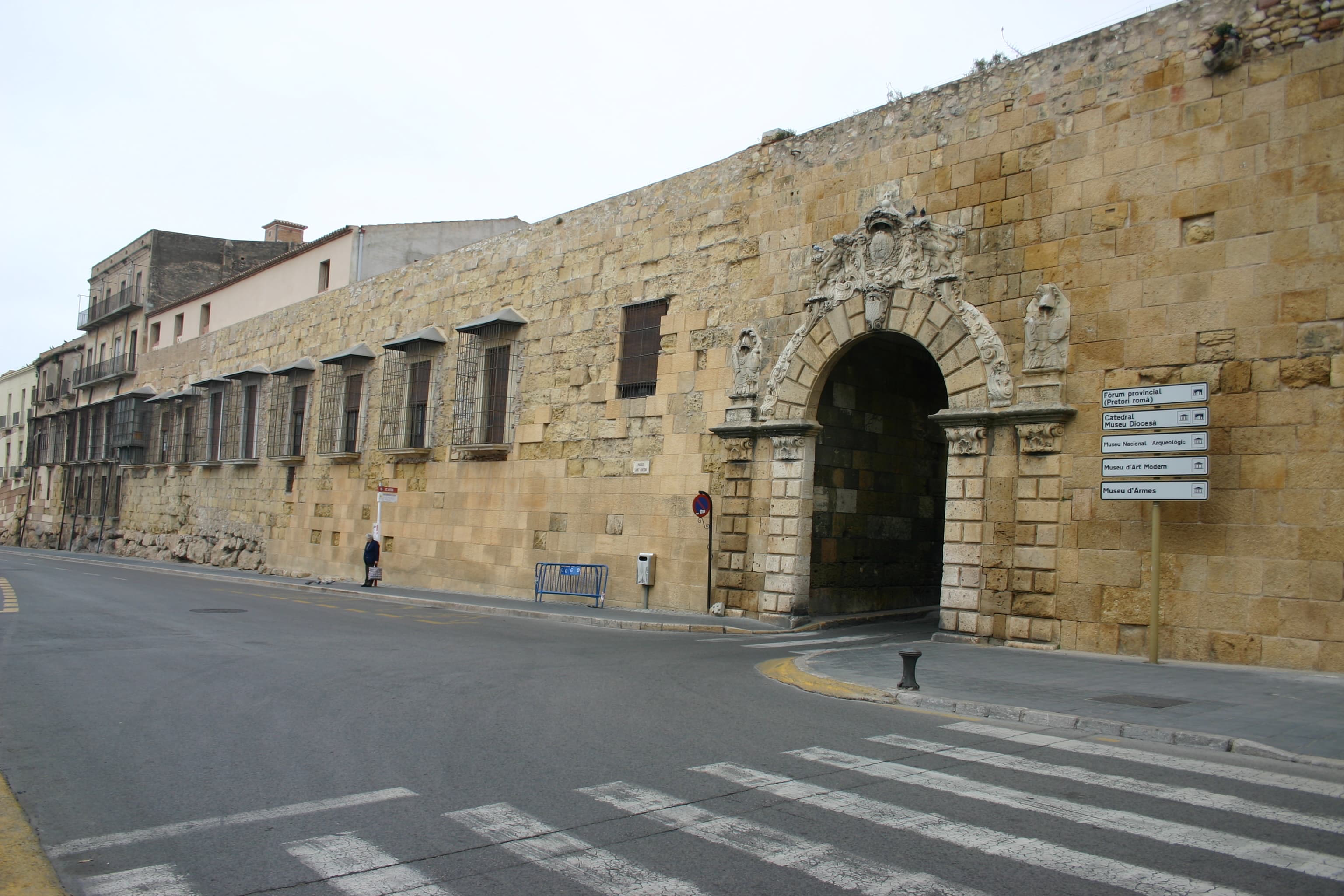
Walk between the Roman and medieval walls, nearly 1 km around the old town.
The oldest Roman wall outside Italy
The Passeig Arqueològic follows the preserved stretch of Tarragona's Roman wall — and "ancient" here is no marketing cliché: it was built in the late 3rd century BC, during the Second Punic War, making it the oldest Roman wall in Spain and the oldest still standing outside Italy. What genuinely grabs you is seeing two techniques layered in plain sight: at the base, cyclopean megalithic blocks, massive stones set without mortar, some weighing several tonnes; above them, from the 2nd century BC, a Roman ashlar facing roughly 6 metres high and 4.5 metres thick. Look out for the Tower of Minerva, which preserves a relief of the goddess with its inscription — considered the oldest Roman sculpture and inscription on the entire Iberian Peninsula. The complex has been a UNESCO World Heritage Site since 2000, as part of the archaeological ensemble of Tárraco.
Tickets, opening hours and how to avoid the queues
A single-entry ticket costs €5 per person; free for under-12s, and 50% off for ages 12–17, students, groups of 20+, and accredited disabled visitors. If you plan to see more Roman sites in the same day, the 5-monument combined ticket (Passeig Arqueològic, Circ-Pretori, Fòrum de la Colònia, Amfiteatre and Casa Canals) costs €15 and is well worth it. No reservation is needed for individual visits: buy at the box office or at entrades.museu.tarragona.cat. Opening hours: in summer (1 April–26 October) Tuesday–Saturday 9:00–20:45, Sundays and public holidays 9:00–14:30; in winter (27 October–31 March) Tuesday–Friday until 18:30, Saturdays 9:30–18:30, Sundays 9:30–14:30. Closed on Mondays year-round except occasional public holidays; note that access closes 30 minutes before the stated closing time. To dodge the crowds in July and August, arrive at opening (9:00) or in the last two hours of the afternoon (18:00–20:00), when the light turns golden. Weekdays are much quieter, and it's worth avoiding the 11:00–14:00 slot, when the sun is at its harshest and tour groups arrive.
How to get there and tips from someone who has walked it
From the train station it is a 15–20 minute walk up to the Part Alta; the main entrance is on Av. Catalunya s/n, next to the Portal del Roser. Tarragona is connected to Barcelona by Rodalies R2 Sud in about an hour, and from the station the entire Roman old town is walkable. If you take a local bus, line 34 drops you in the centre; for real-time schedules, the Moovit app works well. There is no metro or tram in Tarragona. By car, parking in the Part Alta is very limited: leave your vehicle in one of the ring-road car parks and walk up. Two important heads-up from someone who has done the walk: the route is one-way and around 400 m long — you cannot turn back, so take your time and enjoy each information panel. And since it is an outdoor, sun-exposed promenade, bring water and sunscreen in summer. The ground is uneven in places with some ramps; check accessibility for reduced mobility before you go. For guided visits, Itinere Tarragona can be reached at +34 977 239 657.
Frequently asked questions
How much does the ticket cost and is a reservation required?
How long does the visit take?
What is the best time to avoid crowds?
Some links on this page are affiliate links: if you book through them, Andelaria may earn a commission at no extra cost to you. Transparency & affiliate policy
Book tickets and tours: Passeig Arqueològic (Murallas)Plan your trip
Book the essentials for your trip to Tarragona.
Other places in Tarragona
Anfiteatro Romano de Tarragona
monumento2nd-century seafront amphitheatre where bishop Fructuós was martyred in 259.
Catedral de Tarragona
monumentoGothic cathedral built over the former temple of Augustus, atop the Part Alta staircase.
Balcó del Mediterrani
miradorSea balcony at the end of Rambla Nova; touching the railing is said to bring luck.
El Serrallo
barrioFishermen's quarter with the best seafood and the afternoon fish auction.
Revetlla de Sant Joan
fiestaThe Revetlla de Sant Joan — free and open to all — lights up Tarragona on the night of 23–24 June (the 24th is a public holiday across Catalonia). The Flama del Canigó arrives in the fishermen's quarter of El Serrallo, the bonfire blazes in plaça Corsini, and the beaches fill with fire, firecrackers, coca and cava until dawn.
Festa de Santa Tecla
fiestaSanta Tecla is Tarragona's main festival, held around 23 September in honour of the city's patron saint since the 12th century. It is free and open to all, featuring the richest seguici popular in Catalonia — bestiari, gegants and castellers in a single procession. It holds a double recognition of national interest at both regional and state level.
Tarraco Viva
fiestaEvery May, for about two weeks, Tarragona becomes Tárraco again: Tarraco Viva fills the Roman amphitheatre, circus, and forum with gladiators, legionaries, and period markets. It is the most important Roman re-enactment festival in southern Europe, with more than 500 activities and 70% free admission.
Festes de Sant Magí
fiestaSant Magí is Tarragona's Festa Major Petita, the co-patron's festival known as "the water festival." In 2026 it runs from August 8 to 19 (with the 19th as the main day). Its hallmark: the "miraculous" water that portants carry on foot from the Brufaganya. Free and open to all.
Similar places in other cities
Església de Sant Bartomeu i Santa Tecla
SitgesThe church on the rock between two beaches, the symbol of Sitges.
Palau de Maricel
SitgesSeafront Noucentista palace with decorated halls and Mediterranean views, a venue for concerts and weddings.
Sagrada Família
BarcelonaGaudí's unfinished basilica, under construction since 1882 and a UNESCO World Heritage Site. Its forest of columns and coloured stained glass is a unique experience; book your ticket in advance.