Velá de Santiago y Santa Ana
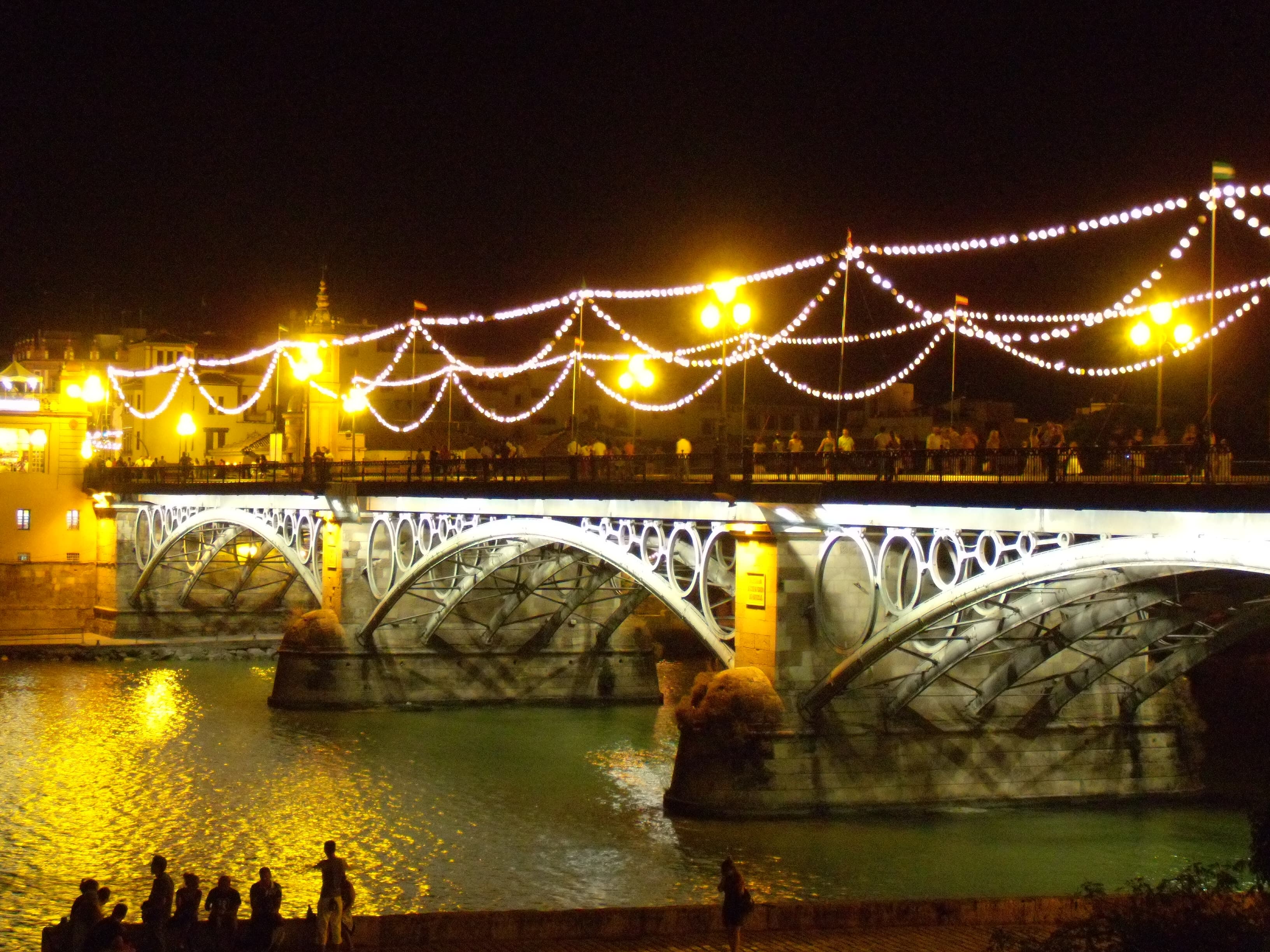
Seville's oldest festival, with more than 750 years of history, doesn't take place in the city centre — it happens in Triana. The Velá de Santa Ana falls in the last week of July, around the 26th: free casetas along the Guadalquivir, the cucaña grease-pole contest over the river, and not a flamenco dress or equestrian parade in sight.
What it is and why it's the oldest
The Velá de Santiago y Santa Ana is Seville's oldest popular festival: more than 750 consecutive years, interrupted only by the Civil War. It began as a night-time vigil beside the church of Santa Ana in Triana, and over the centuries grew into a full neighbourhood fair. In May 2018 the City Council unanimously declared it Seville's Major Festival, ranking it alongside Semana Santa and the Feria de Abril; it is also recognised as a Festival of Tourist Interest of Andalusia. Don't confuse it with the Feria: there are no private casetas with bouncers, no invitations required, no flamenco dress as a dress code, and no horse riders. It's smaller, more riverside and more neighbourhood, and that's precisely why the Trianeros love it — they feel it's theirs, without having to cross the bridge to the Real.
When it takes place and the opening pregón
The Velá falls every year in the last week of July, around the 26th, the feast day of Santa Ana, patron saint of Triana. The traditional window runs from the 21st to the 26th of July; the exact fairground dates vary by edition, so check the official Ayuntamiento website for the programme before booking your trip. The 2026 edition is set for 21–25 July, with the main religious ceremony on the 26th. It opens on Tuesday the 21st with the pregón and the switching-on of the fairground lights in the Plaza del Altozano — that's the starting gun and the moment when the whole neighbourhood comes together. On the night of the 25th the bell tower of Santa Ana is illuminated and the Gozos are sung. A word of warning: this is Seville in July, with afternoon temperatures hitting 40°C; the real atmosphere only begins after sunset, not before.
Where it is and how to get in (free)
Everything happens in Triana, on the Guadalquivir bank opposite the city centre — not in the centre itself. The epicentre is Calle Betis, with the casetas set up between the Puente de Isabel II (the Triana bridge) and the Puente de San Telmo, and a view of the illuminated Seville skyline that is absolutely priceless after dark. Calle Pureza, which climbs up towards Santa Ana, and the Plaza del Altozano complete the scene. Entry is free: the casetas are open to everyone, no invitation or doorman needed, until capacity is reached (you only pay for what you eat or drink). The best way to get there is on foot, crossing the Puente de Triana from the centre; driving is not worth it — the area is closed to traffic and parking is a nightmare. Watch out on Calle Betis after midnight: it fills with young people and the bottleneck on the bridge can get overwhelming.
The cucaña, Alfonso X and Flamenco Triana
The symbol of the festival is the cucaña: a horizontal pole between 5 and 15 metres long, greased with tallow, stretched over a barge moored on the Guadalquivir in front of Calle Betis. Participants try to walk its full length and grab a flag at the far end without falling into the water — a seafaring tradition in Triana documented at the Velá since 1910. It takes place each afternoon around 18:30; in 2025 it ran from 22 to 26 July. The religious origins go back to Alfonso X the Wise, who ordered the construction of the church of Santa Ana — the cathedral of Triana and the first purpose-built parish church in the city after 1248; tradition dates it to 1266, though historical research places it closer to 1279–1280. Triana is the birthplace of flamenco and of Seville's tile-making tradition: during the Velá there are free flamenco performances in the Altozano, and the ceramics workshops on Calle San Jorge open their doors to visitors.
Frequently asked questions
Is the Velá de Santa Ana free?
When does the Velá de Triana take place?
What is the cucaña at the Velá?
Is it the same as the Feria de Abril?
Some links on this page are affiliate links: if you book through them, Andelaria may earn a commission at no extra cost to you. Transparency & affiliate policy
Book tickets and tours: Velá de Santiago y Santa AnaPlan your trip
Book the essentials for your trip to Sevilla.
Other places in Sevilla
Real Alcázar de Sevilla
alcazarThe oldest inhabited royal palace in Europe, a UNESCO World Heritage Site. Its Mudéjar architecture, the tiled Patio de las Doncellas and gardens of fountains and labyrinths make it Seville's essential visit. A filming location for Game of Thrones, it breathes Almohad and Christian history in equal measure.
Catedral de Sevilla y La Giralda
catedralThe largest Gothic cathedral in the world and the third-largest church by floor area, built on the site of the former Almohad mosque. La Giralda, its 97-metre bell tower, is Seville's undisputed symbol. Inside lies the tomb of Christopher Columbus. The ticket includes access to the tower, which has no steps — only ramps.
Plaza de España
plazaA monumental neo-Renaissance and neo-Moorish semicircle built for the 1929 Ibero-American Exposition in the Parque de María Luisa. Its 48 tiled benches represent every Spanish province. The central canal invites boat rides, and its bridges and north and south towers make for perfect photographs at sunrise.
Barrio de Santa Cruz
barrioThe medieval Jewish quarter of whitewashed alleyways, flower-filled courtyards and squares shaded by orange trees. Nestled beside the Alcázar and the Cathedral, it is the romantic heart of Seville. Wandering streets like Agua or Vida, discovering the Hospital de los Venerables and sitting in the Plaza de Doña Elvira are experiences that capture the very soul of the city.
Torre del Oro
torreA 13th-century Almohad watchtower on the banks of the Guadalquivir, one of Seville's great defensive symbols. Its name comes from the golden tiles that once covered it. It houses the Naval Museum, with historical maps and objects from the American expeditions. The view from Puente de Triana at sunset is breathtaking.
Metropol Parasol (Las Setas)
museoThe largest wooden structure in the world, designed by Jürgen Mayer H. and inaugurated in 2011 in the Plaza de la Encarnación. Its elevated walkways offer the best panoramic views of Seville. At ground level it houses the Antiquarium, with Roman and Arab archaeological remains from the 1st century. Not to be missed at sunset.
Semana Santa de Sevilla
fiestaSeville's Holy Week is free and open to all: you only pay for seats and grandstands along the Official Route. In 2026 it runs from 29 March to 5 April, with the eve celebrations on the 27th. Its peak is La Madrugá, when five major brotherhoods process from 1:00 a.m. until noon.
Feria de Abril de Sevilla
fiestaTwo weeks after Easter, Sevilla sets up its Real in Los Remedios: around 1,059 casetas (up to ~1,250 plots with the expansion), flamenco dresses, horses and sevillanas. Entry is free, but most are private and only accessible with an invitation from a member. Only around 14–16 are open to the public.
Similar places in other cities
Festival de los Patios Cordobeses
CórdobaEvery first half of May, Córdoba opens around 53 privately owned competition courtyards for free — plus a dozen institutional spaces: geraniums, bougainvillea, and recycled terracotta pots in living, inhabited patios. UNESCO Intangible Heritage since 2012, with an official competition running since 1921. Free entry, no booking required, split daily hours.
Semana Santa de Córdoba
CórdobaCórdoba's Semana Santa is free and open to all, with processions moving through the medieval Jewish quarter from dawn into the early morning hours. Its defining feature in Spain: since 2017, the Carrera Oficial passes through the interior of the Mezquita-Catedral, a UNESCO World Heritage monument. Thirty-nine of the 42 brotherhoods take part. The festival holds National Tourist Interest status.
Noche Blanca del Flamenco de Córdoba
CórdobaOne June night, Córdoba scatters free flamenco across its historic old town. The Noche Blanca del Flamenco falls on the summer solstice (20–21 June) and sets up around ten simultaneous stages, running from 22:30 until 5:00 in the morning. No ticket, no booking: you walk in, listen, and drift from square to square.