Festival de los Patios Cordobeses
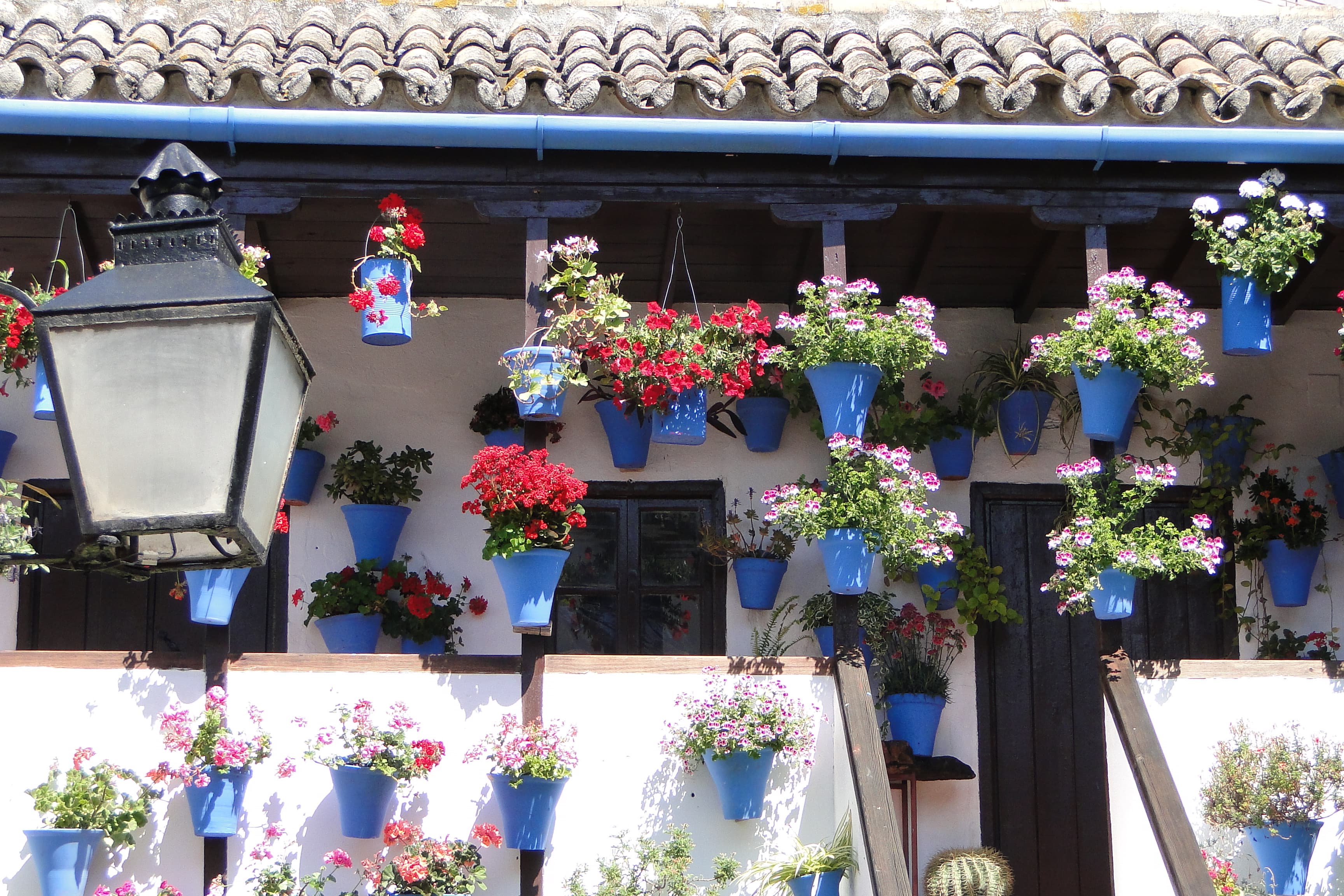
Every first half of May, Córdoba opens around 53 privately owned competition courtyards for free — plus a dozen institutional spaces: geraniums, bougainvillea, and recycled terracotta pots in living, inhabited patios. UNESCO Intangible Heritage since 2012, with an official competition running since 1921. Free entry, no booking required, split daily hours.
What it is and why it's UNESCO
The Festival de los Patios is not a street party: it's walking into someone's home. For two weeks, Córdoba residents open their inhabited courtyards free of charge and enter them in competition — an official contest that has existed since 1921. UNESCO declared it Intangible Cultural Heritage of Humanity in December 2012, and it also holds the status of Festival of International Tourist Interest. The real draw is the flora: geraniums and pelargoniums climbing whitewashed walls, bougainvillea, and recycled clay pots — all tended by the owners year-round. In the 2026 edition, around 53 private patios compete, plus a dozen institutional spaces (convents, museums) outside the competition. One critical note: this is a domestic space, not a stage set. Don't touch the plants, keep your voice down, and respect whatever the owner asks; a lot of visitors treat it like a backdrop and disturb the people who actually live there.
When to go and opening hours
The fixed rule: always the first half of May. In 2026 it ran from the 4th to the 17th, but dates and the full list change every year — confirm the programme at the official site (patios.cordoba.es) before planning your trip. Standard hours are split and daily: 11:00–14:00 in the morning and 18:00–22:00 in the evening. Entry is free with no advance booking; at many doors you'll find a donation box or plate for a voluntary contribution that helps cover the cost of flowers throughout the year. Critical crowd-avoidance tip: skip the first weekend. The flowers are at their peak on days 4–5, but queues triple and the previous year's prize-winning patios draw the longest waits. Go on a weekday, early in the afternoon slot (18:00–19:00) or just before closing (21:30), and prioritise patios that didn't win — they tend to be just as spectacular and nearly empty.
How to visit and where
The epicentre is the Alcázar Viejo–San Basilio neighbourhood, in the southern part of the old town, right next to the Alcázar de los Reyes Cristianos. Route 6 of the competition clusters a dozen patios there, including several of the most decorated ones. A note on the 'red marker' myth: no official system from the city council classifies patios with coloured plaques; the only blue/orange icons on the official map indicate accessibility. Colloquially, 'red' tends to refer to competition patios — private homes that only open in May, free of charge, the authentic ones — as opposed to those open year-round. Competition patios are identifiable by the boxwood hedges in planters flanking the door. Critical tip: download the free official app 'Mayo Cordobés' (iOS/Android), which has GPS mapping of patios by neighbourhood, opening hours, and an accessibility filter — it's the most reliable tool for getting around. Outside May, paid alternatives include the private San Basilio route (seasonal hours, closed Tuesdays, and in July–August and January–February) and the Palacio de Viana, closed on Mondays.
What to eat and practical logistics
For food nearby, seek out the pitillo (a small flamenquín) and salmorejo well away from the Mezquita; in San Basilio there are long-standing taverns where salmorejo goes for around 2–4 €, such as La Viuda (San Basilio, 52) or Puerta Sevilla (Postrera, 51). If you head into the old town, Calle Deanes or San Álvaro are better bets than the tourist traps opposite the Mezquita. Logistics: the old town has restricted traffic, so a car is useless — park outside and walk in. From the Mezquita it's about an 8-minute walk to San Basilio. By city bus, Aucorsa has a stop at Paseo de la Victoria, right on the edge of the neighbourhood. Critical heat warning: May in Córdoba is already intense at midday, and sun-exposed patios offer no consistent shade. Save the afternoon slot for your visits, bring water and a hat, and use the midday hours for a long lunch at a taverna.
Frequently asked questions
When does the Festival de los Patios de Córdoba take place?
Do you need to pay or book in advance to enter the patios?
What is the 'red marker' system for the patios?
How do I avoid the longest queues?
Some links on this page are affiliate links: if you book through them, Andelaria may earn a commission at no extra cost to you. Transparency & affiliate policy
Book tickets and tours: Festival de los Patios CordobesesPlan your trip
Book the essentials for your trip to Córdoba.
Other places in Córdoba
Mezquita-Catedral de Córdoba
catedralDeclared a UNESCO World Heritage Site, the Mosque-Cathedral is Córdoba's most iconic monument. Built from the year 786 onwards by Abd al-Rahman I on the site of a Visigoth basilica, it was for centuries the second-largest mosque in the world. Its forest of 856 two-tone columns of jasper and marble is an unforgettable sight.
Alcázar de los Reyes Cristianos
alcazarA 14th-century medieval fortress where the Catholic Monarchs established their headquarters during the Reconquista and received Christopher Columbus before his voyage to the Americas. Its terraced gardens with ponds, cypress trees and fountains, along with the Roman mosaics in the interior museum, make it essential visiting. After months of works, the gardens reopened on 16 June 2026 with a reduced summer schedule (8:15–13:00, Tue–Sun) and an admission fee of €7 — check the official website before you go.
Puente Romano
puenteBuilt in the 1st century BC on the orders of Augustus, this 16-arch bridge over the Guadalquivir was for twenty centuries the only southern entrance to the city. It offers the most photogenic view of Córdoba: the Mosque tower silhouetted against the sky at sunrise or sunset. Today it is pedestrian-only.
Medina Azahara (Madinat al-Zahra)
museoA caliphal palace city built in 936 by Abd al-Rahman III, 8 km from Córdoba, declared a UNESCO World Heritage Site in 2018. At its peak it housed up to 25,000 people. The throne room of Abd al-Rahman III, with its restored polychrome marble arches, conveys the splendour of the Córdoba caliphate at the height of its power.
Calleja de las Flores
barrioThe most photographed alley in Córdoba, set within the medieval Judería. Its whitewashed façades covered in pots of geraniums and begonias form a natural frame through which the Mosque's bell tower appears in the distance. Together with the surrounding Judería neighbourhood, it is the finest surviving example of Andalusian urban planning.
Judería de Córdoba
barrioCórdoba's medieval Jewish quarter, declared a World Heritage Site, is one of the best-preserved historic districts in Europe. Its narrow cobbled streets conceal the Synagogue of 1315 — one of only three surviving medieval synagogues in Spain — and the Casa de Sefarad. The maze of lanes between Calle Judíos and Plaza Maimónides is made for getting pleasantly lost.
Semana Santa de Córdoba
fiestaCórdoba's Semana Santa is free and open to all, with processions moving through the medieval Jewish quarter from dawn into the early morning hours. Its defining feature in Spain: since 2017, the Carrera Oficial passes through the interior of the Mezquita-Catedral, a UNESCO World Heritage monument. Thirty-nine of the 42 brotherhoods take part. The festival holds National Tourist Interest status.
Noche Blanca del Flamenco de Córdoba
fiestaOne June night, Córdoba scatters free flamenco across its historic old town. The Noche Blanca del Flamenco falls on the summer solstice (20–21 June) and sets up around ten simultaneous stages, running from 22:30 until 5:00 in the morning. No ticket, no booking: you walk in, listen, and drift from square to square.
Navidad en Córdoba
fiestaFrom 2 December to 5 January, Córdoba lights up with over 400 free activities: the light-and-sound show on Cruz Conde (488,755 LED points), the Municipal Nativity Scene near the Judería, Christmas markets, and the Three Kings Parade on 5 January. All free to enjoy in the historic centre.
Similar places in other cities
Semana Santa de Sevilla
SevillaSeville's Holy Week is free and open to all: you only pay for seats and grandstands along the Official Route. In 2026 it runs from 29 March to 5 April, with the eve celebrations on the 27th. Its peak is La Madrugá, when five major brotherhoods process from 1:00 a.m. until noon.
Feria de Abril de Sevilla
SevillaTwo weeks after Easter, Sevilla sets up its Real in Los Remedios: around 1,059 casetas (up to ~1,250 plots with the expansion), flamenco dresses, horses and sevillanas. Entry is free, but most are private and only accessible with an invitation from a member. Only around 14–16 are open to the public.
Velá de Santiago y Santa Ana
SevillaSeville's oldest festival, with more than 750 years of history, doesn't take place in the city centre — it happens in Triana. The Velá de Santa Ana falls in the last week of July, around the 26th: free casetas along the Guadalquivir, the cucaña grease-pole contest over the river, and not a flamenco dress or equestrian parade in sight.