Alcázar de los Reyes Cristianos
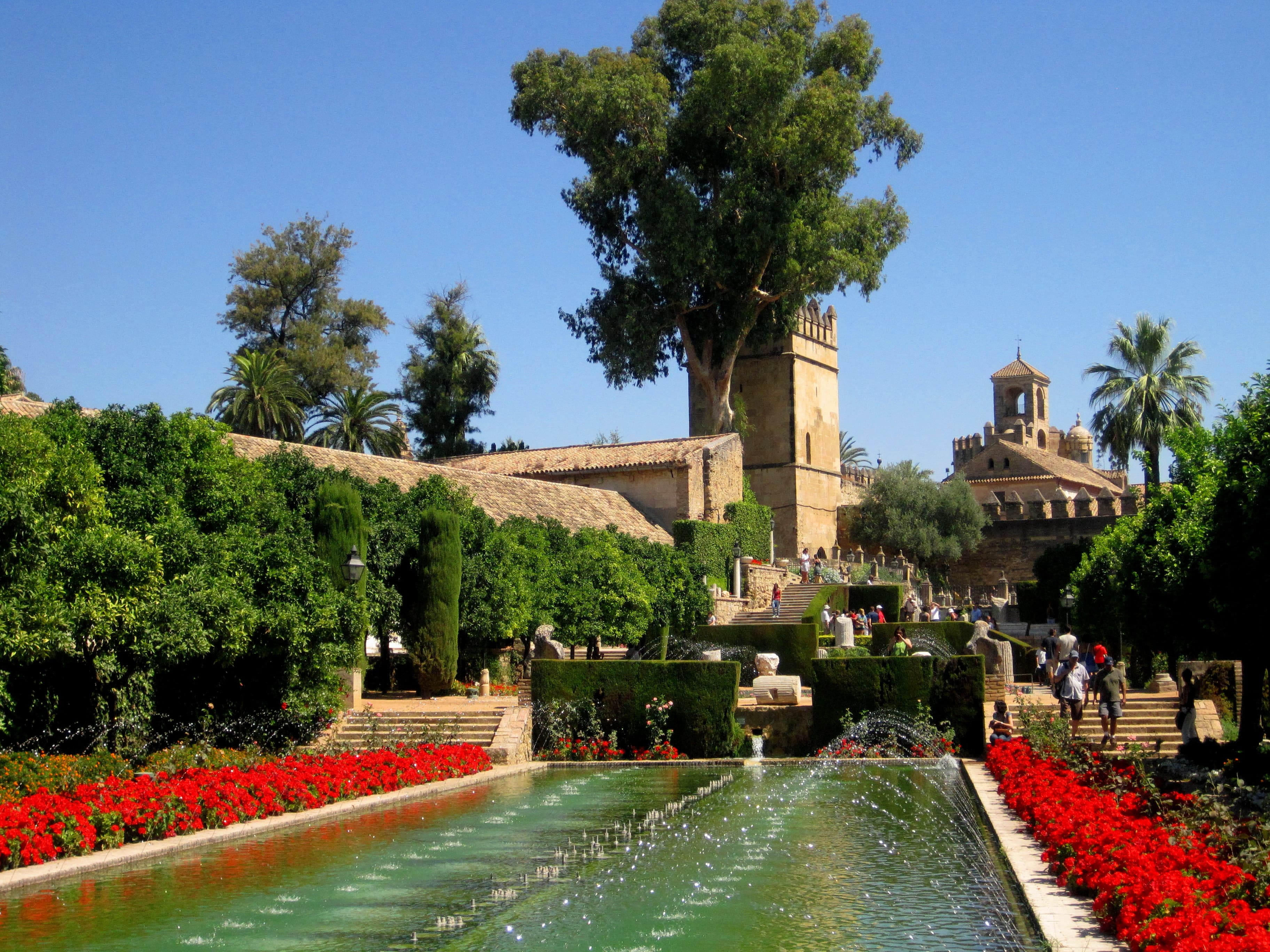
A 14th-century medieval fortress where the Catholic Monarchs established their headquarters during the Reconquista and received Christopher Columbus before his voyage to the Americas. Its terraced gardens with ponds, cypress trees and fountains, along with the Roman mosaics in the interior museum, make it essential visiting. After months of works, the gardens reopened on 16 June 2026 with a reduced summer schedule (8:15–13:00, Tue–Sun) and an admission fee of €7 — check the official website before you go.
The essentials
- Tickets
- 7 €
Why it's genuinely worth your time
The Alcázar de los Reyes Cristianos isn't Córdoba's most photogenic monument — that crown goes to the Mosque-Cathedral, just 100 metres away — but it packs more history per square metre than almost anywhere else in the city. What you see today was ordered built by Alfonso XI in 1328 on top of Roman, Visigothic and Arab remains, and for centuries it served as the favourite royal residence of Castile in the south. From 1482 the Catholic Monarchs used it as their headquarters for the conquest of Granada, and it was here that they first received Christopher Columbus in 1486 to negotiate the voyage to the Indies. There's a darker side the brochures skip: between the 16th and 19th centuries it housed the Inquisition Tribunal, and then served as a provincial prison until 1931. Inside, two things dominate: the Mosaic Hall, with 1st–2nd century AD Roman floor pavements uncovered at the Plaza de la Corredera (among the best-preserved on the Iberian Peninsula), and the roughly 30,000 m² of terraced gardens with pools and hedgerows stepping down towards the Guadalquivir.
Tickets, opening hours and how to beat the queues and heat
General admission is €7 per person (price confirmed at the June 2026 reopening). There's a 50% discount for large families, over-65s, youth card holders and accredited students, and free entry for Córdoba residents with ID, minors, the unemployed and people with disabilities. On non-holiday Thursdays from 18:00 entry is free — which is precisely why those slots tend to be the most crowded. Watch out for the summer schedule (16 June–15 September): the site only opens Tuesday to Sunday, 8:15–13:00, a cutback driven by the heat and the fact that almost everything is outdoors. In winter (16 Sept–15 June) hours are far more generous: Tuesday to Friday until around 20:00, Saturday 9:30–17:30, Sunday and public holidays 8:15–14:15. Monday is always closed. Buy online via the city council website (recommended in high season) or in person at the Ribera kiosk or the Campo Santo de los Mártires booth. In July and August, arriving at opening time (8:15) isn't just good advice — it's almost essential: with closing at 13:00, the site becomes packed by mid-morning.
How to get there and tips from those who've been
It sits on Plaza Campo Santo de los Mártires, s/n, right by the river and about 100 metres from the Mosque-Cathedral, so from the historic centre you can walk there in 5–10 minutes. By city bus, lines 3, 6 and 16 stop nearby (the stops at Av. de Cádiz 18, Puerta Sevilla and Glorieta Cruz Roja are about a 6-minute walk away). From the AVE high-speed rail station, line 05 takes around 19 minutes. Córdoba has no metro or tram: local public transport is the Aucorsa urban bus network. By car, park on Calle Santa Teresa or Calle Capitulares. Allow 1.5 to 2 hours to see it comfortably (more if you take a guided tour): the gardens, mosaic rooms and towers are all covered by a single ticket. In summer bring water and sun protection, as almost the entire route is outdoors. One last heads-up: on local public holidays such as Corpus Christi the site may close, so it's worth checking the official website before you set off.
Frequently asked questions
How much does admission cost and is it worth booking online?
How long should you set aside for the visit?
What's the best time to visit and avoid queues?
Some links on this page are affiliate links: if you book through them, Andelaria may earn a commission at no extra cost to you. Transparency & affiliate policy
Book tickets and tours: Alcázar de los Reyes Cristianos· 7 €Plan your trip
Book the essentials for your trip to Córdoba.
Other places in Córdoba
Mezquita-Catedral de Córdoba
catedralDeclared a UNESCO World Heritage Site, the Mosque-Cathedral is Córdoba's most iconic monument. Built from the year 786 onwards by Abd al-Rahman I on the site of a Visigoth basilica, it was for centuries the second-largest mosque in the world. Its forest of 856 two-tone columns of jasper and marble is an unforgettable sight.
Puente Romano
puenteBuilt in the 1st century BC on the orders of Augustus, this 16-arch bridge over the Guadalquivir was for twenty centuries the only southern entrance to the city. It offers the most photogenic view of Córdoba: the Mosque tower silhouetted against the sky at sunrise or sunset. Today it is pedestrian-only.
Medina Azahara (Madinat al-Zahra)
museoA caliphal palace city built in 936 by Abd al-Rahman III, 8 km from Córdoba, declared a UNESCO World Heritage Site in 2018. At its peak it housed up to 25,000 people. The throne room of Abd al-Rahman III, with its restored polychrome marble arches, conveys the splendour of the Córdoba caliphate at the height of its power.
Calleja de las Flores
barrioThe most photographed alley in Córdoba, set within the medieval Judería. Its whitewashed façades covered in pots of geraniums and begonias form a natural frame through which the Mosque's bell tower appears in the distance. Together with the surrounding Judería neighbourhood, it is the finest surviving example of Andalusian urban planning.
Judería de Córdoba
barrioCórdoba's medieval Jewish quarter, declared a World Heritage Site, is one of the best-preserved historic districts in Europe. Its narrow cobbled streets conceal the Synagogue of 1315 — one of only three surviving medieval synagogues in Spain — and the Casa de Sefarad. The maze of lanes between Calle Judíos and Plaza Maimónides is made for getting pleasantly lost.
Festival de los Patios Cordobeses
fiestaEvery first half of May, Córdoba opens around 53 privately owned competition courtyards for free — plus a dozen institutional spaces: geraniums, bougainvillea, and recycled terracotta pots in living, inhabited patios. UNESCO Intangible Heritage since 2012, with an official competition running since 1921. Free entry, no booking required, split daily hours.
Semana Santa de Córdoba
fiestaCórdoba's Semana Santa is free and open to all, with processions moving through the medieval Jewish quarter from dawn into the early morning hours. Its defining feature in Spain: since 2017, the Carrera Oficial passes through the interior of the Mezquita-Catedral, a UNESCO World Heritage monument. Thirty-nine of the 42 brotherhoods take part. The festival holds National Tourist Interest status.
Noche Blanca del Flamenco de Córdoba
fiestaOne June night, Córdoba scatters free flamenco across its historic old town. The Noche Blanca del Flamenco falls on the summer solstice (20–21 June) and sets up around ten simultaneous stages, running from 22:30 until 5:00 in the morning. No ticket, no booking: you walk in, listen, and drift from square to square.