Navidad en Córdoba
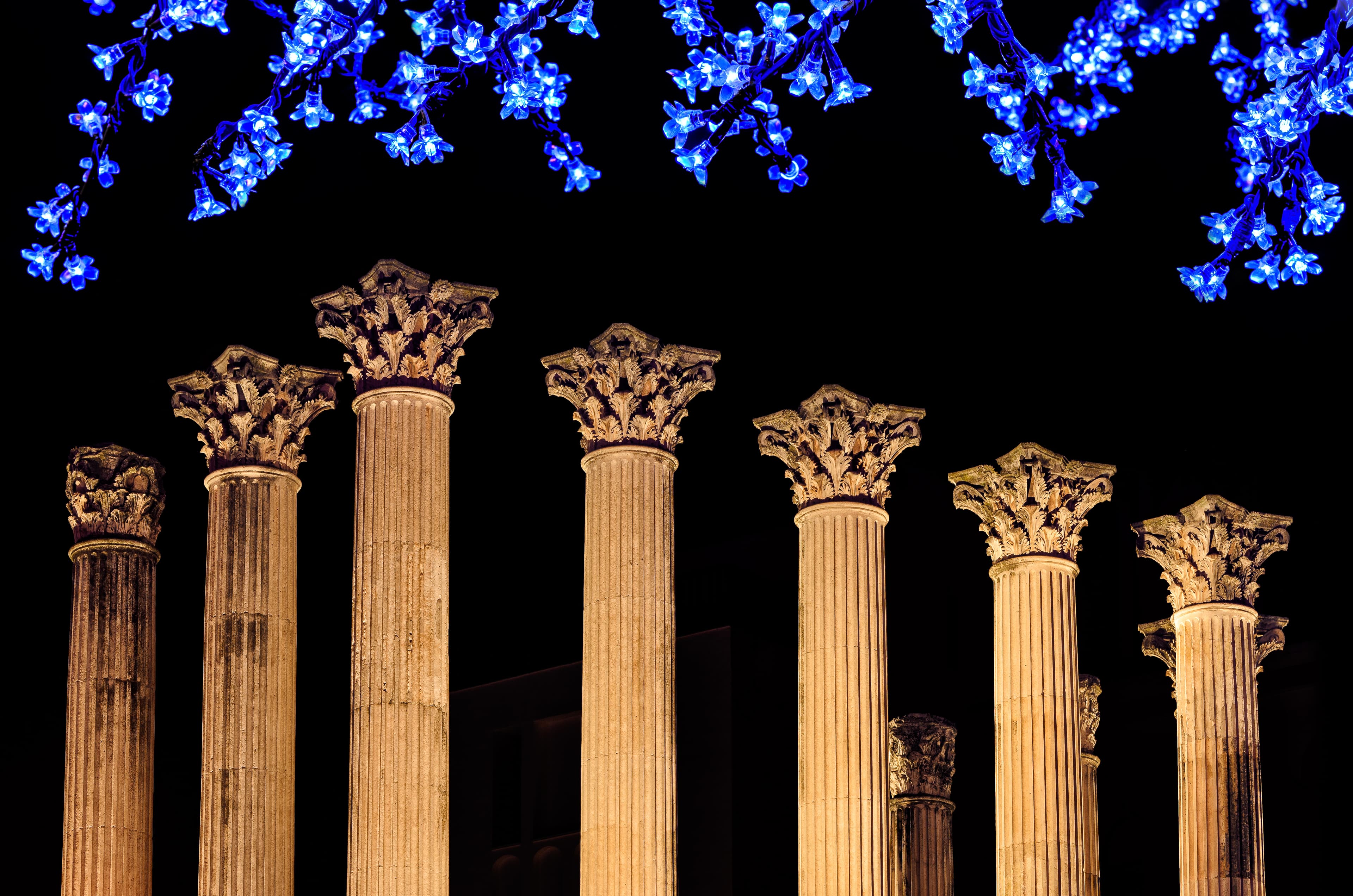
From 2 December to 5 January, Córdoba lights up with over 400 free activities: the light-and-sound show on Cruz Conde (488,755 LED points), the Municipal Nativity Scene near the Judería, Christmas markets, and the Three Kings Parade on 5 January. All free to enjoy in the historic centre.
Lights on Tendillas and Cruz Conde
The heart of the Christmas lights is Cruz Conde street: a display of 21 archways forming a 12-metre-high tunnel, 488,755 LED light points and 100 suspended stars — over 1.7 million lights across the city. The light-and-sound show runs five times daily (18:30, 19:00, 19:30, 20:00 and 20:30), with the 19:00 and 20:00 sessions at reduced volume, ideal for families with young children. Plaza de las Tendillas is the main hub: concerts, carols and roasted chestnuts. Practical tip: Cruz Conde gets extremely crowded at the first evening show and on weekends. If you have a pushchair or want a clear photo, go to the 18:30 show on a weekday or the last one at 20:30. Check official dates and times each year at cordobaesnavidad.es.
The Municipal Nativity Scene and the Judería
The Municipal Nativity Scene is set up inside the Oratorio de San Felipe Neri (calle San Felipe), a short walk from Tendillas and the Judería. Around 45 figures can be viewed from all four sides — free of charge, from 2 December to 5 January, open 11:00–14:00 and 17:00–20:00. Note the exceptions: on the 24th and 31st it only opens in the morning (11:00–14:00), and it closes on 25 December and 1 January. Nearby, the Nativity Scene Route and the Kutxabank Competition spread around 27 displays across parish churches, shops and the Palacio de Viana. Practical tip: the Judería has no special Christmas lights and its narrow lanes get congested in the afternoon. Visit first thing in the morning for a peaceful stroll, then head to the nativity scene afterwards. Medina Azahara runs limited daytime hours with no Christmas programming.
Three Kings Parade, 5 January
The parade sets off on 5 January at 17:00 from Parque de Miraflores (Plaza de Santa Teresa) and winds through the city centre for about four and a half hours: Avenida de Cádiz, Puente de San Rafael, Corregidor, Conde de Vallellano, Paseo de la Victoria, Ronda de los Tejares and Plaza de Colón. The last float reaches the Alpargate area (Avenida de Barcelona) around 21:30, and the Adoration of the Child takes place at Plaza del Cristo de Gracia around 22:00. The parade typically features over 500 performers, 14 floats and around 17,500 kg of sweets. Practical tip: if you have young children or a pushchair, avoid Cruz Conde and Tendillas — they get very crowded. Corregidor or Conde de Vallellano are wider stretches with easier exit routes. Avenida de las Ollerías draws smaller crowds and sweets still fall there.
Christmas Markets and Festive Atmosphere
The Christmas market is held on Bulevar del Gran Capitán (roughly 1 December to 5 January), with stalls selling crafts, nativity figurines, convent sweets and local food; additional stalls appear on Tendillas and Plaza de la Corredera. Entry is free. On weekends from 5 to 28 December, the Christmas Patios Festival opens around 40 courtyards for free (17:00–21:00) with flamenco and storytelling — a calmer alternative to the city centre buzz. New Year's Eve celebrations centre on Las Tendillas. Practical tip: Gran Capitán stalls fill up as evening falls and artisan sweets are not cheap. Shop in the morning and consider the city's convent pastry shops instead. We do not vouch for specific prices or line-ups — check the year's programme at cordobaesnavidad.es.
Frequently asked questions
How much does it cost to experience Christmas in Córdoba?
When do the lights switch on and what are the hours?
What time is the Three Kings Parade and which route does it follow?
Where is the Municipal Nativity Scene and when is it open?
Some links on this page are affiliate links: if you book through them, Andelaria may earn a commission at no extra cost to you. Transparency & affiliate policy
Book tickets and tours: Navidad en CórdobaPlan your trip
Book the essentials for your trip to Córdoba.
Other places in Córdoba
Mezquita-Catedral de Córdoba
catedralDeclared a UNESCO World Heritage Site, the Mosque-Cathedral is Córdoba's most iconic monument. Built from the year 786 onwards by Abd al-Rahman I on the site of a Visigoth basilica, it was for centuries the second-largest mosque in the world. Its forest of 856 two-tone columns of jasper and marble is an unforgettable sight.
Alcázar de los Reyes Cristianos
alcazarA 14th-century medieval fortress where the Catholic Monarchs established their headquarters during the Reconquista and received Christopher Columbus before his voyage to the Americas. Its terraced gardens with ponds, cypress trees and fountains, along with the Roman mosaics in the interior museum, make it essential visiting. After months of works, the gardens reopened on 16 June 2026 with a reduced summer schedule (8:15–13:00, Tue–Sun) and an admission fee of €7 — check the official website before you go.
Puente Romano
puenteBuilt in the 1st century BC on the orders of Augustus, this 16-arch bridge over the Guadalquivir was for twenty centuries the only southern entrance to the city. It offers the most photogenic view of Córdoba: the Mosque tower silhouetted against the sky at sunrise or sunset. Today it is pedestrian-only.
Medina Azahara (Madinat al-Zahra)
museoA caliphal palace city built in 936 by Abd al-Rahman III, 8 km from Córdoba, declared a UNESCO World Heritage Site in 2018. At its peak it housed up to 25,000 people. The throne room of Abd al-Rahman III, with its restored polychrome marble arches, conveys the splendour of the Córdoba caliphate at the height of its power.
Calleja de las Flores
barrioThe most photographed alley in Córdoba, set within the medieval Judería. Its whitewashed façades covered in pots of geraniums and begonias form a natural frame through which the Mosque's bell tower appears in the distance. Together with the surrounding Judería neighbourhood, it is the finest surviving example of Andalusian urban planning.
Judería de Córdoba
barrioCórdoba's medieval Jewish quarter, declared a World Heritage Site, is one of the best-preserved historic districts in Europe. Its narrow cobbled streets conceal the Synagogue of 1315 — one of only three surviving medieval synagogues in Spain — and the Casa de Sefarad. The maze of lanes between Calle Judíos and Plaza Maimónides is made for getting pleasantly lost.
Festival de los Patios Cordobeses
fiestaEvery first half of May, Córdoba opens around 53 privately owned competition courtyards for free — plus a dozen institutional spaces: geraniums, bougainvillea, and recycled terracotta pots in living, inhabited patios. UNESCO Intangible Heritage since 2012, with an official competition running since 1921. Free entry, no booking required, split daily hours.
Semana Santa de Córdoba
fiestaCórdoba's Semana Santa is free and open to all, with processions moving through the medieval Jewish quarter from dawn into the early morning hours. Its defining feature in Spain: since 2017, the Carrera Oficial passes through the interior of the Mezquita-Catedral, a UNESCO World Heritage monument. Thirty-nine of the 42 brotherhoods take part. The festival holds National Tourist Interest status.
Noche Blanca del Flamenco de Córdoba
fiestaOne June night, Córdoba scatters free flamenco across its historic old town. The Noche Blanca del Flamenco falls on the summer solstice (20–21 June) and sets up around ten simultaneous stages, running from 22:30 until 5:00 in the morning. No ticket, no booking: you walk in, listen, and drift from square to square.
Similar places in other cities
Semana Santa de Sevilla
SevillaSeville's Holy Week is free and open to all: you only pay for seats and grandstands along the Official Route. In 2026 it runs from 29 March to 5 April, with the eve celebrations on the 27th. Its peak is La Madrugá, when five major brotherhoods process from 1:00 a.m. until noon.
Feria de Abril de Sevilla
SevillaTwo weeks after Easter, Sevilla sets up its Real in Los Remedios: around 1,059 casetas (up to ~1,250 plots with the expansion), flamenco dresses, horses and sevillanas. Entry is free, but most are private and only accessible with an invitation from a member. Only around 14–16 are open to the public.
Velá de Santiago y Santa Ana
SevillaSeville's oldest festival, with more than 750 years of history, doesn't take place in the city centre — it happens in Triana. The Velá de Santa Ana falls in the last week of July, around the 26th: free casetas along the Guadalquivir, the cucaña grease-pole contest over the river, and not a flamenco dress or equestrian parade in sight.