Feria de Abril de Sevilla
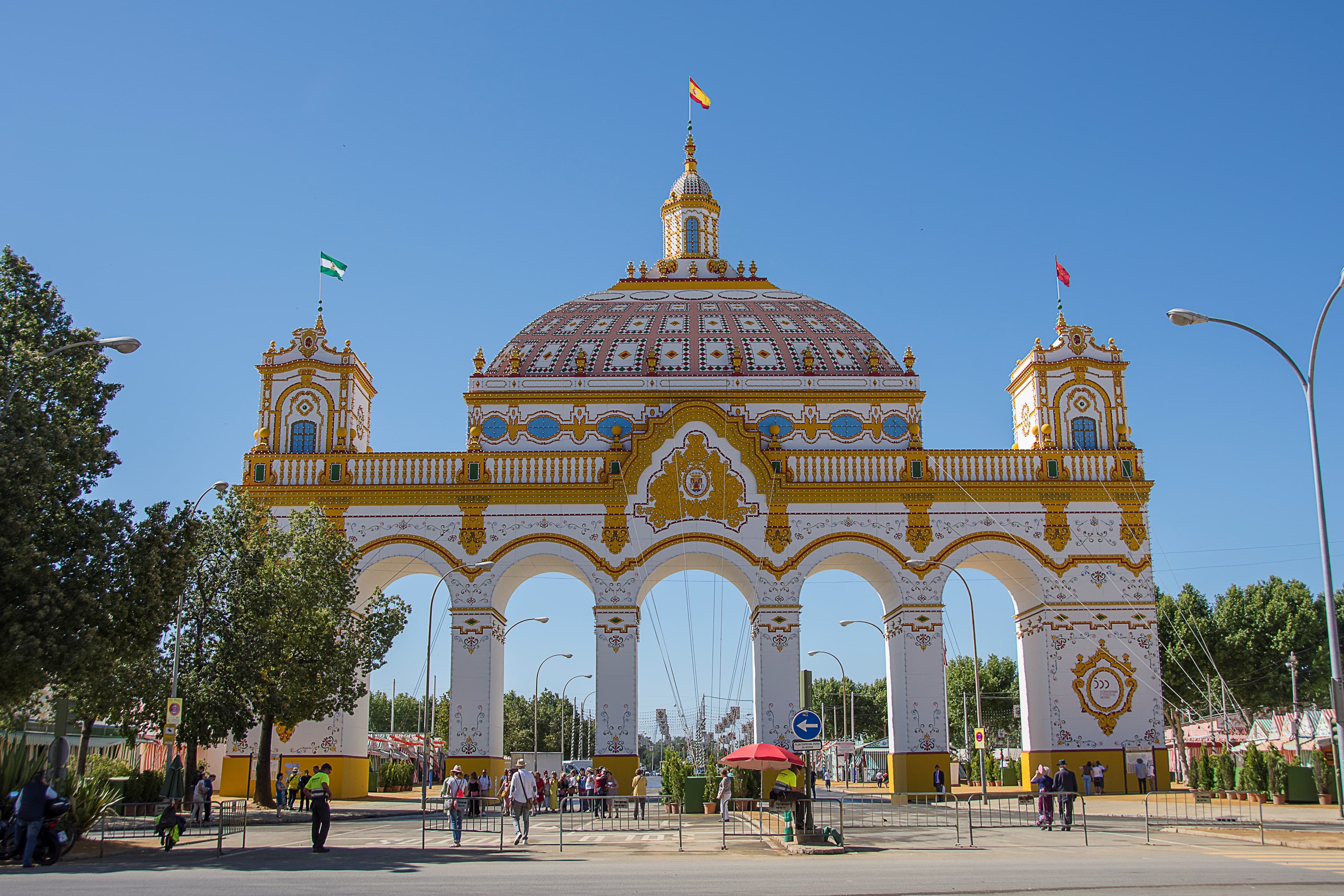
Two weeks after Easter, Sevilla sets up its Real in Los Remedios: around 1,059 casetas (up to ~1,250 plots with the expansion), flamenco dresses, horses and sevillanas. Entry is free, but most are private and only accessible with an invitation from a member. Only around 14–16 are open to the public.
What it is and why it defines Sevilla
The Feria de Abril is not a music festival or a beach party — it is a celebration of casetas, sevillanas, flamenco dresses and a horse parade with its own social code that defines Sevillano identity. The setting is the Real, an enclosure of around 450,000 m² in the Los Remedios neighbourhood — note that it is NOT in the historic centre — on the other side of the river. Each year a new Portada is unveiled: a monumental gateway structure (in 2026 it is 50 m wide and 40 m tall, lit by 28,000 bulbs) inspired by regionalist architecture. During the day horses and carriages reign; at night, rebujito and dancing take over. One honest warning: you may arrive expecting a tourist market and instead find a deeply local party where 90% of the casetas are private. Without a local contact, your Feria experience will be limited to the street of the Real and the handful of public casetas. Accept that before you go and you will not be disappointed.
2026 calendar: Alumbrado, days and fireworks
The Feria always falls two weeks after Easter. In 2026 it runs from Tuesday 21 to Sunday 26 April, with Monday 20 as the eve. That night, at midnight between Monday and Tuesday, the mayor flips the switch for the Alumbrado and around 280,000 lights come on all at once; beforehand, the whole city dines on fried fish at local bars. The week combines the horse parade, casetas and six bullfights at the Maestranza (check the official programme, announced each year). Wednesday 22 is a local public holiday — the busiest day of all. The Feria closes on Monday 27 at midnight with a fireworks display over the Guadalquivir (around 15 minutes), visible from the Puente de Triana, San Telmo or Calle Betis. Crowd-avoidance tip: Tuesday and Thursday are the quietest days; the Wednesday holiday, Friday and Saturday nights are absolute peak. Avoid visiting the Portada at dusk on the weekend — pedestrian access grinds to a halt.
Public vs private casetas and how to get there
Here is the nuance almost no one mentions: entering the Real is free, but the vast majority of the 1,059 casetas are private (families, companies, clubs) and can only be entered with a member's invitation. There is no paid ticket that gets you in — costs are shared internally among members. As a visitor, focus on the 14–16 open-access casetas: municipal district pavilions, trade unions (UGT, CCOO), political parties and the large Caseta Municipal run by the city council (c/ Pepe Luis Vázquez, 53; open 12:00 to 03:00). You pay no entry fee there, only for what you consume. The Calle del Real at night is open to everyone: anyone can join in dancing sevillanas. Getting there by car is a non-starter — parking in Los Remedios that week is impossible. Take Metro L1 (Prado de San Sebastián / Nervión, with nearby stops such as Plaza de Cuba) or the Tussam Tranvibús TB1 from Nervión, which runs directly to the Real until 07:00. The Feria ticket costs €1.60.
Rebujito, pescaíto and flamenco without looking like a tourist
The official drink is rebujito: manzanilla (a dry fino sherry from Jerez) mixed with lemon-lime soda and plenty of ice, served in a shared jug — one or two litres — never in a single glass. In public casetas it costs around €7.50; in private ones, €12–17. For food, go for shared plates of pescaíto frito (anchovies, marinated dogfish, small squid), tortilla de camarones, spinach with chickpeas and montaditos de pringá; never a set menu. The night of the Pescaíto (Monday 20) is the opening dinner, accompanied by fino or manzanilla. The local rule: NEVER order sangría or tinto de verano at a caseta — it is the unmistakable mark of an outsider — and do not chain more than two jugs together if you want to dance until five in the morning. The flamenco dress is the only Spanish regional costume that follows an annual fashion cycle; it is not fancy dress, so if you wear one, do so with respect. A Caseta del Turista does exist, but it closes earlier and has far less atmosphere than the district casetas.
Frequently asked questions
Can I walk into any caseta at the Feria de Abril?
When is the Feria de Abril de Sevilla 2026?
How do I get to the Real without a car?
What should I order to avoid standing out as a tourist?
Some links on this page are affiliate links: if you book through them, Andelaria may earn a commission at no extra cost to you. Transparency & affiliate policy
Book tickets and tours: Feria de Abril de SevillaPlan your trip
Book the essentials for your trip to Sevilla.
Other places in Sevilla
Real Alcázar de Sevilla
alcazarThe oldest inhabited royal palace in Europe, a UNESCO World Heritage Site. Its Mudéjar architecture, the tiled Patio de las Doncellas and gardens of fountains and labyrinths make it Seville's essential visit. A filming location for Game of Thrones, it breathes Almohad and Christian history in equal measure.
Catedral de Sevilla y La Giralda
catedralThe largest Gothic cathedral in the world and the third-largest church by floor area, built on the site of the former Almohad mosque. La Giralda, its 97-metre bell tower, is Seville's undisputed symbol. Inside lies the tomb of Christopher Columbus. The ticket includes access to the tower, which has no steps — only ramps.
Plaza de España
plazaA monumental neo-Renaissance and neo-Moorish semicircle built for the 1929 Ibero-American Exposition in the Parque de María Luisa. Its 48 tiled benches represent every Spanish province. The central canal invites boat rides, and its bridges and north and south towers make for perfect photographs at sunrise.
Barrio de Santa Cruz
barrioThe medieval Jewish quarter of whitewashed alleyways, flower-filled courtyards and squares shaded by orange trees. Nestled beside the Alcázar and the Cathedral, it is the romantic heart of Seville. Wandering streets like Agua or Vida, discovering the Hospital de los Venerables and sitting in the Plaza de Doña Elvira are experiences that capture the very soul of the city.
Torre del Oro
torreA 13th-century Almohad watchtower on the banks of the Guadalquivir, one of Seville's great defensive symbols. Its name comes from the golden tiles that once covered it. It houses the Naval Museum, with historical maps and objects from the American expeditions. The view from Puente de Triana at sunset is breathtaking.
Metropol Parasol (Las Setas)
museoThe largest wooden structure in the world, designed by Jürgen Mayer H. and inaugurated in 2011 in the Plaza de la Encarnación. Its elevated walkways offer the best panoramic views of Seville. At ground level it houses the Antiquarium, with Roman and Arab archaeological remains from the 1st century. Not to be missed at sunset.
Semana Santa de Sevilla
fiestaSeville's Holy Week is free and open to all: you only pay for seats and grandstands along the Official Route. In 2026 it runs from 29 March to 5 April, with the eve celebrations on the 27th. Its peak is La Madrugá, when five major brotherhoods process from 1:00 a.m. until noon.
Velá de Santiago y Santa Ana
fiestaSeville's oldest festival, with more than 750 years of history, doesn't take place in the city centre — it happens in Triana. The Velá de Santa Ana falls in the last week of July, around the 26th: free casetas along the Guadalquivir, the cucaña grease-pole contest over the river, and not a flamenco dress or equestrian parade in sight.
Cabalgata de Reyes Magos de Sevilla
fiestaEvery January 5th, Seville's Cabalgata de Reyes Magos winds through the city centre with 33 floats and around 100,000 kg of sweets tossed from them. Organised by the Ateneo since 1918, it is one of the oldest in Spain. Entry is free and open to all; the parade lasts about six hours.
Similar places in other cities
Festival de los Patios Cordobeses
CórdobaEvery first half of May, Córdoba opens around 53 privately owned competition courtyards for free — plus a dozen institutional spaces: geraniums, bougainvillea, and recycled terracotta pots in living, inhabited patios. UNESCO Intangible Heritage since 2012, with an official competition running since 1921. Free entry, no booking required, split daily hours.
Semana Santa de Córdoba
CórdobaCórdoba's Semana Santa is free and open to all, with processions moving through the medieval Jewish quarter from dawn into the early morning hours. Its defining feature in Spain: since 2017, the Carrera Oficial passes through the interior of the Mezquita-Catedral, a UNESCO World Heritage monument. Thirty-nine of the 42 brotherhoods take part. The festival holds National Tourist Interest status.
Noche Blanca del Flamenco de Córdoba
CórdobaOne June night, Córdoba scatters free flamenco across its historic old town. The Noche Blanca del Flamenco falls on the summer solstice (20–21 June) and sets up around ten simultaneous stages, running from 22:30 until 5:00 in the morning. No ticket, no booking: you walk in, listen, and drift from square to square.