Andalucía · España
Sevilla
The Real Alcázar, the Cathedral with La Giralda, the flamenco of Triana, and two festivals that define it: Semana Santa and the Feria de Abril.
By Brandon Quiroz · Verified by the Andelaria editorial team
The essentials
- Best time
- January, February, November
- Cost per day
- 101€/día
- Must-see
- Real Alcázar de Sevilla
About Sevilla
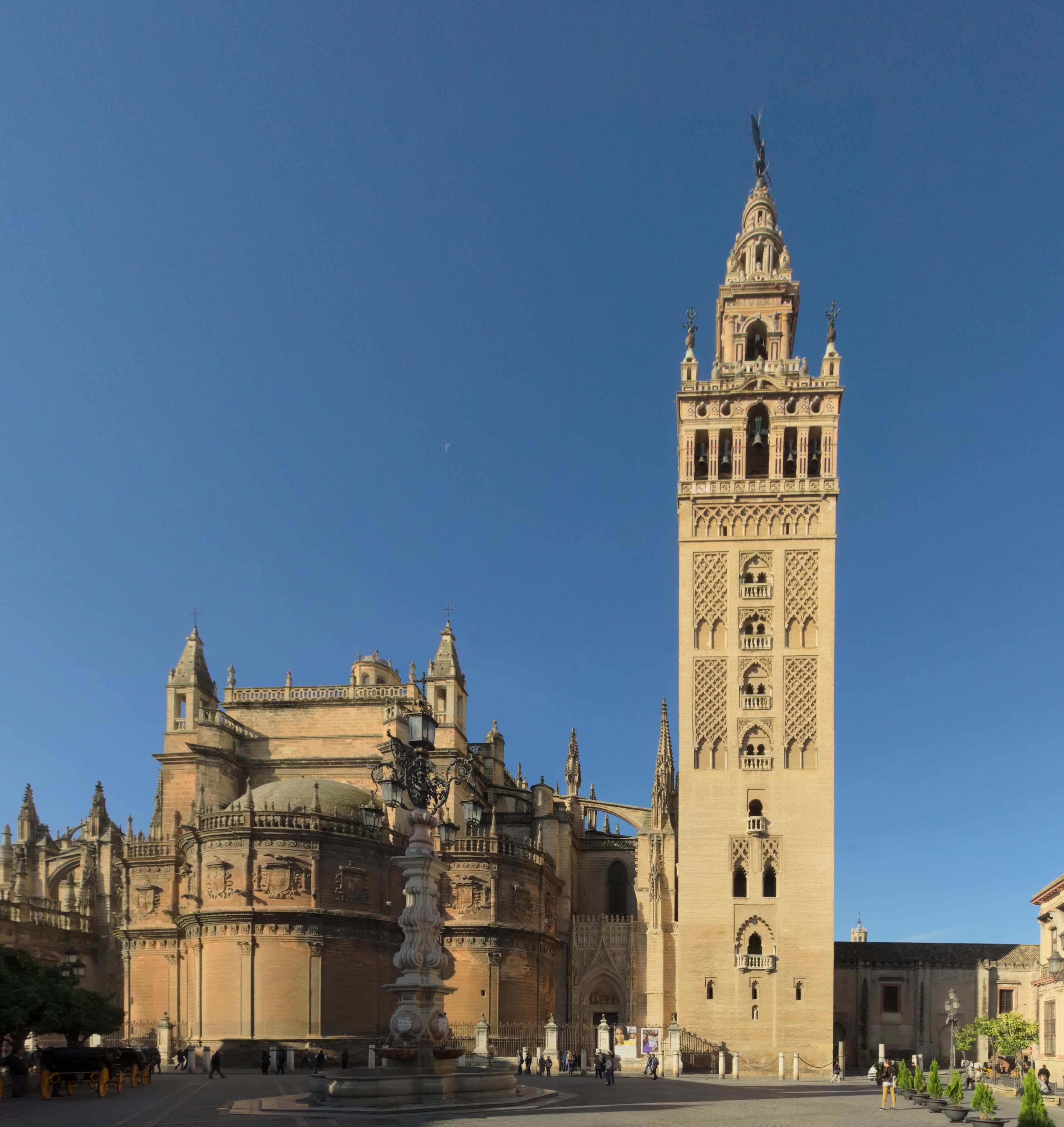
Seville is a city you walk and sweat through in equal measure. We almost always start at the Real Alcázar (€15.50 adult admission): book online with a date and time, because the queue without a ticket can swallow an entire morning. Next door, the Cathedral and the climb up La Giralda via its 35 ramps — designed for horses, not stairs — costs €13 (€12 online), and these two are the visits that truly justify the trip. From there you head into the Barrio de Santa Cruz, the old Jewish quarter: alleyways like Calle Agua or Pimienta, small squares like Doña Elvira or Santa Marta, and plenty of tile shops. It's beautiful and it's touristy; we own that.
To understand the real city, it's worth crossing over to Triana, on the other side of the Guadalquivir, where authentic flamenco is born and the market is a great spot for a cheap meal (set lunch menu from €8 to €13). Plaza de España, in the Parque de María Luisa, is free and worth every minute: go early or at sunset to beat the heat and the crowds. Torre del Oro by the river and Metropol Parasol — "Las Setas" to everyone — round out the circuit; climb the Las Setas walkway as the sun goes down.
The big question is when to come. April and October offer 22–25 °C (March slightly cooler, around 18–20 °C), moderate rain and the city at its best. But April is packed with Semana Santa and the Feria de Abril: a unique atmosphere, but with soaring prices, crowds, and near-impossible hotel availability. If you're not coming for the festivals, May is our pick: good weather with a little less overcrowding. July and August are brutal, with afternoons brushing or exceeding 40 °C.
The budget is kind: hotel from around €65 a night (€110 for a 3-star), white coffee from €1.30 to €1.80, and a single bus or tram ticket at €1.40. The Bienal de Flamenco (even years, like 2026) and the circus festival Circada in summer give you extra reasons to lock in your dates.
Guides to plan your trip
How much does a trip to Spain cost
A mid-range trip runs about €90–150 per person per day with a shared hotel; budget style, €50–70. Real breakdown of hotel, food, transport, and entry fees.
Best time to visit Spain
May and October offer the best balance: 19–21 °C and fewer crowds. Summer is hot (interior above 40 °C), winter is cheap. A month-by-month guide based on
What to do in Seville in 3 days: a neighborhood-by-neighborhood itinerary with prices and hours
A 3-day Seville itinerary by area: Alcázar, Cathedral, Santa Cruz, Plaza de España and Triana, with verified prices.
When to go
Best time to visit: January, February, November
Best avoided: May, September
Temperature, rainfall and crowds month by month.
| Month | Temp. | Rain | Crowds | Suitability |
|---|---|---|---|---|
| January | 17°C | 62 mm | Low | 77 |
| February | 19°C | 55 mm | Low | 84 |
| March | 22°C | 37 mm | Medium | 74 |
| April | 24°C | 47 mm | High | 52 |
| May | 28°C | 37 mm | High | 37 |
| June | 33°C | 11 mm | Medium | 48 |
| July | 36°C | 2 mm | Medium | 45 |
| August | 36°C | 3 mm | Medium | 45 |
| September | 31°C | 19 mm | High | 37 |
| October | 25°C | 72 mm | Medium | 51 |
| November | 19°C | 66 mm | Low | 82 |
| December | 17°C | 79 mm | Low | 73 |
Suitability (0-100) computed from temperature, rainfall, crowds and events.
Festivals & events
Semana Santa de Sevilla
2026-03-29 → 2026-04-05
Seville's Holy Week is free and open to all: you only pay for seats and grandstands along the Official Route. In 2026 it runs from 29 March to 5 April, with the eve celebrations on the 27th. Its peak is La Madrugá, when five major brotherhoods process from 1:00 a.m. until noon.
Feria de Abril de Sevilla
2026-04-21 → 2026-04-26
Two weeks after Easter, Sevilla sets up its Real in Los Remedios: around 1,059 casetas (up to ~1,250 plots with the expansion), flamenco dresses, horses and sevillanas. Entry is free, but most are private and only accessible with an invitation from a member. Only around 14–16 are open to the public.
Velá de Santiago y Santa Ana
Seville's oldest festival, with more than 750 years of history, doesn't take place in the city centre — it happens in Triana. The Velá de Santa Ana falls in the last week of July, around the 26th: free casetas along the Guadalquivir, the cucaña grease-pole contest over the river, and not a flamenco dress or equestrian parade in sight.
XXIV Bienal de Flamenco de Sevilla 2026
2026-09-09 → 2026-10-03
The most important flamenco festival in the world, featuring 72 shows, 22 world premieres and artists such as Sara Baras and José Mercé at venues including the Teatro de la Maestranza and the Real Alcázar.
Festival Circada Sevilla 2026
2026-06-04 → 2026-06-21
A contemporary circus festival that fills the squares, theatres and neighbourhoods of Seville with acrobatics, humour and visual poetry for all ages.
Browse by category
What to see & where to eat
Real Alcázar de Sevilla
alcazarThe oldest inhabited royal palace in Europe, a UNESCO World Heritage Site. Its Mudéjar architecture, the tiled Patio de las Doncellas and gardens of fountains and labyrinths make it Seville's essential visit. A filming location for Game of Thrones, it breathes Almohad and Christian history in equal measure.
Catedral de Sevilla y La Giralda
catedralThe largest Gothic cathedral in the world and the third-largest church by floor area, built on the site of the former Almohad mosque. La Giralda, its 97-metre bell tower, is Seville's undisputed symbol. Inside lies the tomb of Christopher Columbus. The ticket includes access to the tower, which has no steps — only ramps.
Plaza de España
plazaA monumental neo-Renaissance and neo-Moorish semicircle built for the 1929 Ibero-American Exposition in the Parque de María Luisa. Its 48 tiled benches represent every Spanish province. The central canal invites boat rides, and its bridges and north and south towers make for perfect photographs at sunrise.
Barrio de Santa Cruz
barrioThe medieval Jewish quarter of whitewashed alleyways, flower-filled courtyards and squares shaded by orange trees. Nestled beside the Alcázar and the Cathedral, it is the romantic heart of Seville. Wandering streets like Agua or Vida, discovering the Hospital de los Venerables and sitting in the Plaza de Doña Elvira are experiences that capture the very soul of the city.
Torre del Oro
torreA 13th-century Almohad watchtower on the banks of the Guadalquivir, one of Seville's great defensive symbols. Its name comes from the golden tiles that once covered it. It houses the Naval Museum, with historical maps and objects from the American expeditions. The view from Puente de Triana at sunset is breathtaking.
Metropol Parasol (Las Setas)
museoThe largest wooden structure in the world, designed by Jürgen Mayer H. and inaugurated in 2011 in the Plaza de la Encarnación. Its elevated walkways offer the best panoramic views of Seville. At ground level it houses the Antiquarium, with Roman and Arab archaeological remains from the 1st century. Not to be missed at sunset.
Some links on this page are affiliate links: if you book through them, Andelaria may earn a commission at no extra cost to you. Transparency & affiliate policy
Book experiences and tours in SevillaAverage prices
Approx. cost: ~101 €/day · Moderate
| Item | Price |
|---|---|
| Hotel (per night) | ~65 € (económico) / ~110 € (3 estrellas) |
| Set lunch menu / meal | 8–13 € |
| White coffee | 1,30–1,80 € |
| Public transport (single ticket) | 1,40 € |
| Real Alcázar entrance (adult) | 15,50 € |
| Seville Cathedral entrance (adult) | 13,00 € (12 € online) |
1-day estimate (1 person): hotel night + set menu + 2 coffees + 1 beer.
Getting there
- AVE Renfe from Madrid-Puerta de Atocha to Sevilla Santa Justa: ~2 h 30 min, tickets from €20. From Barcelona-Sants: ~5 h 30 min with AVE/iryo, tickets from €16. Both arrive at Santa Justa station, 10 minutes from the centre.
- From Madrid via the A-4 (Autovía del Sur), toll-free: ~530 km, approx. 5 h 15 min. Estimated fuel cost €55–75. From Barcelona via the A-4 through Madrid: ~1,000 km, ~9–10 h.
- The historic centre has an active LEZ (Mon–Fri 7:00–19:00); vehicles without a DGT environmental sticker cannot enter. It is recommended to use the free park-and-ride facilities on the western edge (Av. Carlos III, 2,900+ spaces) and travel in by metro or bus. Covered parking in the centre: from €2/hour or ~€17–25/day (e.g. Parkia Paseo Colón).
Plan your trip
Book the essentials for your trip to Sevilla.
Book your visit
Frequently asked questions
How many days do I need to see Seville?
What's the best time to avoid the heat?
Is it worth paying to enter the Real Alcázar?
How do I get around the city?
When is the best time to visit Sevilla?
How much does it cost to visit Sevilla per day?
More destinations
- Andalucía
Córdoba
The Mosque-Cathedral with its forest of columns, the former capital of the Umayyad caliphate, and the flower-filled patios of May.
- Andalucía
Málaga
The Alcazaba and Gibralfaro, the 'Manquita' Cathedral, the Picasso Museum and sardine espetos on its urban beaches.
- Granada
Granada
Nasrid Alhambra, Albaicín viewpoints, free tapas with every caña, and Sierra Nevada snow-capped half an hour from the centre.
- Comunidad de Madrid
Madrid
The art triangle (Prado, Reina Sofía, Thyssen), the taverns of La Latina, and a street life that keeps going late.
- Comunidad Valenciana
Valencia
Calatrava's Ciudad de las Artes, the Art Nouveau Mercado Central, the Jardins del Túria and the Fallas that set the city ablaze every March.
- País Vasco
San Sebastián
La Concha bay, pintxos in the Parte Vieja, Chillida's Peine del Viento and two festivals: Jazzaldia and the Zinemaldia film festival.