Metropol Parasol (Las Setas)
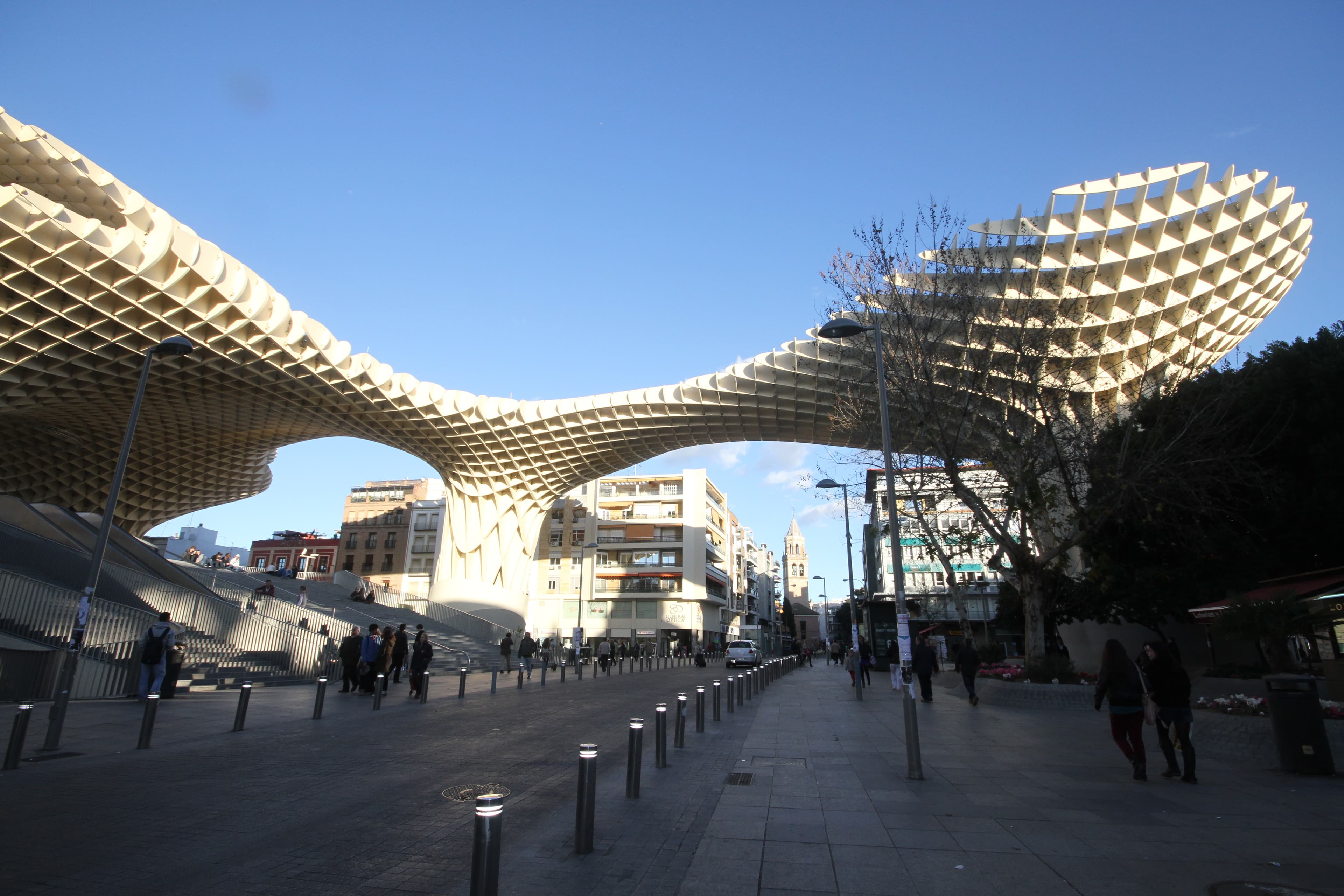
The largest wooden structure in the world, designed by Jürgen Mayer H. and inaugurated in 2011 in the Plaza de la Encarnación. Its elevated walkways offer the best panoramic views of Seville. At ground level it houses the Antiquarium, with Roman and Arab archaeological remains from the 1st century. Not to be missed at sunset.
The essentials
- Tickets
- 16,00 €
What it is and why going up is truly worth it
Las Setas (The Mushrooms) of La Encarnación is the largest wooden structure in the world: 150 metres long, 70 metres wide and 26 metres tall, built from Finnish laminated timber and designed by architect Jürgen Mayer H., inspired by the ficus trees in the square and the vaulted ceilings of Seville Cathedral. What makes it special is not just the futuristic building planted in the heart of the historic old town, but the history beneath your feet: in 2005, excavations began for an underground car park and uncovered Roman (1st–6th century) and Almohad remains. This forced a complete rethink of the project and led to the creation of the Antiquarium at its base. Up top, the mirador walkways offer a 360-degree view over Seville's rooftops that is hard to match anywhere else in the centre. Fun fact: the official name 'Setas' was adopted by the City Council to avoid paying royalties for the registered trademark 'Metropol Parasol'.
Tickets, opening hours and how to skip the queues
Entry to the mirador walkways costs €15 per adult and includes the projection show, the panoramic platform and the Aurora show. There is a reduced price of €12 for children aged 6–14, EU students aged 18–25, over-65s, large families and people with disabilities. Residents registered in the city of Seville and children under 5 enter free. The Antiquarium is charged separately (€2) and only has an on-site ticket desk — no online sales. Opening hours: 9:30 until midnight or 1:00 depending on the season (later in summer, ideal for sunset). Tip: in high season (April to September) queues at the ticket desk are common, so buy online at setasdesevilla.com even though it is not compulsory — you will save 30 to 60 minutes waiting. The first slot, from 9:30 to 11:00, is the quietest and offers the best light for photos without crowds.
How to get there and tips from someone who has been
You are right in the city centre, so walking is the most practical option: it is about 15 minutes from the Cathedral through the streets of the old town. By city bus, lines 01, 14, 16, 27, 32 and 40 stop at 'Laraña (Plaza Encarnación)', a three-minute walk away. The metro (Line L1) does not pass directly underneath, so you will need to walk 10 to 15 minutes from the nearest station; tram T1 drops you at Plaza Nueva, about 14 minutes on foot. For the visit, allow 30–45 minutes just for the mirador, or 1.5–2 hours if you add the Antiquarium or the evening Aurora show. Since the walkways are open-air, bring water and sun cream in summer and take the daytime climb at a relaxed pace; on very windy days access may be restricted. Check the Aurora show schedule on the official website when booking.
Frequently asked questions
How much does the ticket cost and do I need to book in advance?
How long does the visit take?
What is the best time to go up?
Some links on this page are affiliate links: if you book through them, Andelaria may earn a commission at no extra cost to you. Transparency & affiliate policy
Book tickets and tours: Metropol Parasol (Las Setas)· 16,00 €Plan your trip
Book the essentials for your trip to Sevilla.
Other places in Sevilla
Real Alcázar de Sevilla
alcazarThe oldest inhabited royal palace in Europe, a UNESCO World Heritage Site. Its Mudéjar architecture, the tiled Patio de las Doncellas and gardens of fountains and labyrinths make it Seville's essential visit. A filming location for Game of Thrones, it breathes Almohad and Christian history in equal measure.
Catedral de Sevilla y La Giralda
catedralThe largest Gothic cathedral in the world and the third-largest church by floor area, built on the site of the former Almohad mosque. La Giralda, its 97-metre bell tower, is Seville's undisputed symbol. Inside lies the tomb of Christopher Columbus. The ticket includes access to the tower, which has no steps — only ramps.
Plaza de España
plazaA monumental neo-Renaissance and neo-Moorish semicircle built for the 1929 Ibero-American Exposition in the Parque de María Luisa. Its 48 tiled benches represent every Spanish province. The central canal invites boat rides, and its bridges and north and south towers make for perfect photographs at sunrise.
Barrio de Santa Cruz
barrioThe medieval Jewish quarter of whitewashed alleyways, flower-filled courtyards and squares shaded by orange trees. Nestled beside the Alcázar and the Cathedral, it is the romantic heart of Seville. Wandering streets like Agua or Vida, discovering the Hospital de los Venerables and sitting in the Plaza de Doña Elvira are experiences that capture the very soul of the city.
Torre del Oro
torreA 13th-century Almohad watchtower on the banks of the Guadalquivir, one of Seville's great defensive symbols. Its name comes from the golden tiles that once covered it. It houses the Naval Museum, with historical maps and objects from the American expeditions. The view from Puente de Triana at sunset is breathtaking.
Semana Santa de Sevilla
fiestaSeville's Holy Week is free and open to all: you only pay for seats and grandstands along the Official Route. In 2026 it runs from 29 March to 5 April, with the eve celebrations on the 27th. Its peak is La Madrugá, when five major brotherhoods process from 1:00 a.m. until noon.
Feria de Abril de Sevilla
fiestaTwo weeks after Easter, Sevilla sets up its Real in Los Remedios: around 1,059 casetas (up to ~1,250 plots with the expansion), flamenco dresses, horses and sevillanas. Entry is free, but most are private and only accessible with an invitation from a member. Only around 14–16 are open to the public.
Velá de Santiago y Santa Ana
fiestaSeville's oldest festival, with more than 750 years of history, doesn't take place in the city centre — it happens in Triana. The Velá de Santa Ana falls in the last week of July, around the 26th: free casetas along the Guadalquivir, the cucaña grease-pole contest over the river, and not a flamenco dress or equestrian parade in sight.
Similar places in other cities
Medina Azahara (Madinat al-Zahra)
CórdobaA caliphal palace city built in 936 by Abd al-Rahman III, 8 km from Córdoba, declared a UNESCO World Heritage Site in 2018. At its peak it housed up to 25,000 people. The throne room of Abd al-Rahman III, with its restored polychrome marble arches, conveys the splendour of the Córdoba caliphate at the height of its power.
Museo Picasso Málaga
MálagaInaugurated by the King and Queen of Spain in October 2003, it occupies the 16th-century Palacio Buenavista in the historic centre. It houses 285 works donated by the Picasso family, covering every period of the Málaga-born genius's career, from his academic studies to late Cubism. Entrance: €13 (audio guide included).
Centro de Arte Contemporáneo de Málaga (CAC)
MálagaMálaga's only museum dedicated entirely to 20th- and 21st-century art, housed in the former Wholesale Market of 1939 (architects Gutiérrez Soto and Jáuregui). It hosts temporary exhibitions by international artists such as Louise Bourgeois and Marc Quinn in a Rationalist building with a triangular floor plan. Free admission.