Centro de Arte Contemporáneo de Málaga (CAC)
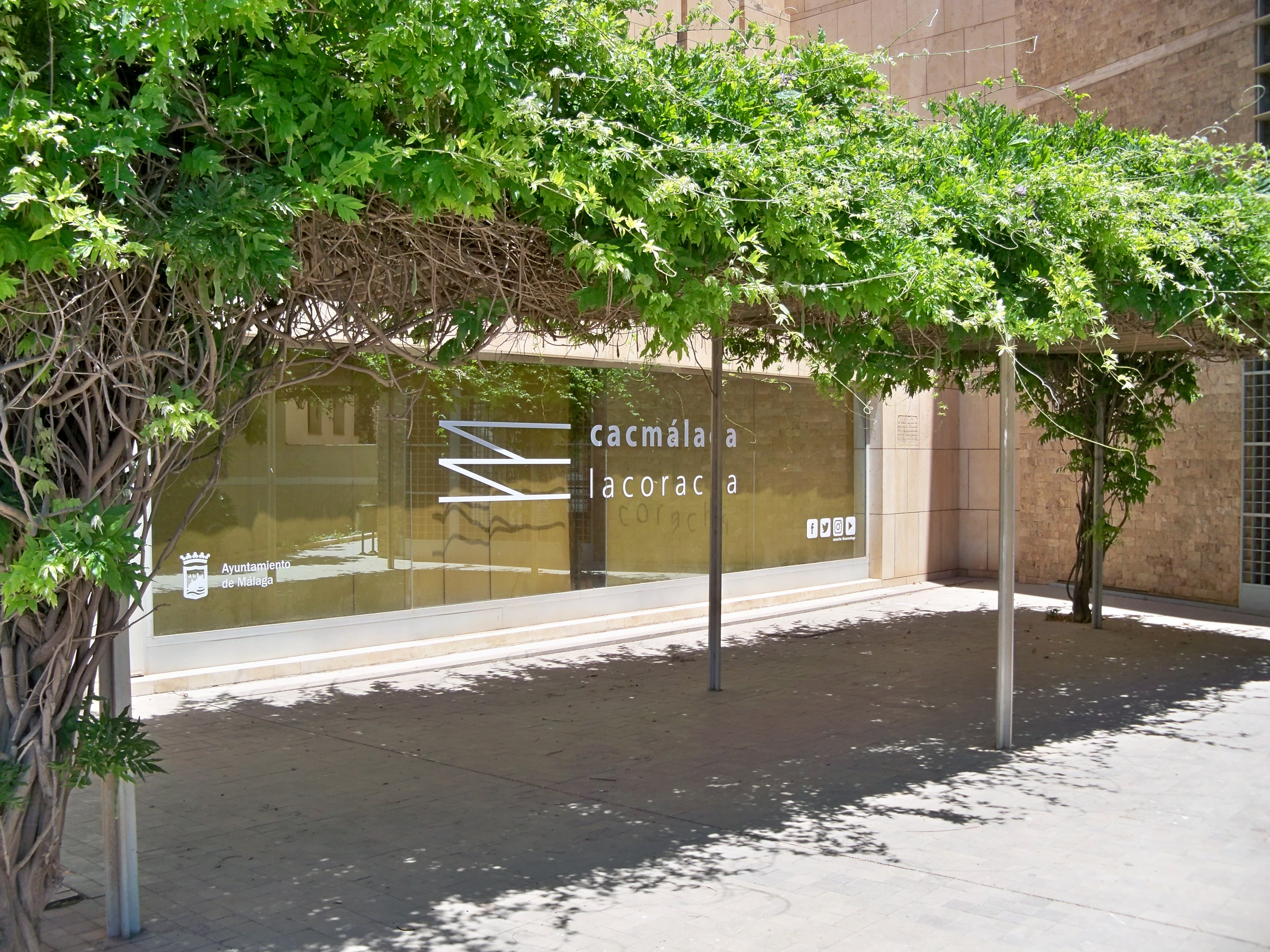
Málaga's only museum dedicated entirely to 20th- and 21st-century art, housed in the former Wholesale Market of 1939 (architects Gutiérrez Soto and Jáuregui). It hosts temporary exhibitions by international artists such as Louise Bourgeois and Marc Quinn in a Rationalist building with a triangular floor plan. Free admission.
The essentials
- Tickets
- Gratis
What it is (and why you should check the programme before you visit)
CAC Málaga was for 21 years the only museum in the city devoted entirely to 20th- and 21st-century art, with a collection of more than 630 works and names such as Louise Bourgeois, Ai Weiwei, Olafur Eliasson, Damien Hirst, Maurizio Cattelan, Ron Mueck, Antoni Tàpies and Miquel Barceló. In September 2024 it closed as the CAC and the project evolved into MuCAC Málaga. Here is the detail that will save you a wasted trip: the building most people associate with the CAC — the former Wholesale Market on Calle Alemania, in the Soho district — has been closed for renovation since 2024 and CANNOT be visited in June 2026. Work was formally begun in January 2026 and the reopening is estimated for mid or late 2026, with no confirmed date yet. The building is worth some context: it is a Rationalist structure from 1939–1944, with an almost triangular floor plan, a central tower and a courtyard, designed by Luis Gutiérrez Soto (who also designed Madrid's Barajas airport and the Europa and Barceló cinemas), with cold-storage rooms and an air-raid shelter in the basement — a reminder that it was conceived during the Spanish Civil War. It is listed as a Cultural Heritage Site. But today, to see art, you need to go to a different venue.
Tickets, opening hours and how to skip the queues
The active venue is MuCAC La Coracha, at Paseo de Reding, 1, at the foot of Gibralfaro in La Malagueta. Admission is free (policy in force as of June 2026; the official website mucacmalaga.eu has not announced any change). It opens Tuesday to Sunday from 10:00 to 20:00 and is closed on Mondays; it also closes on 25 December and 1 January but is open on all other public holidays. The sources we consulted show no requirement to book online, so you can just turn up — though it is worth checking mucacmalaga.eu before you go in case anything changes. The good news is that it is rarely crowded and queues are almost unheard of. The 2026 programme includes "Ayer. Colección 1940–1990" (on permanent display until April 2027), "Tejiendo historias" (April to September 2026) and "Mi porción del pastel" by Verónica Ruth Frías (9 June to 26 July 2026). Allow around 1 hour for a standard visit, or up to 90 minutes if you linger in the bookshop-store or join a workshop. For the quietest experience, go on a weekday morning — Tuesday to Thursday before 12:00.
Getting there and tips from someone who has already been
MuCAC La Coracha (Paseo de Reding, 1) is an easy walk: about 20 minutes from the Cathedral and the historic centre, or about 15 minutes from the Parque, skirting the port towards La Malagueta. It is a pleasant stroll, so if you are already in the centre there is no need to bother with public transport. If you prefer the bus, several EMT lines run along the coastal corridor of Paseo de Reding and La Malagueta (line 3, for instance, stops nearby); check the exact line on emtmalaga.es or the EMT Málaga app before you leave. The tram does not reach Paseo de Reding: the nearest stop is at Alameda Principal, about 15 minutes on foot, so it is not worth it. A couple of final notes: first, if you came specifically to enter the Rationalist Wholesale Market building on Calle Alemania (Soho), you will have to wait until it reopens as MuCAC Mayoristas, expected in the second half of 2026; in the meantime, all the art is at La Coracha. Second, because it is in La Malagueta, you can easily combine the visit with the beach, Muelle Uno or the Castillo de Gibralfaro, all within walking distance.
Frequently asked questions
How much does admission cost and do I need to book?
How much time do I need for the visit?
Can I visit the former CAC building on Calle Alemania?
Some links on this page are affiliate links: if you book through them, Andelaria may earn a commission at no extra cost to you. Transparency & affiliate policy
Book tickets and tours: Centro de Arte Contemporáneo de Málaga (CAC)· GratisPlan your trip
Book the essentials for your trip to Málaga.
Other places in Málaga
Alcazaba de Málaga
alcazabaAn 11th-century Arab fortress declared a Historic-Artistic Monument in 1931, with 110 towers and three walled enclosures rising from the Roman theatre up to the Nasrid palace. Built under the Zirid taifa of Badis (1056), its inner gardens and pools rival those of the Alhambra. Entrance: €7 (combined with Gibralfaro: €10); free on Sundays from 2 pm.
Catedral de la Encarnación (La Manquita)
catedralA Renaissance cathedral begun in 1528 on the site of the former main mosque, with Gothic and Baroque touches. Málaga locals call it 'La Manquita' because its south tower was never finished; the north tower reaches 84 metres, the second tallest in Andalusia after the Giralda. Entrance: €6; with rooftop access: €10.
Castillo de Gibralfaro
castilloA 14th-century Muslim fortress perched 130 metres above the sea, connected to the Alcazaba by the 'coracha' wall. From its battlements you command views of the Port, La Malagueta and the whole bay. A museum room on its military history was opened in 2003. Entrance: €7 (combined with the Alcazaba: €10); free on Sundays from 2 pm.
Museo Picasso Málaga
museoInaugurated by the King and Queen of Spain in October 2003, it occupies the 16th-century Palacio Buenavista in the historic centre. It houses 285 works donated by the Picasso family, covering every period of the Málaga-born genius's career, from his academic studies to late Cubism. Entrance: €13 (audio guide included).
Calle Marqués de Larios
plazaA 300-metre pedestrian artery inaugurated on 27 August 1891 and pedestrianised in 2002, it is the commercial and social heart of Málaga. Its 19th-century limestone buildings frame shops and terraces all the way to Plaza de la Constitución. An essential backdrop for the August Fiestas and Málaga's Holy Week. Free access.
Semana Santa en Málaga
fiestaMálaga's Holy Week fills the historic centre with floats weighing up to 4,200 kg, carried by hundreds of men and women bearers. It is free and street-based: from Palm Sunday to Easter Sunday (in 2026, 29 March to 5 April). Its distinctive sound — bugles and drums — was born here in 1911.
Feria de Málaga (Feria de Agosto)
fiestaThe Feria de Málaga is actually two free fairs in one: the daytime fair in the city centre (Calle Larios, 12:00–18:00) and the nighttime fair at the Real del Cortijo de Torres, with around 120 casetas (marquees) with free entry. In 2026 it runs from 15 to 22 August, commemorating the entry of the Catholic Monarchs into Málaga in 1487.
Festival de Málaga — Cine en Español
fiestaThe Málaga Festival is Spain's leading Spanish-language film festival after San Sebastián. Its 29th edition ran from 6 to 15 March 2026 and drew around 111,000 attendees. It is a ticketed event: galas and screenings require a paid entry, except for the free summer programme Cine Abierto.
Noche en Blanco de Málaga
fiestaMálaga's Noche en Blanco is a free nocturnal festival that opens museums, monuments and city-centre streets for a single night. Its 2026 edition (the 17th, held on 16 May, from 20:00 to 01:00) brought together around 150 art, music and dance events across nearly a hundred venues, all free to enter.
Similar places in other cities
Medina Azahara (Madinat al-Zahra)
CórdobaA caliphal palace city built in 936 by Abd al-Rahman III, 8 km from Córdoba, declared a UNESCO World Heritage Site in 2018. At its peak it housed up to 25,000 people. The throne room of Abd al-Rahman III, with its restored polychrome marble arches, conveys the splendour of the Córdoba caliphate at the height of its power.
Metropol Parasol (Las Setas)
SevillaThe largest wooden structure in the world, designed by Jürgen Mayer H. and inaugurated in 2011 in the Plaza de la Encarnación. Its elevated walkways offer the best panoramic views of Seville. At ground level it houses the Antiquarium, with Roman and Arab archaeological remains from the 1st century. Not to be missed at sunset.
Museo del Prado
MadridSpain's most important painting museum holds more than 8,000 works on display, among them Velázquez's Las Meninas, Bosch's The Garden of Earthly Delights and Goya's cartoons. Juan de Villanueva's neoclassical building, opened in 1819, is itself a monumental piece of architecture on the Paseo del Arte.