Alcazaba de Málaga
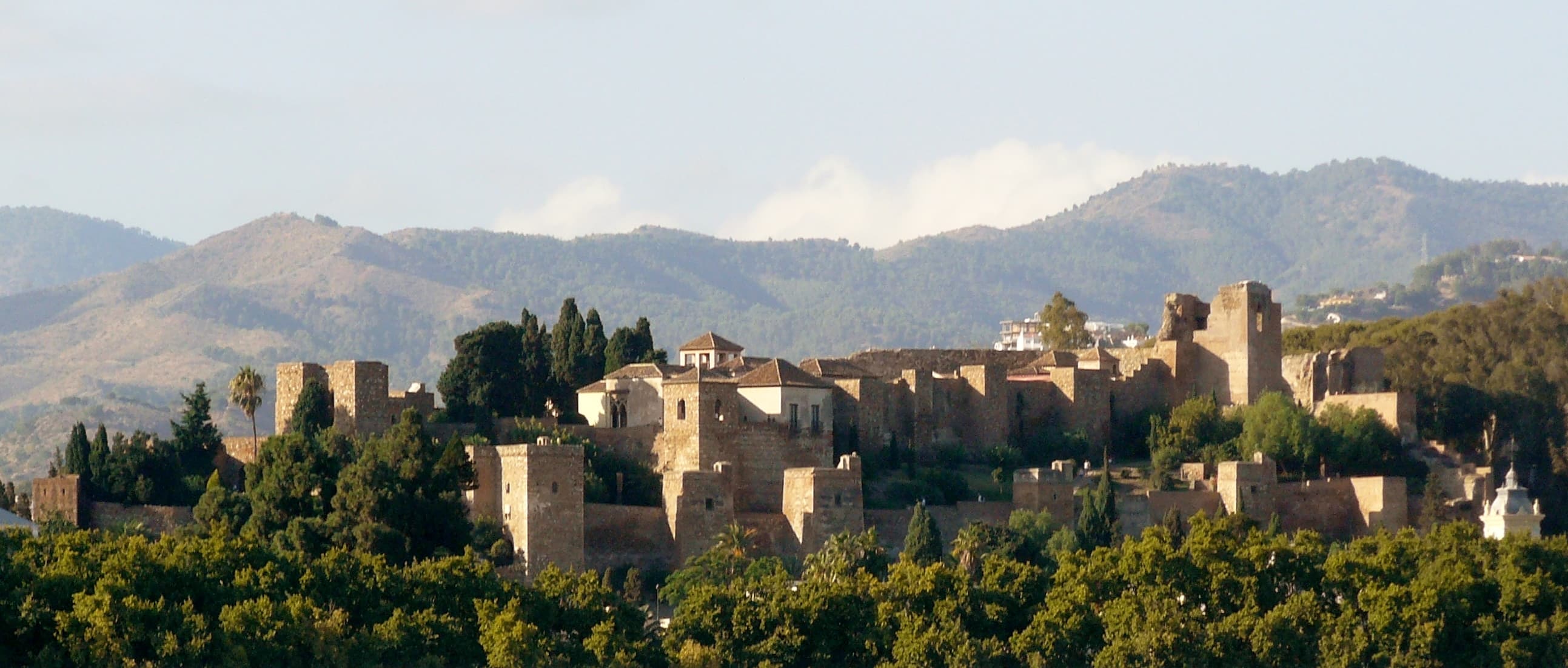
An 11th-century Arab fortress declared a Historic-Artistic Monument in 1931, with 110 towers and three walled enclosures rising from the Roman theatre up to the Nasrid palace. Built under the Zirid taifa of Badis (1056), its inner gardens and pools rival those of the Alhambra. Entrance: €7 (combined with Gibralfaro: €10); free on Sundays from 2 pm.
The essentials
- Tickets
- 7 €
What it is and why it's worth a visit
The Alcazaba is the palatial fortress that crowns the centre of Málaga, right above the Roman Theatre and a short walk from Calle Alcazabilla. Its defensive core was built — or thoroughly rebuilt — by Badis ben Habús, king of the Zirid taifa of Granada, between 1040 and 1065: a double walled enclosure, angled gateways such as the Puerta de la Bóveda and the Puerta del Cristo, and barbican towers that restorer Leopoldo Torres Balbás described as the prototype of military architecture from the taifa period. But what truly captivates visitors is not the walls — it's the Nasrid palace inside, remodelled in the 13th century: the Patio de la Alberca with its reflecting pool, the Patio de los Surtidores, the Patio de los Naranjos and the cisterns. It recalls the Alhambra in style and Granadan tradition, though it is considerably smaller (around 15,000 m² today, less than half its original extent). It was declared a Historic-Artistic Monument on 3 April 1931 and holds the status of Bien de Interés Cultural. In 2019 it welcomed 711,067 visitors, so it's no hidden gem — but it can still be explored at a relaxed pace.
Tickets, opening hours and how to beat the queues
General admission costs 7 € and the reduced ticket 3 € (EU residents aged 65+, EU students, disability ≥33%, large families; free for children under 6). If you want to combine it with the Castillo de Gibralfaro, a joint ticket costs 10 € (5 € reduced) and covers both sites on the same day. A well-known trick: on Sundays admission is free from 14:00 until closing — which means long queues, so weigh up whether it's worth it. In summer (1 April–31 October) it's open 09:00–20:00, last entry at 19:00; in winter (1 November–31 March) 09:00–18:00, last entry at 17:00. It opens every day including public holidays. Booking online (alcazabaygibralfaro.janto.es) is recommended in high season but not required — you can buy tickets at the box office on the day. To avoid crowds and heat, the best time is right at opening, between 09:00 and 10:30, or on weekday mornings Tuesday to Thursday.
How to get there and tips from those who've been
The main entrance is on Calle Alcazabilla, next to the Roman Theatre; from the historic centre it's a 5–10 minute walk. If the uphill climb is a problem, behind the Town Hall (Calle Guillén Sotelo) there is a free lift that takes you to the upper section, letting you tour the monument downhill to the Roman Theatre. Important note: that lift does not operate on Mondays, so if you rely on it or have reduced mobility, save Monday for something else. By metro, lines L1 and L2 to Atarazanas (around 10 minutes on foot); the tram and EMT buses 1, 11, 19, 23, 25 and A also stop nearby, at Paseo del Parque or Plaza de la Merced. Allow between 1.5 and 2 hours for a standard visit, and half a day if you combine it with Gibralfaro. The terrain is uneven, with ramps and steps — not suitable for wheelchairs, though pushchairs can manage the main route. Wear comfortable shoes and bring water in summer.
Frequently asked questions
How much does entry cost and do I need to book in advance?
How much time do I need to visit?
What is the best time to avoid crowds and heat?
Some links on this page are affiliate links: if you book through them, Andelaria may earn a commission at no extra cost to you. Transparency & affiliate policy
Book tickets and tours: Alcazaba de Málaga· 7 €Plan your trip
Book the essentials for your trip to Málaga.
Other places in Málaga
Catedral de la Encarnación (La Manquita)
catedralA Renaissance cathedral begun in 1528 on the site of the former main mosque, with Gothic and Baroque touches. Málaga locals call it 'La Manquita' because its south tower was never finished; the north tower reaches 84 metres, the second tallest in Andalusia after the Giralda. Entrance: €6; with rooftop access: €10.
Castillo de Gibralfaro
castilloA 14th-century Muslim fortress perched 130 metres above the sea, connected to the Alcazaba by the 'coracha' wall. From its battlements you command views of the Port, La Malagueta and the whole bay. A museum room on its military history was opened in 2003. Entrance: €7 (combined with the Alcazaba: €10); free on Sundays from 2 pm.
Museo Picasso Málaga
museoInaugurated by the King and Queen of Spain in October 2003, it occupies the 16th-century Palacio Buenavista in the historic centre. It houses 285 works donated by the Picasso family, covering every period of the Málaga-born genius's career, from his academic studies to late Cubism. Entrance: €13 (audio guide included).
Centro de Arte Contemporáneo de Málaga (CAC)
museoMálaga's only museum dedicated entirely to 20th- and 21st-century art, housed in the former Wholesale Market of 1939 (architects Gutiérrez Soto and Jáuregui). It hosts temporary exhibitions by international artists such as Louise Bourgeois and Marc Quinn in a Rationalist building with a triangular floor plan. Free admission.
Calle Marqués de Larios
plazaA 300-metre pedestrian artery inaugurated on 27 August 1891 and pedestrianised in 2002, it is the commercial and social heart of Málaga. Its 19th-century limestone buildings frame shops and terraces all the way to Plaza de la Constitución. An essential backdrop for the August Fiestas and Málaga's Holy Week. Free access.
Semana Santa en Málaga
fiestaMálaga's Holy Week fills the historic centre with floats weighing up to 4,200 kg, carried by hundreds of men and women bearers. It is free and street-based: from Palm Sunday to Easter Sunday (in 2026, 29 March to 5 April). Its distinctive sound — bugles and drums — was born here in 1911.
Feria de Málaga (Feria de Agosto)
fiestaThe Feria de Málaga is actually two free fairs in one: the daytime fair in the city centre (Calle Larios, 12:00–18:00) and the nighttime fair at the Real del Cortijo de Torres, with around 120 casetas (marquees) with free entry. In 2026 it runs from 15 to 22 August, commemorating the entry of the Catholic Monarchs into Málaga in 1487.
Festival de Málaga — Cine en Español
fiestaThe Málaga Festival is Spain's leading Spanish-language film festival after San Sebastián. Its 29th edition ran from 6 to 15 March 2026 and drew around 111,000 attendees. It is a ticketed event: galas and screenings require a paid entry, except for the free summer programme Cine Abierto.