Noche en Blanco de Málaga
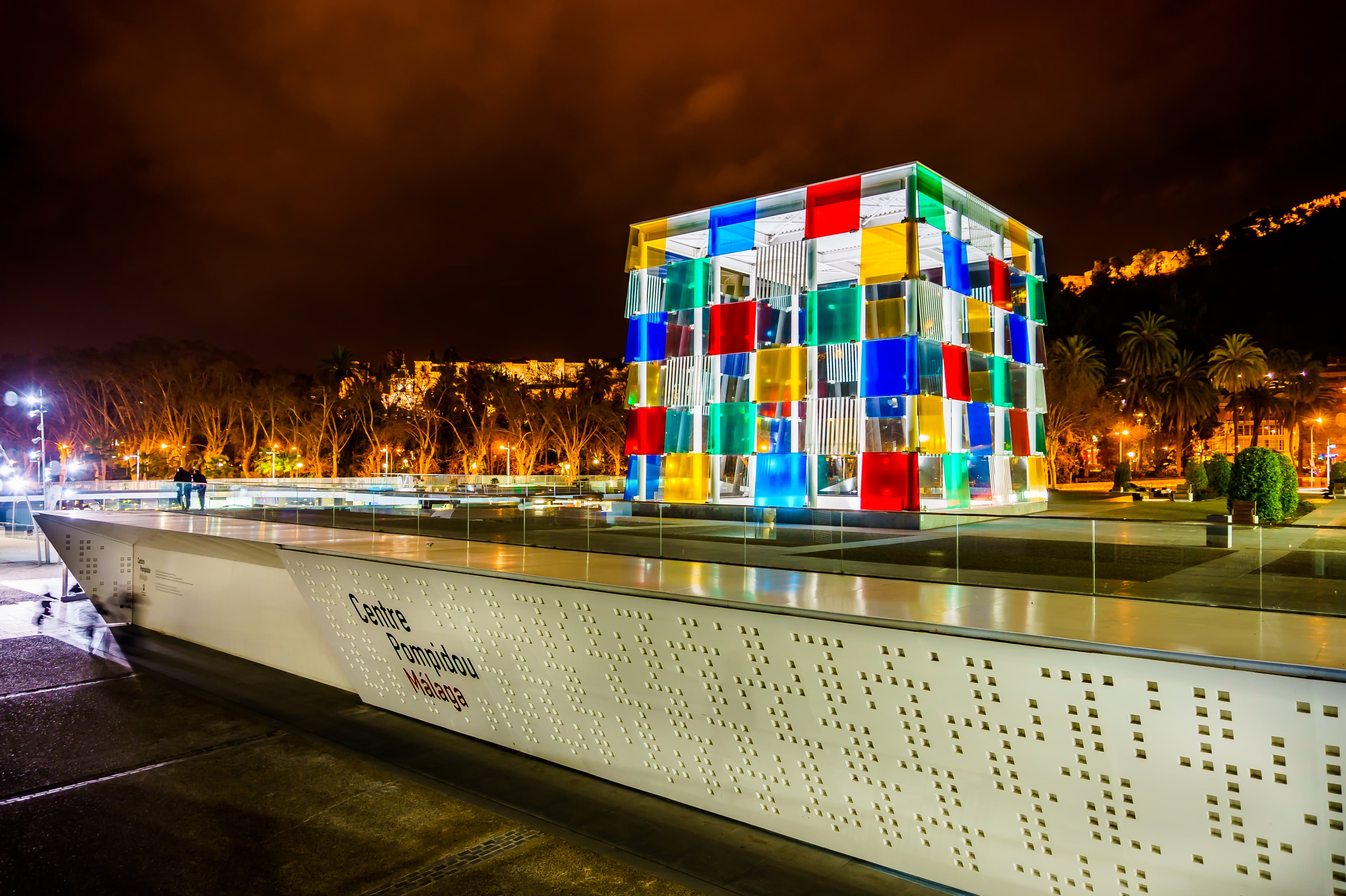
Málaga's Noche en Blanco is a free nocturnal festival that opens museums, monuments and city-centre streets for a single night. Its 2026 edition (the 17th, held on 16 May, from 20:00 to 01:00) brought together around 150 art, music and dance events across nearly a hundred venues, all free to enter.
What is the Noche en Blanco
Once a year, on a Saturday night, Málaga throws its cultural life open to the streets and unlocks most of its museums and monuments free of charge. The festival was born in 2008, inspired by the European Nuits Blanches (Paris, Rome, Madrid), and Málaga is the only Spanish capital to have kept it going without interruption. Hours run from 20:00 to 01:00, and everything — absolutely everything on the official programme — is free and open to all: museums, concerts, performances and installations. Each edition revolves around a theme (in 2026, 'The Future Is Written in Music') and typically features around 150 events. One thing to watch: the festival is usually held in mid-May, not October. The October editions (2018 and 2022, following the pandemic) were exceptions. Always check the official website for the exact date and lineup, as both change every year.
Which museums open and what do they offer
For many visitors, the main draw is free entry to museums that normally charge admission. Recent editions have included the Museo Picasso Málaga (permanent collection), the Centre Pompidou Málaga, the CAC Málaga contemporary art museum, the Museo Carmen Thyssen, the Museo de Málaga at the Palacio de la Aduana (Fine Arts and Archaeology) and the Museo Ruso, among others. In 2026, the Picasso was open from 20:00 to 00:00 (last entry at 23:20) and the Thyssen from 20:00 to 01:00 with last entry at 00:30. One critical tip: closing times and last-entry cut-offs vary between venues, and the Picasso typically closes earlier than the rest. If there is a specific museum you want to see, go early and double-check its hours on its own official website that same week — do not assume every venue stays open until one in the morning.
Street art and live concerts
Beyond the museums, the city fills with stages and installations. There are usually concerts in Plaza de la Constitución and along Calle Larios (including acts like 'Balcones en Canto'), classical guitar recitals in courtyards, performing arts and a dedicated children's strand, the 'Nochecita en Blanco'. In 2026, public-space art interventions such as 'IN-ESTABLES' and 'DERIVA' were part of the programme, and even EMT city buses were transformed into acoustic stages for singer-songwriters. Some events have limited capacity or require prior registration: guided tours of the Alcazaba, for example, were booked through Eventbrite, and spots at monuments such as Gibralfaro or the English Cemetery tend to sell out weeks in advance. Tip: if you want one of these slots, sign up as soon as booking opens. The rest of the street programme needs no ticket — just patience with the crowds.
Practical tips: timings and getting around
The historic centre closes to traffic that night, so forget about parking nearby: the City Hall itself recommends arriving on foot, by bike or by public transport. The EMT extends several bus lines until 02:00 (adding some 25,000 extra spaces to get people home) and the Metro also extends its usual timetable. If you are coming by car, leave it in a car park on the outskirts and walk in. The tip you will thank yourself for: between 20:00 and 22:30 the crowds are noticeably thinner and children's activities work best; after 22:30 the centre fills up and museum queues shoot up quickly. Download the map and programme PDF from the official website and plan your route by priority, because there is no way to see everything. Bring water and comfortable shoes — it is five hours on your feet.
Frequently asked questions
Is Málaga's Noche en Blanco free?
Is it held in May or October?
Which museums open for free that night?
How do I get to the centre if traffic is closed off?
Some links on this page are affiliate links: if you book through them, Andelaria may earn a commission at no extra cost to you. Transparency & affiliate policy
Book tickets and tours: Noche en Blanco de MálagaPlan your trip
Book the essentials for your trip to Málaga.
Other places in Málaga
Alcazaba de Málaga
alcazabaAn 11th-century Arab fortress declared a Historic-Artistic Monument in 1931, with 110 towers and three walled enclosures rising from the Roman theatre up to the Nasrid palace. Built under the Zirid taifa of Badis (1056), its inner gardens and pools rival those of the Alhambra. Entrance: €7 (combined with Gibralfaro: €10); free on Sundays from 2 pm.
Catedral de la Encarnación (La Manquita)
catedralA Renaissance cathedral begun in 1528 on the site of the former main mosque, with Gothic and Baroque touches. Málaga locals call it 'La Manquita' because its south tower was never finished; the north tower reaches 84 metres, the second tallest in Andalusia after the Giralda. Entrance: €6; with rooftop access: €10.
Castillo de Gibralfaro
castilloA 14th-century Muslim fortress perched 130 metres above the sea, connected to the Alcazaba by the 'coracha' wall. From its battlements you command views of the Port, La Malagueta and the whole bay. A museum room on its military history was opened in 2003. Entrance: €7 (combined with the Alcazaba: €10); free on Sundays from 2 pm.
Museo Picasso Málaga
museoInaugurated by the King and Queen of Spain in October 2003, it occupies the 16th-century Palacio Buenavista in the historic centre. It houses 285 works donated by the Picasso family, covering every period of the Málaga-born genius's career, from his academic studies to late Cubism. Entrance: €13 (audio guide included).
Centro de Arte Contemporáneo de Málaga (CAC)
museoMálaga's only museum dedicated entirely to 20th- and 21st-century art, housed in the former Wholesale Market of 1939 (architects Gutiérrez Soto and Jáuregui). It hosts temporary exhibitions by international artists such as Louise Bourgeois and Marc Quinn in a Rationalist building with a triangular floor plan. Free admission.
Calle Marqués de Larios
plazaA 300-metre pedestrian artery inaugurated on 27 August 1891 and pedestrianised in 2002, it is the commercial and social heart of Málaga. Its 19th-century limestone buildings frame shops and terraces all the way to Plaza de la Constitución. An essential backdrop for the August Fiestas and Málaga's Holy Week. Free access.
Semana Santa en Málaga
fiestaMálaga's Holy Week fills the historic centre with floats weighing up to 4,200 kg, carried by hundreds of men and women bearers. It is free and street-based: from Palm Sunday to Easter Sunday (in 2026, 29 March to 5 April). Its distinctive sound — bugles and drums — was born here in 1911.
Feria de Málaga (Feria de Agosto)
fiestaThe Feria de Málaga is actually two free fairs in one: the daytime fair in the city centre (Calle Larios, 12:00–18:00) and the nighttime fair at the Real del Cortijo de Torres, with around 120 casetas (marquees) with free entry. In 2026 it runs from 15 to 22 August, commemorating the entry of the Catholic Monarchs into Málaga in 1487.
Festival de Málaga — Cine en Español
fiestaThe Málaga Festival is Spain's leading Spanish-language film festival after San Sebastián. Its 29th edition ran from 6 to 15 March 2026 and drew around 111,000 attendees. It is a ticketed event: galas and screenings require a paid entry, except for the free summer programme Cine Abierto.
Similar places in other cities
Fiestas del Corpus de Granada
GranadaCorpus Christi is Granada's biggest festival: a full week of free fairground festivities centred on a Thursday with a moveable date (60 days after Easter, almost always between late May and early June). The procession of the Custodia, fairground casetas in Almanjáyar, the Tarasca figure and the satirical Carocas panels in Bib-Rambla.
Semana Santa de Granada
GranadaGranada's Semana Santa brings together 32 brotherhoods, 58 floats and more than 2,000 costaleros, and holds the title of Festival of International Tourist Interest. It is free and open to anyone on the street. Its hallmark is quiet devotion: the Silencio de la Madrugá moves through darkness to the beat of a single drum, with the Alhambra as a backdrop.
Festival Internacional de Música y Danza de Granada
GranadaFounded in 1952, the Granada International Festival of Music and Dance is one of the oldest classical music festivals in Europe. Every summer, between June and July, it stages classical music, flamenco, and dance at the Palacio de Carlos V and the Generalife, within the Alhambra. It is a ticketed event: entry must be purchased in advance.