Castillo de Gibralfaro
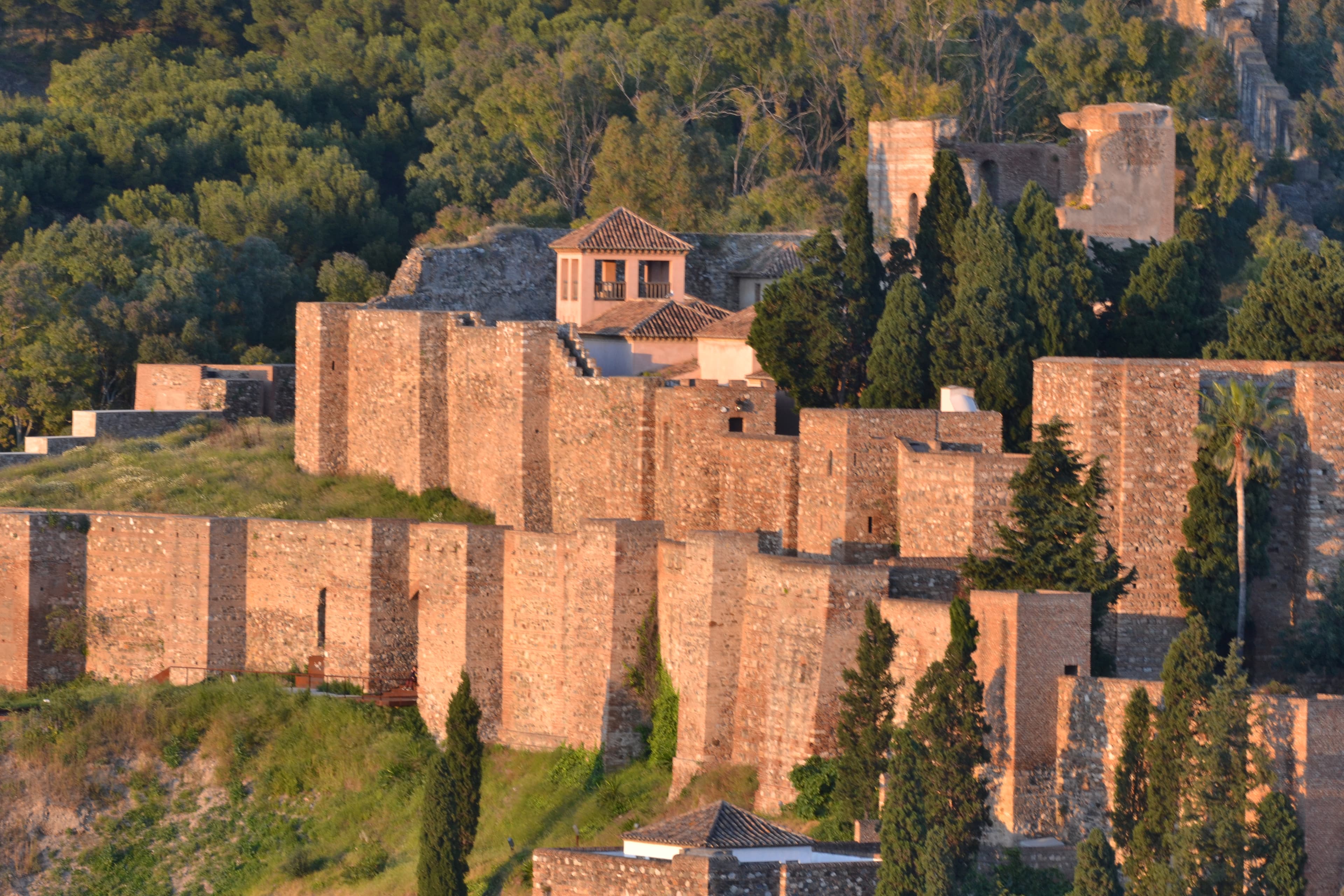
A 14th-century Muslim fortress perched 130 metres above the sea, connected to the Alcazaba by the 'coracha' wall. From its battlements you command views of the Port, La Malagueta and the whole bay. A museum room on its military history was opened in 2003. Entrance: €7 (combined with the Alcazaba: €10); free on Sundays from 2 pm.
The essentials
- Tickets
- 7 €
What it is and why the climb is worth it
Gibralfaro Castle crowns the hill that dominates Málaga at 132 metres above sea level, and its greatest asset is the view from the top: the walls look directly out over the Port of Málaga, La Malagueta beach, the entire bay and the historic centre. It is the highest panoramic viewpoint in the city open to the public, so if you are only going to take one photo from above during your entire trip, take it here. The fortress was ordered built in the 14th century by the Nasrid sultan Yusuf I of Granada (his son Muhammad V completed it), and it was once considered the most impregnable in Al-Andalus. The name comes from the Arabic Yabal Faruh, meaning 'mountain of the lighthouse', because the hill already had a Phoenician-Roman lighthouse before the castle was built. Do not expect palatial halls like those at the Alhambra: what you visit is a walk along the walls (a perimeter of 1,310 m, 30 curtain walls and 8 towers), an interpretation centre housed in the old powder magazine and the Pozo Airón, a well excavated 40 metres into solid rock. Look out too for the coracha, the walled passage that descends to the Alcazaba so that garrison troops could move between the two fortresses under cover — it is one of the best preserved in Al-Andalus.
Tickets, prices and opening hours (and how to skip the queue)
The general admission for Gibralfaro alone costs €7. If you also want to visit the Alcazaba, the combined ticket costs €10 and is valid for 48 hours, so you do not have to visit both monuments on the same day. There is a reduced rate of €3 (€5 for the combined ticket) for EU residents over 65, students, European youth card holders, large families and people with a disability of 33% or more; children under 6 enter free. A useful tip for budget travellers: entry is free every Sunday from 14:00, as well as on Andalusia Day (28 Feb), Museum Day (18 May) and Tourism Day (27 Sep). Note that some third-party websites still show old prices of €3.50/€5.50 which are no longer valid: the official price is €7/€10. Opening hours: in high season (1 Apr–31 Oct) it is open from 09:00 to 20:00 (last entry at 19:00); in low season (1 Nov–31 Mar), from 09:00 to 18:00 (last entry at 17:00). It is open every day of the year. You can buy tickets online on the official website to skip the ticket office, but it is not compulsory: we only recommend it in July–August and during Holy Week, when queues can be noticeable.
How to get there and tips from those who have already made the climb
The most convenient option is the EMT bus line 35, the only one that goes directly up to the castle: catch it at Plaza de la Marina (next to Calle Larios) or at Paseo del Parque (opposite the Town Hall). The journey takes about 15–20 minutes and buses run every 20–30 minutes (more frequently in summer). The final stop leaves you just a few metres from the entrance. If you prefer to go on foot, there are two routes of about 20 minutes each: the one from Plaza de la Merced via Calle Mundo Nuevo is steeper but surrounded by natural scenery, while the one from Calle Alcazabilla along Paseo de Don Juan de Temboury has a gentler gradient. Both are demanding climbs in the heat, so in the height of summer our advice is clear: take the 35 and save your legs. By car it is better to avoid it: parking on Camino de Gibralfaro is very limited. Allow 1 to 1.5 hours for Gibralfaro alone, or a minimum of 3–4 hours if you are combining it with the Alcazaba on the same day. The best time? First thing in the morning (09:00–10:30) there are fewer people and good light, and in high season from 18:00 onwards you can catch the sunset over the bay with almost no crowds. Avoid the midday heat in July–August and Sundays from 14:00, when free entry draws a large local crowd. Bring water, a hat and sunscreen: there is very little shade at the top.
Frequently asked questions
How much does the Gibralfaro Castle entrance cost and do I need to book in advance?
How long do I need to visit the castle?
What is the best time to visit and avoid crowds?
Some links on this page are affiliate links: if you book through them, Andelaria may earn a commission at no extra cost to you. Transparency & affiliate policy
Book tickets and tours: Castillo de Gibralfaro· 7 €Plan your trip
Book the essentials for your trip to Málaga.
Other places in Málaga
Alcazaba de Málaga
alcazabaAn 11th-century Arab fortress declared a Historic-Artistic Monument in 1931, with 110 towers and three walled enclosures rising from the Roman theatre up to the Nasrid palace. Built under the Zirid taifa of Badis (1056), its inner gardens and pools rival those of the Alhambra. Entrance: €7 (combined with Gibralfaro: €10); free on Sundays from 2 pm.
Catedral de la Encarnación (La Manquita)
catedralA Renaissance cathedral begun in 1528 on the site of the former main mosque, with Gothic and Baroque touches. Málaga locals call it 'La Manquita' because its south tower was never finished; the north tower reaches 84 metres, the second tallest in Andalusia after the Giralda. Entrance: €6; with rooftop access: €10.
Museo Picasso Málaga
museoInaugurated by the King and Queen of Spain in October 2003, it occupies the 16th-century Palacio Buenavista in the historic centre. It houses 285 works donated by the Picasso family, covering every period of the Málaga-born genius's career, from his academic studies to late Cubism. Entrance: €13 (audio guide included).
Centro de Arte Contemporáneo de Málaga (CAC)
museoMálaga's only museum dedicated entirely to 20th- and 21st-century art, housed in the former Wholesale Market of 1939 (architects Gutiérrez Soto and Jáuregui). It hosts temporary exhibitions by international artists such as Louise Bourgeois and Marc Quinn in a Rationalist building with a triangular floor plan. Free admission.
Calle Marqués de Larios
plazaA 300-metre pedestrian artery inaugurated on 27 August 1891 and pedestrianised in 2002, it is the commercial and social heart of Málaga. Its 19th-century limestone buildings frame shops and terraces all the way to Plaza de la Constitución. An essential backdrop for the August Fiestas and Málaga's Holy Week. Free access.
Semana Santa en Málaga
fiestaMálaga's Holy Week fills the historic centre with floats weighing up to 4,200 kg, carried by hundreds of men and women bearers. It is free and street-based: from Palm Sunday to Easter Sunday (in 2026, 29 March to 5 April). Its distinctive sound — bugles and drums — was born here in 1911.
Feria de Málaga (Feria de Agosto)
fiestaThe Feria de Málaga is actually two free fairs in one: the daytime fair in the city centre (Calle Larios, 12:00–18:00) and the nighttime fair at the Real del Cortijo de Torres, with around 120 casetas (marquees) with free entry. In 2026 it runs from 15 to 22 August, commemorating the entry of the Catholic Monarchs into Málaga in 1487.
Festival de Málaga — Cine en Español
fiestaThe Málaga Festival is Spain's leading Spanish-language film festival after San Sebastián. Its 29th edition ran from 6 to 15 March 2026 and drew around 111,000 attendees. It is a ticketed event: galas and screenings require a paid entry, except for the free summer programme Cine Abierto.
Similar places in other cities
Castelo dos Mouros
SintraA castle built by the Moors between the 8th and 9th centuries, conquered by Afonso Henriques in 1147 following the capture of Lisboa.
Monte Urgull y Castillo de la Mota
San SebastiánA 123 m hill crowning the old town, topped by the Castillo de la Mota (12th century) and a monumental statue of the Sacred Heart (11 m). Paths through gardens and cannon batteries lead to viewpoints with panoramic views over La Concha bay and the port. Free entry all year round.