Torre del Oro
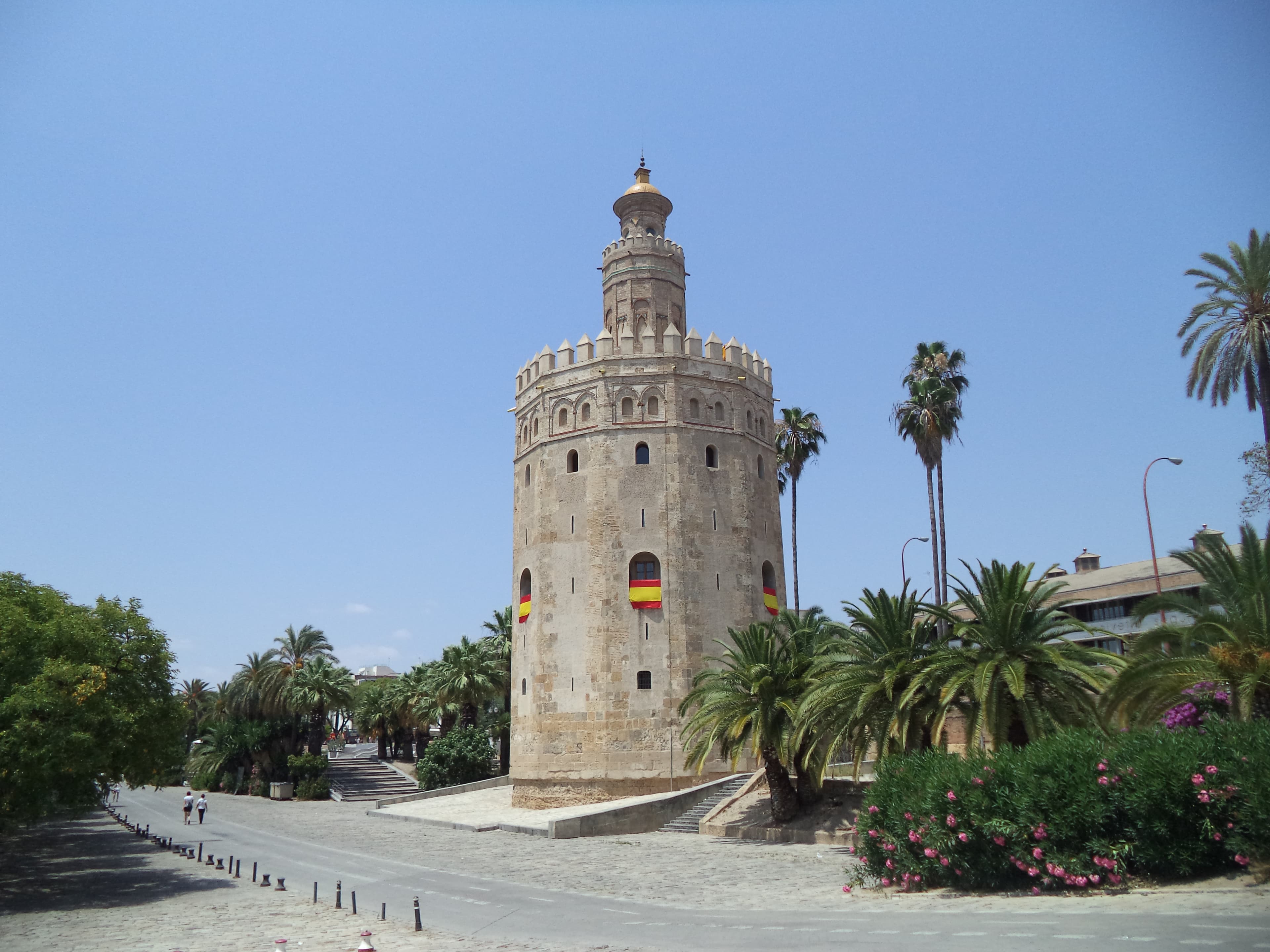
A 13th-century Almohad watchtower on the banks of the Guadalquivir, one of Seville's great defensive symbols. Its name comes from the golden tiles that once covered it. It houses the Naval Museum, with historical maps and objects from the American expeditions. The view from Puente de Triana at sunset is breathtaking.
The essentials
- Tickets
- 3,00 €
A watchtower with views over the Guadalquivir
The Torre del Oro is not a grand museum, and that works in its favour: half an hour is enough to take it all in, and you leave with one of the best views of the river Seville has to offer. The Almohads built it in 1221 as an albarrana tower — detached from the city wall — to control river access to the Puente de Barcas; an iron chain stretched across the Guadalquivir to a twin tower in Triana, blocking enemy vessels from passing. The name comes from the Arabic Borg al-Dsahab ('Tower of Gold'), after the golden gleam its ceramic tiles cast on the water. Today it houses the Naval Museum (since 1944), with 16th-century nautical charts, astrolabes, compasses, galleon models and artefacts tied to the Americas expeditions. But the real reason to climb is the rooftop: at 36 metres, views open up over the Guadalquivir, the Torre de los Perdigones and the historic centre.
Tickets, prices and how to skip the queues
General admission is €3, with a reduced rate of €1.50 for children aged 6–14, students, over-65s and groups. Children under 6 and people with disabilities enter free, and on Mondays entry is free for everyone (no booking required — just show up). There is no online sales: tickets are bought only at the door on the day, so advance booking is not needed either. Opening hours are Monday to Friday 9:30–18:45 and weekends 10:30–18:45, with last entry 30 minutes before closing; the tower shuts on major public holidays (1 and 6 January, Good Friday, 1 May and 25 December). To dodge queues, the best bet is to go on a weekday right at opening (9:30) or after 17:00. Mondays, being free, get busy — arrive at opening. Avoid the 11:00–14:00 window on spring and summer weekends when tour groups pile in.
How to get there and tips from those who've been
The tower sits right on the Paseo de Cristóbal Colón, beside the river, so it will almost certainly be on your route anyway. It is about a 10-minute walk from the Cathedral and around 8 minutes from the Alcázar. By metro, Line 1 stops at Puerta de Jerez, about 4 minutes on foot; the Metrocentro tram (T1) also stops at Puerta de Jerez. By bus, lines 03, 21, C4, C5 and 40 serve the 'Paseo Cristóbal Colón (Torre del Oro)' stop, two minutes away. Allow 30 to 60 minutes for the visit: that is enough to cover the museum's three floors and head up to the rooftop at a comfortable pace. One important note: the stairways between floors are narrow and steep, and the tower is not wheelchair accessible. In July and August some sources suggest extended evening hours — if you are visiting in summer it is worth checking directly with the museum before you go.
Frequently asked questions
How much does entry cost and do I need to book?
How long does a visit take?
What is the best time to avoid queues?
Some links on this page are affiliate links: if you book through them, Andelaria may earn a commission at no extra cost to you. Transparency & affiliate policy
Book tickets and tours: Torre del Oro· 3,00 €Plan your trip
Book the essentials for your trip to Sevilla.
Other places in Sevilla
Real Alcázar de Sevilla
alcazarThe oldest inhabited royal palace in Europe, a UNESCO World Heritage Site. Its Mudéjar architecture, the tiled Patio de las Doncellas and gardens of fountains and labyrinths make it Seville's essential visit. A filming location for Game of Thrones, it breathes Almohad and Christian history in equal measure.
Catedral de Sevilla y La Giralda
catedralThe largest Gothic cathedral in the world and the third-largest church by floor area, built on the site of the former Almohad mosque. La Giralda, its 97-metre bell tower, is Seville's undisputed symbol. Inside lies the tomb of Christopher Columbus. The ticket includes access to the tower, which has no steps — only ramps.
Plaza de España
plazaA monumental neo-Renaissance and neo-Moorish semicircle built for the 1929 Ibero-American Exposition in the Parque de María Luisa. Its 48 tiled benches represent every Spanish province. The central canal invites boat rides, and its bridges and north and south towers make for perfect photographs at sunrise.
Barrio de Santa Cruz
barrioThe medieval Jewish quarter of whitewashed alleyways, flower-filled courtyards and squares shaded by orange trees. Nestled beside the Alcázar and the Cathedral, it is the romantic heart of Seville. Wandering streets like Agua or Vida, discovering the Hospital de los Venerables and sitting in the Plaza de Doña Elvira are experiences that capture the very soul of the city.
Metropol Parasol (Las Setas)
museoThe largest wooden structure in the world, designed by Jürgen Mayer H. and inaugurated in 2011 in the Plaza de la Encarnación. Its elevated walkways offer the best panoramic views of Seville. At ground level it houses the Antiquarium, with Roman and Arab archaeological remains from the 1st century. Not to be missed at sunset.
Semana Santa de Sevilla
fiestaSeville's Holy Week is free and open to all: you only pay for seats and grandstands along the Official Route. In 2026 it runs from 29 March to 5 April, with the eve celebrations on the 27th. Its peak is La Madrugá, when five major brotherhoods process from 1:00 a.m. until noon.
Feria de Abril de Sevilla
fiestaTwo weeks after Easter, Sevilla sets up its Real in Los Remedios: around 1,059 casetas (up to ~1,250 plots with the expansion), flamenco dresses, horses and sevillanas. Entry is free, but most are private and only accessible with an invitation from a member. Only around 14–16 are open to the public.
Velá de Santiago y Santa Ana
fiestaSeville's oldest festival, with more than 750 years of history, doesn't take place in the city centre — it happens in Triana. The Velá de Santa Ana falls in the last week of July, around the 26th: free casetas along the Guadalquivir, the cucaña grease-pole contest over the river, and not a flamenco dress or equestrian parade in sight.