Judería de Córdoba
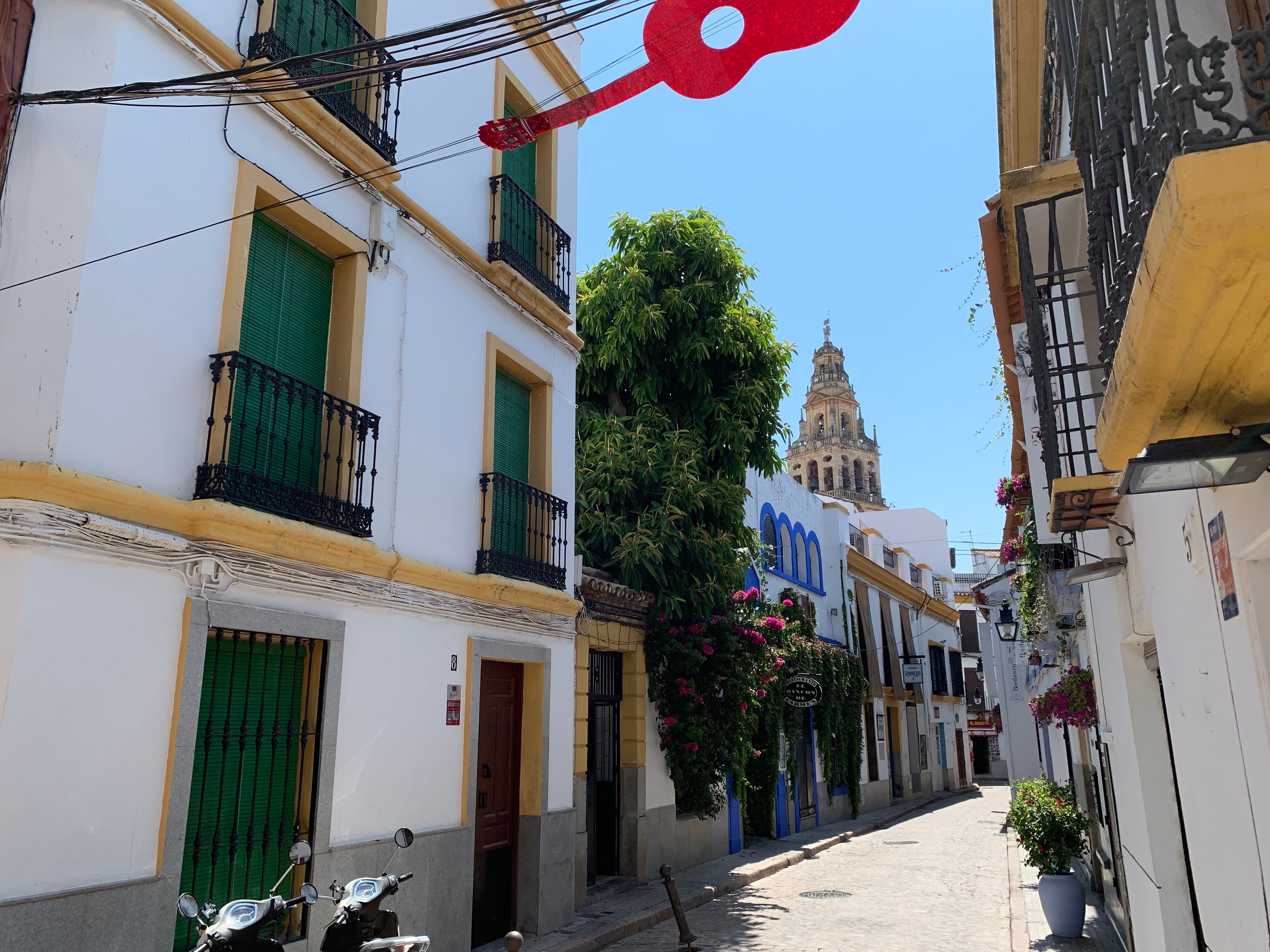
Córdoba's medieval Jewish quarter, declared a World Heritage Site, is one of the best-preserved historic districts in Europe. Its narrow cobbled streets conceal the Synagogue of 1315 — one of only three surviving medieval synagogues in Spain — and the Casa de Sefarad. The maze of lanes between Calle Judíos and Plaza Maimónides is made for getting pleasantly lost.
The essentials
- Tickets
- gratis
What it is and why these streets are worth every step
The Jewish Quarter is a labyrinth of whitewashed alleyways stretching between the Puerta de Almodóvar and the Mosque-Cathedral, in the northwest corner of the old town. It is the only Jewish quarter in Spain declared a UNESCO World Heritage Site (1994, as part of the Mosque's extended designation) — and that's no empty label: Maimonides was born here in 1138, and Hasdai ibn Shaprut served as finance minister to Abd al-Rahman III and founded a Talmudic academy that rivalled those of Babylon. The funerary stone of Yahuda bar Akon (9th century) is the only physical remnant of that Umayyad-era community. Two things worth knowing before you arrive: the famous Calleja de las Flores — with its blue flower pots — was prettied up in the 20th century as a tourist draw, not a medieval survivor; and the community never recovered from the 1391 pogrom, a prelude to the 1492 expulsion. Set aside time to wander without a map, peek into Plaza Tiberíades — where the Maimonides statue stands, his right foot worn shiny by visitors who rub it for luck — and squeeze through the Calleja del Pañuelo, one of the narrowest streets in Europe.
Tickets, prices and opening hours (and the synagogue trap)
The two indoor visits are the Synagogue (Calle Judíos, 20) and the Casa de Sefarad, nine metres away. The 1315 synagogue is one of only three medieval ones left in Spain — small, but with exquisite Mudéjar plasterwork; entry is free for EU citizens (a token €0.30 for everyone else). Here's the important warning: some sources claim it's open until 21:00 in summer, but the official Junta de Andalucía data says Tuesday to Sunday, 9:00–15:00, closed Mondays. Last entry ten minutes before closing. Don't trust extended-hours listings — confirm on the Junta's website or call +34 957 749 015 before you go. The Casa de Sefarad (a 14th-century building) costs €4.50 for adults / €3.50 concessions, opens Tuesday to Sunday 11:00–18:00, and covers Sephardic domestic life, Hebrew music and the role of Jewish women in Al-Andalus. The neighbourhood itself is free and always open. Booking is only required for groups of six or more at the Synagogue; solo visitors walk straight in.
How to get there and tips from someone who's been
The easiest option is on foot: from the Mosque-Cathedral it's about 5 minutes, and from the train station around 20 minutes along Avenida de América to Plaza de las Tendillas. If you prefer the bus, AUCORSA runs several routes around the perimeter (single fare €1.20); line 5 connects the train and bus stations with the Glorieta Media Luna stop, right next to the Puerta de Almodóvar — the natural entry point to the quarter. By car, park on Avenida de la Victoria or Avenida del Fleming, as buses can't navigate these narrow alleys. Córdoba has no metro or tram. On timing: the neighbourhood alone takes 1–1.5 hours; add the Synagogue and Casa de Sefarad and you're looking at 2–2.5 hours; pair it with the Mosque-Cathedral and plan for a half day (4–5 hours). The best time to beat the crowds is first thing in the morning (9:00–10:30), when the light is perfect for photos and the Calleja de las Flores is almost deserted; in summer, late afternoon (19:00–21:00) also works well, when tour groups leave and locals come out — though the Synagogue will already be closed. Avoid the 11:00–14:00 slot from April to October. Two more things: the ground is irregular cobblestone — tricky with a wheelchair or pushchair in the inner alleyways — and in July–August midday temperatures hit 38–40 °C, so bring water and avoid walking between 12:00 and 17:00.
Frequently asked questions
How much does entry cost and do I need to book?
How much time do I need to see it properly?
What's the best time to visit without the crowds?
Some links on this page are affiliate links: if you book through them, Andelaria may earn a commission at no extra cost to you. Transparency & affiliate policy
Book tickets and tours: Judería de Córdoba· gratisPlan your trip
Book the essentials for your trip to Córdoba.
Other places in Córdoba
Mezquita-Catedral de Córdoba
catedralDeclared a UNESCO World Heritage Site, the Mosque-Cathedral is Córdoba's most iconic monument. Built from the year 786 onwards by Abd al-Rahman I on the site of a Visigoth basilica, it was for centuries the second-largest mosque in the world. Its forest of 856 two-tone columns of jasper and marble is an unforgettable sight.
Alcázar de los Reyes Cristianos
alcazarA 14th-century medieval fortress where the Catholic Monarchs established their headquarters during the Reconquista and received Christopher Columbus before his voyage to the Americas. Its terraced gardens with ponds, cypress trees and fountains, along with the Roman mosaics in the interior museum, make it essential visiting. After months of works, the gardens reopened on 16 June 2026 with a reduced summer schedule (8:15–13:00, Tue–Sun) and an admission fee of €7 — check the official website before you go.
Puente Romano
puenteBuilt in the 1st century BC on the orders of Augustus, this 16-arch bridge over the Guadalquivir was for twenty centuries the only southern entrance to the city. It offers the most photogenic view of Córdoba: the Mosque tower silhouetted against the sky at sunrise or sunset. Today it is pedestrian-only.
Medina Azahara (Madinat al-Zahra)
museoA caliphal palace city built in 936 by Abd al-Rahman III, 8 km from Córdoba, declared a UNESCO World Heritage Site in 2018. At its peak it housed up to 25,000 people. The throne room of Abd al-Rahman III, with its restored polychrome marble arches, conveys the splendour of the Córdoba caliphate at the height of its power.
Calleja de las Flores
barrioThe most photographed alley in Córdoba, set within the medieval Judería. Its whitewashed façades covered in pots of geraniums and begonias form a natural frame through which the Mosque's bell tower appears in the distance. Together with the surrounding Judería neighbourhood, it is the finest surviving example of Andalusian urban planning.
Festival de los Patios Cordobeses
fiestaEvery first half of May, Córdoba opens around 53 privately owned competition courtyards for free — plus a dozen institutional spaces: geraniums, bougainvillea, and recycled terracotta pots in living, inhabited patios. UNESCO Intangible Heritage since 2012, with an official competition running since 1921. Free entry, no booking required, split daily hours.
Semana Santa de Córdoba
fiestaCórdoba's Semana Santa is free and open to all, with processions moving through the medieval Jewish quarter from dawn into the early morning hours. Its defining feature in Spain: since 2017, the Carrera Oficial passes through the interior of the Mezquita-Catedral, a UNESCO World Heritage monument. Thirty-nine of the 42 brotherhoods take part. The festival holds National Tourist Interest status.
Noche Blanca del Flamenco de Córdoba
fiestaOne June night, Córdoba scatters free flamenco across its historic old town. The Noche Blanca del Flamenco falls on the summer solstice (20–21 June) and sets up around ten simultaneous stages, running from 22:30 until 5:00 in the morning. No ticket, no booking: you walk in, listen, and drift from square to square.
Navidad en Córdoba
fiestaFrom 2 December to 5 January, Córdoba lights up with over 400 free activities: the light-and-sound show on Cruz Conde (488,755 LED points), the Municipal Nativity Scene near the Judería, Christmas markets, and the Three Kings Parade on 5 January. All free to enjoy in the historic centre.
Similar places in other cities
Barrio de Santa Cruz
SevillaThe medieval Jewish quarter of whitewashed alleyways, flower-filled courtyards and squares shaded by orange trees. Nestled beside the Alcázar and the Cathedral, it is the romantic heart of Seville. Wandering streets like Agua or Vida, discovering the Hospital de los Venerables and sitting in the Plaza de Doña Elvira are experiences that capture the very soul of the city.
El Albaicín y el Mirador de San Nicolás
GranadaFormer Moorish quarter of steep streets, a World Heritage Site since 1994, whose Mirador de San Nicolás offers the classic view of the Alhambra against Sierra Nevada.
Sacromonte
GranadaA Romani quarter of whitewashed cave dwellings hewn into the hillside of the valle de Valparaíso, birthplace of zambra flamenco since the sixteenth century.