Las Fallas de València
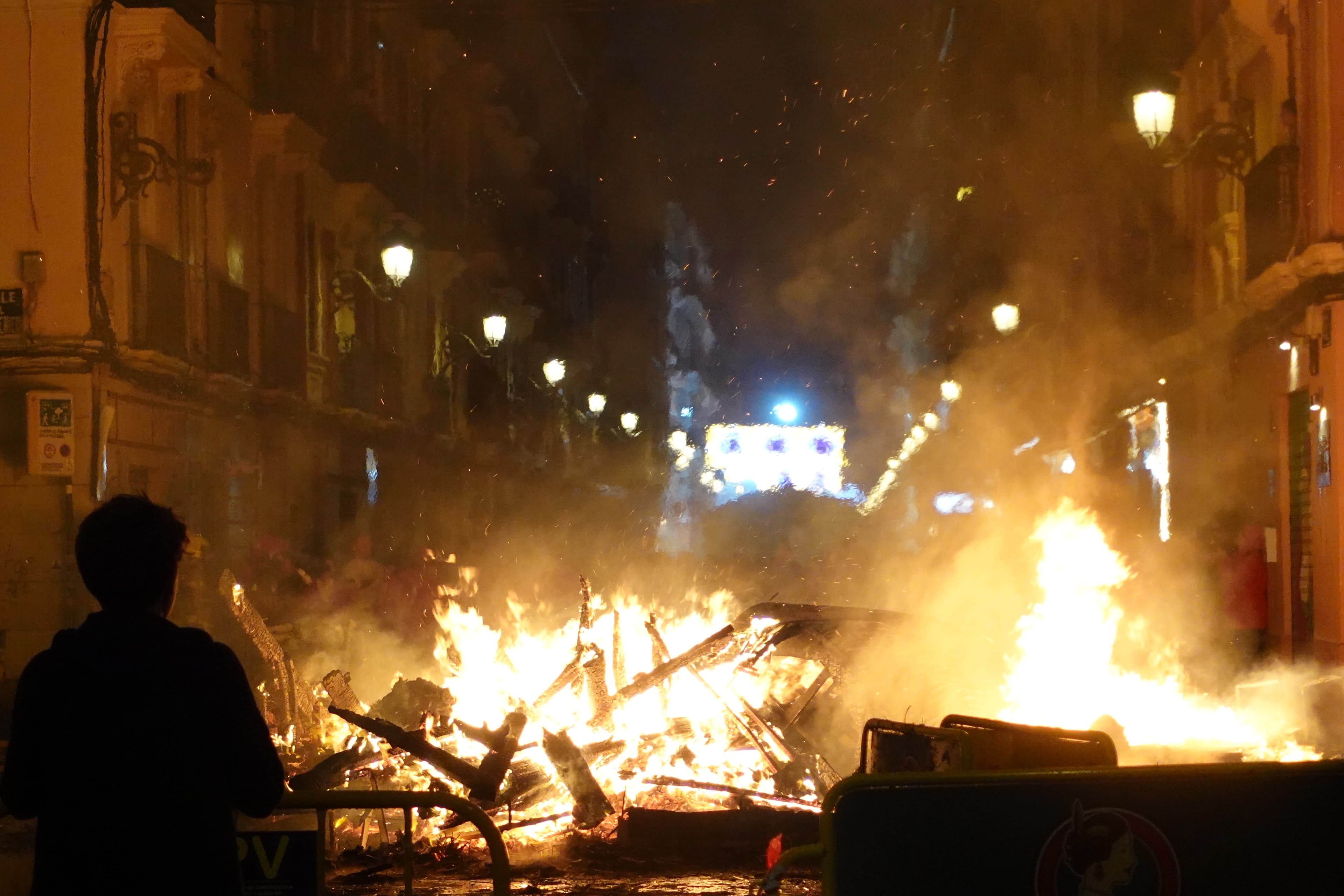
Las Fallas de València is fire, gunpowder, and ephemeral art right out in the street. Every March (in 2026, from the 1st to the 19th; main days 15–19) the city burns hundreds of papier-mâché monuments. A free, open-access festival and UNESCO Intangible Cultural Heritage since 2016. Its defining daily ritual: the mascletà at 2:00 PM — 120 dB you don't just hear, you feel.
What the Fallas are and when they happen
The Fallas are not a music festival or a beach party: they are pyrotechnics, fire, and enormous satirical papier-mâché monuments erected in the middle of the street, then burned on the final night. They take place every March (in 2026, from the 1st to the 19th, with the main days on the 15th–19th) and have been UNESCO Intangible Cultural Heritage since 2016 and a Festival of International Tourist Interest. The symbolic starting gun is La Crida, held on 22 February at the Torres de Serranos. La Plantà sees the monuments fully installed by the early hours of 15–16 March. The entire event is free and open to all. One critical tip: don't come expecting peace and quiet. The sound of gunpowder is constant (firecrackers at any hour, including from children), the crowds in the city centre are enormous, and sleeping near the Plaza del Ayuntamiento means hearing fireworks strings well into the night. For exact dates and the programme of the next edition, check the official Visit Valencia website.
The mascletà — without wrecking your hearing
For Valencians, the event that truly matters is not the nocturnal fireworks but the daily mascletà: every day from 1 to 19 March at 2:00 PM in the Plaza del Ayuntamiento, 6 to 8 minutes of pure gunpowder percussion exceeding 120 dB that you feel in your chest rather than just hear. The general public enters free through the streets leading to the square; the window between 12:45 and 1:45 PM via Calle de la Sangre (corner of San Vicente) is reserved access for people with reduced mobility. The square fills up quickly and capacity is regulated for safety, so arrive around 12:00 noon or you will not get in. The point of maximum vibration is directly beneath the Ayuntamiento balcony; Marqués de Sotelo, being wider, offers a better balance of experience and space. One critical tip from ear specialists: keep your mouth slightly open or chew gum throughout to equalise the pressure on your eardrums. Silicone earplugs cut a further 20–40 dB. With children, keep them considerably further back from the source.
Nit del Foc and the Ofrenda
The Nit del Foc is the biggest fireworks display of the year: in 2026 it took place on 18 March at 11:59 PM, launched from the Puente de Montolivete over the dry Turia riverbed at the level of the Ciutat de les Arts. The best open vantage points are the Puente de las Flores, the Puente del Reino and the Paseo de la Alameda; the riverbed is wide so the crowd spreads out, but arrive well in advance because it still gets packed. The quiet counterpart is the Ofrenda a la Virgen de los Desamparados (17–18 March, from 3:30 PM onwards): 114,000 falleros parade in traditional dress and cover a 15-metre statue of the Virgin in the Plaza de la Virgen with carnations. The mantle is only completed in the early hours of 18–19 March. One critical tip: to photograph the full mantle without the human tide, go in the early hours of the 18th (between 1:00 and 2:00 AM), when the square empties out and the carnations have not yet wilted.
Ruzafa fallas, food and getting around
The Sección Especial fallas are the ones most visitors tend to miss. They are concentrated along the Ruzafa–Gran Vía axis (Convento Jerusalén, Almirante Cadarso, Sueca–Literato Azorín); in Ruzafa you can see three of them on foot in under 20 minutes. See them at night, from around 10:00 PM, when the LED lighting pops against the dark sky. Food: pumpkin fritters (buñuelos de calabaza) with hot chocolate from stalls all over the city, agua de Valencia (cava, orange juice, vodka and gin) and paella on the 19th, Sant Josep's Day. One critical tip: book a rice-specialist restaurant months in advance (Casa Carmela, La Pepica) or you will go hungry on Cremà day. Transport: the metro and EMT buses run 24 hours on the main days (Metrovalencia operates non-stop from the 13th until the early hours of the 20th; check for possible strikes before you travel). Arrive by metro at Xàtiva (lines 3, 5 and 9) and walk: the centre is closed to traffic and parking is impossible. The Cremà begins on the 19th from 8:00 PM, with the Ayuntamiento falla burning last, around midnight. Stay well back from any burning monument: the heat is brutal.
Frequently asked questions
Do you have to pay to see the Fallas?
What is the best trick for protecting your ears during the mascletà?
When and where is the Cremà of the Ayuntamiento falla?
How do I get around if the city centre is closed to traffic?
Some links on this page are affiliate links: if you book through them, Andelaria may earn a commission at no extra cost to you. Transparency & affiliate policy
Book tickets and tours: Las Fallas de ValènciaPlan your trip
Book the essentials for your trip to Valencia.
Other places in Valencia
Ciudad de las Artes y las Ciencias
complejoValencia's defining architectural landmark, designed by Santiago Calatrava over the old Turia riverbed. Its five buildings — the Hemisfèric, the Museu de les Ciències, the Oceanogràfic, the Palau de les Arts and the Umbracle — form Spain's largest cultural complex. The Oceanogràfic is the biggest aquarium in Europe.
Catedral de Valencia
catedralBuilt between the 13th and 15th centuries on the site of a former mosque, the Seu blends Romanesque, Gothic, Renaissance and Baroque styles. It holds the Santo Cáliz, identified by many as the Holy Grail. Its bell tower, the Micalet, rewards the climb of its 207 steps with 360° panoramic views.
La Lonja de la Seda
museoA masterpiece of Valencian civic Gothic, declared a UNESCO World Heritage Site in 1996. Built between 1482 and 1548 as the city's silk-trading exchange, its Sala de Contratació — with 16 helical columns rising 16 metres — still impresses. Free entry on Sundays and public holidays.
Mercado Central
mercadoOne of the largest working food markets in Europe, inaugurated in 1928 inside a magnificent Art Nouveau building with tiled domes and stained glass. More than 300 stalls sell Valencian oranges, fresh fish, garden vegetables and horchata. Entry to the building is free.
Jardines del Turia
parqueNine kilometres of linear urban parkland built over the old Turia riverbed, rerouted after the 1957 floods. Gardens, fountains, football pitches, athletics tracks and the Gulliver Park — complete with slides — form the green lung connecting the historic centre with the Ciudad de las Artes.
Barrio del Carmen
barrioThe medieval heart of Valencia, with streets dating back to Roman and medieval times, Arab towers such as the Torres de Quart and Torres de Serranos, art galleries and tapas bars. It's the epicentre of Valencian street art and the city's liveliest neighbourhood after dark, buzzing from the afternoon right through to dawn.
Gran Fira de València (Feria de Julio)
fiestaThe Gran Fira de València runs throughout July (in 2026, from July 1 to 31): the most festive month of the Valencian year, with over 400 events spread across the city since 1871. Most are free, but the Conciertos de Viveros and the Batalla de Flores grandstands require tickets. Check dates and the programme on the official website.
Corpus Christi de València (la Festa Grossa)
fiestaValencia's Corpus Christi is the city's oldest and most baroque festival: 700 uninterrupted years since its first documentation in 1326. Free and held entirely outdoors, it blends the mascletà, medieval Rocas floats, the Dance of La Moma, and the largest processional monstrance in the world (600 kg of silver). The date shifts each year, always 60 days after Easter.
Similar places in other cities
Revetlla de Sant Joan
TarragonaThe Revetlla de Sant Joan — free and open to all — lights up Tarragona on the night of 23–24 June (the 24th is a public holiday across Catalonia). The Flama del Canigó arrives in the fishermen's quarter of El Serrallo, the bonfire blazes in plaça Corsini, and the beaches fill with fire, firecrackers, coca and cava until dawn.
Festa de Santa Tecla
TarragonaSanta Tecla is Tarragona's main festival, held around 23 September in honour of the city's patron saint since the 12th century. It is free and open to all, featuring the richest seguici popular in Catalonia — bestiari, gegants and castellers in a single procession. It holds a double recognition of national interest at both regional and state level.
Tarraco Viva
TarragonaEvery May, for about two weeks, Tarragona becomes Tárraco again: Tarraco Viva fills the Roman amphitheatre, circus, and forum with gladiators, legionaries, and period markets. It is the most important Roman re-enactment festival in southern Europe, with more than 500 activities and 70% free admission.