Gran Fira de València (Feria de Julio)
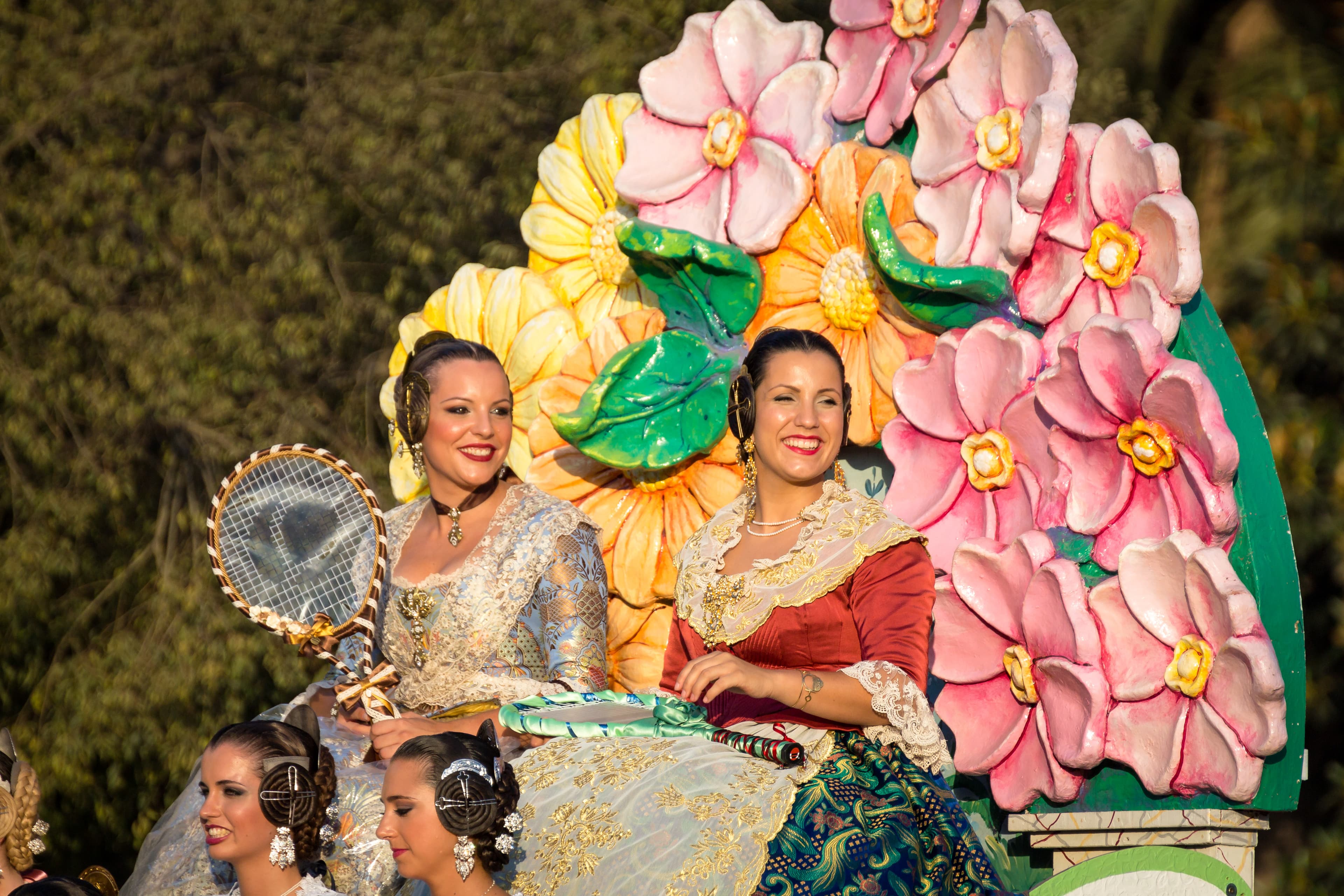
The Gran Fira de València runs throughout July (in 2026, from July 1 to 31): the most festive month of the Valencian year, with over 400 events spread across the city since 1871. Most are free, but the Conciertos de Viveros and the Batalla de Flores grandstands require tickets. Check dates and the programme on the official website.
What the Gran Fira is and its July calendar
The Gran Fira de Juliol was born on 21 July 1871 and has been the most festive event of the year for Valencians ever since. It is not a single-day fair or a closed-off festival: it is an entire month spread across the whole city, with more than 400 activities including concerts, mascletàs, theatre, folklore, circus, fireworks, and the Batalla de Flores as the grand finale. In 2026 it runs from 1 to 31 July. Entry is mixed: the overwhelming majority of events are free, but the Conciertos de Viveros and the Batalla grandstands require tickets. One critical tip: because the programme is approved each year in May–June and changes every edition, do not rely on dates or line-ups published by third parties. Always check the official Ajuntament website (valencia.es) and visitvalencia.com for the final programme of the upcoming edition before making any plans, as events overlap and prioritising ahead of time is well worth it.
What is free and what costs money
Almost everything is free: the mascletàs and open-air shows in the squares, the firework displays every Saturday just past midnight, the folklore, theatre and dance concerts in the Jardins del Palau, and watching the Batalla de Flores from the pavement. Only two things require a ticket. First, the Conciertos de Viveros: 18 nights of music (in 2026, from 2 to 25 July) held in the Jardins del Real — universally known as Viveros — the gardens of the former Royal Palace. It is the only event with individual tickets per concert. Second, the Batalla de Flores grandstands, which are allocated by a notarised municipal lottery. Critical tip: do not buy Viveros tickets from touts or unofficial websites; the only reliable source for the line-up and prices is conciertosdeviverosvlc.com. To get to Viveros, take metro lines 3 or 5 to Aragó or Alameda and walk ten minutes, or cycle along the illuminated Turia riverbed bike lane.
The Batalla de Flores: how to watch it and what to bring
On the last Sunday of July (in 2026, the 26th at 20:00) the Paseo de la Alameda turns into a joyful battle involving over 1.2 million carnations hurled between floats and the crowd. You are not there to admire the flowers: they are thrown at you, and you throw them back. The active stretch runs from the Puente del Real to the Puente de Aragón, and the route is covered twice — first as a judged parade, then as the real battle. Watching from the street is free; the grandstands (eight seats, around €5 per person) are obtained through a prior lottery with thousands of applicants competing for a few hundred stands. Critical tip: wear clothes you do not mind staining, bring water and sun protection — it is the height of summer and shade along the avenue is patchy. If you are on foot, get there at least two hours early for a good spot; the further you are from the centre of the avenue, the less you get pelted. Any carnations on the ground are yours to keep.
Certamen de Bandas, focs, and where to eat paella
The Certamen Internacional de Bandas "Ciutat de València" (in 2026, from 15 to 19 July at the Palau de la Música) is the oldest active band competition in the world, followed with football-match intensity: free until capacity is reached, a maximum of two tickets per person, and the hall is cleared between performances. La Gran Nit de Juliol (third Saturday) fills the Plaza de la Virgen, La Reina, Parc Central and El Patriarca with music, circus, magic, street paella and fireworks. The Saturday focs are more intimate than the Falles displays: every neighbourhood brings its own folding chairs. With temperatures of 35–38 °C, move around at night along the Turia riverbed (10 km, traffic-free) by Valenbisi (€3.99 per day, first 30 minutes free) or taxi; the metro gets packed on Saturday nights because of the fireworks. To finish the night by the sea, La Pepica (Paseo de Neptuno, open since 1898 — Hemingway's favourite): book weeks ahead, there is a minimum spend, and the paella is served for a minimum of two.
Frequently asked questions
Is the Gran Fira de València free or do you need to buy tickets?
What are the Conciertos de Viveros and where can you buy tickets?
How can I watch the Batalla de Flores without a grandstand ticket, and what should I wear?
What is the best way to get around in July's heat?
Some links on this page are affiliate links: if you book through them, Andelaria may earn a commission at no extra cost to you. Transparency & affiliate policy
Book tickets and tours: Gran Fira de València (Feria de Julio)Plan your trip
Book the essentials for your trip to Valencia.
Other places in Valencia
Ciudad de las Artes y las Ciencias
complejoValencia's defining architectural landmark, designed by Santiago Calatrava over the old Turia riverbed. Its five buildings — the Hemisfèric, the Museu de les Ciències, the Oceanogràfic, the Palau de les Arts and the Umbracle — form Spain's largest cultural complex. The Oceanogràfic is the biggest aquarium in Europe.
Catedral de Valencia
catedralBuilt between the 13th and 15th centuries on the site of a former mosque, the Seu blends Romanesque, Gothic, Renaissance and Baroque styles. It holds the Santo Cáliz, identified by many as the Holy Grail. Its bell tower, the Micalet, rewards the climb of its 207 steps with 360° panoramic views.
La Lonja de la Seda
museoA masterpiece of Valencian civic Gothic, declared a UNESCO World Heritage Site in 1996. Built between 1482 and 1548 as the city's silk-trading exchange, its Sala de Contratació — with 16 helical columns rising 16 metres — still impresses. Free entry on Sundays and public holidays.
Mercado Central
mercadoOne of the largest working food markets in Europe, inaugurated in 1928 inside a magnificent Art Nouveau building with tiled domes and stained glass. More than 300 stalls sell Valencian oranges, fresh fish, garden vegetables and horchata. Entry to the building is free.
Jardines del Turia
parqueNine kilometres of linear urban parkland built over the old Turia riverbed, rerouted after the 1957 floods. Gardens, fountains, football pitches, athletics tracks and the Gulliver Park — complete with slides — form the green lung connecting the historic centre with the Ciudad de las Artes.
Barrio del Carmen
barrioThe medieval heart of Valencia, with streets dating back to Roman and medieval times, Arab towers such as the Torres de Quart and Torres de Serranos, art galleries and tapas bars. It's the epicentre of Valencian street art and the city's liveliest neighbourhood after dark, buzzing from the afternoon right through to dawn.
Las Fallas de València
fiestaLas Fallas de València is fire, gunpowder, and ephemeral art right out in the street. Every March (in 2026, from the 1st to the 19th; main days 15–19) the city burns hundreds of papier-mâché monuments. A free, open-access festival and UNESCO Intangible Cultural Heritage since 2016. Its defining daily ritual: the mascletà at 2:00 PM — 120 dB you don't just hear, you feel.
Corpus Christi de València (la Festa Grossa)
fiestaValencia's Corpus Christi is the city's oldest and most baroque festival: 700 uninterrupted years since its first documentation in 1326. Free and held entirely outdoors, it blends the mascletà, medieval Rocas floats, the Dance of La Moma, and the largest processional monstrance in the world (600 kg of silver). The date shifts each year, always 60 days after Easter.
Día de la Comunitat Valenciana
fiestaOctober 9 is the national day of the Comunitat Valenciana: it marks King Jaume I's entry into Valencia in 1238. Free and open to all, the day centres on the civic procession of the Senyera at midday, a special mascletà in the Plaza del Ayuntamiento, and a fireworks display. Everything takes place in the historic centre.
Similar places in other cities
Revetlla de Sant Joan
TarragonaThe Revetlla de Sant Joan — free and open to all — lights up Tarragona on the night of 23–24 June (the 24th is a public holiday across Catalonia). The Flama del Canigó arrives in the fishermen's quarter of El Serrallo, the bonfire blazes in plaça Corsini, and the beaches fill with fire, firecrackers, coca and cava until dawn.
Festa de Santa Tecla
TarragonaSanta Tecla is Tarragona's main festival, held around 23 September in honour of the city's patron saint since the 12th century. It is free and open to all, featuring the richest seguici popular in Catalonia — bestiari, gegants and castellers in a single procession. It holds a double recognition of national interest at both regional and state level.
Tarraco Viva
TarragonaEvery May, for about two weeks, Tarragona becomes Tárraco again: Tarraco Viva fills the Roman amphitheatre, circus, and forum with gladiators, legionaries, and period markets. It is the most important Roman re-enactment festival in southern Europe, with more than 500 activities and 70% free admission.