Verbenas de Agosto: San Cayetano, San Lorenzo y La Paloma
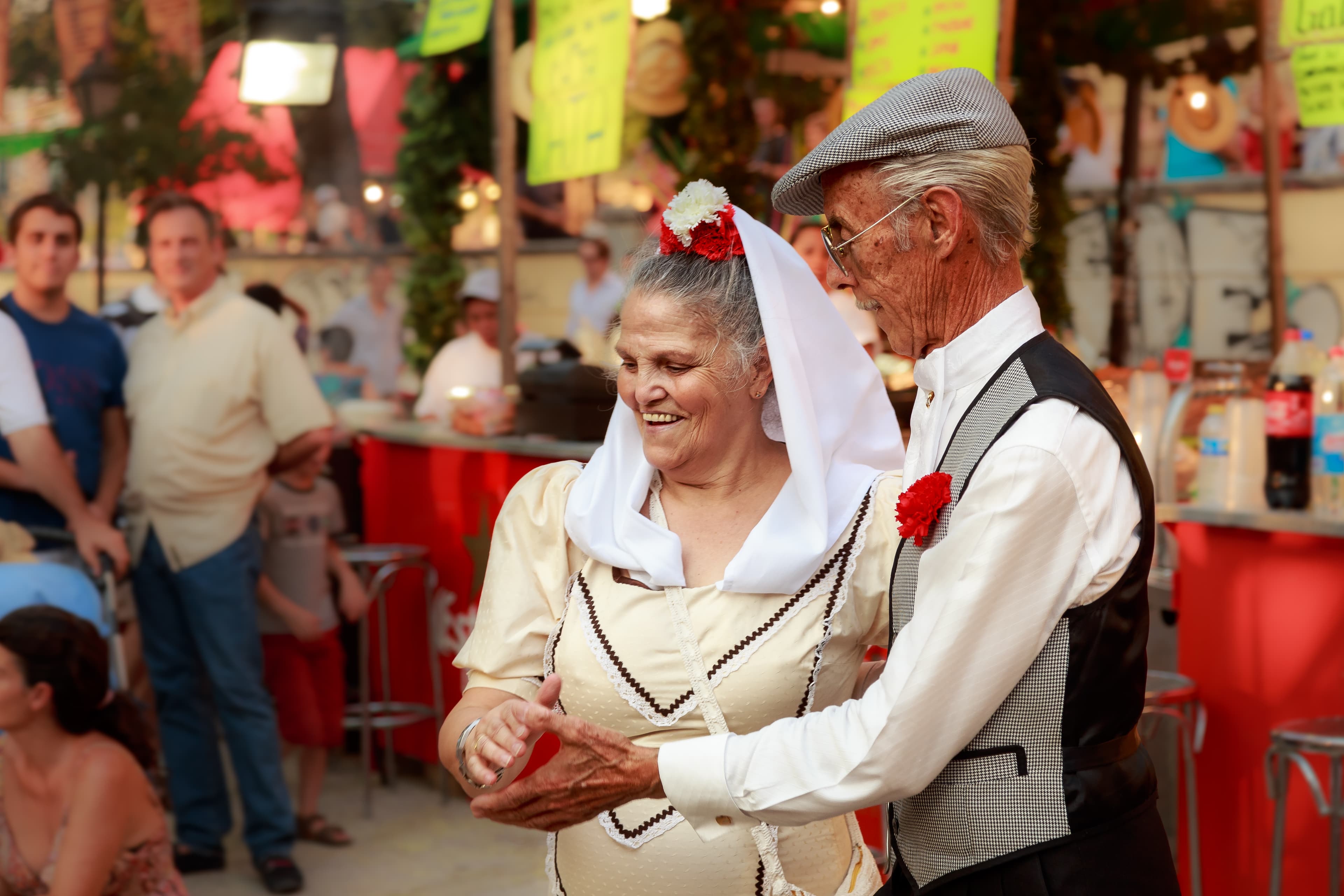
Three back-to-back, free neighbourhood street parties in Madrid's castizo south-centre: San Cayetano (5–8 August, Rastro and Embajadores), San Lorenzo (9–12, Lavapiés) and La Paloma (14–17, La Latina), with the big day on the 15th. Chotis music, limoná, gallinejas and Manila shawls, all within less than a kilometre on foot.
Three castizo verbenas across twelve days
This is the summer verbena trilogy of Madrid: three free, consecutive street festivals that Distrito Centro strings together across twelve days in the castizo south-centre. There's no ticket booth, no beach — just chotis in the square, paper lanterns, a barrel organ, giants and big-heads, the patron saint's procession and street stalls that only appear these days of the year. The best part: all three share the same neighbourhood (Embajadores, Lavapiés, La Latina) and fit inside a triangle under two kilometres across, so you can walk from one to the next without ever touching the metro. Plaza de Cascorro, at the heart of the Rastro flea market, is the natural meeting point. One heads-up: on the peak nights — especially the 14th and 15th — Cascorro, Plaza de la Cebada and Las Vistillas get seriously packed; these spots are well-known pickpocket territory, so keep your phone and wallet in front pockets and skip the pushchair during rush hours.
Fixed dates by the saints' calendar, with the 15th as the crown
The dates are fixed because they follow the Catholic calendar, not the nearest weekend — they fall on the same day every year. San Cayetano opens 5–8 August (big day the 7th), around the Embajadores neighbourhood and the church of San Millán y San Cayetano; he's the patron of the unemployed, and tradition says grabbing a flower from the processional float brings you work. San Lorenzo follows 9–12 August (highlight on the 10th), in Lavapiés, with pétanque, chess, workshops and concerts on Plaza Arturo Barea. La Paloma closes 14–17 August in La Latina — and this one carries the only actual public holiday: 15 August, the Assumption, a national bank holiday and the climax of the whole cycle. Since the programme changes each year, check esmadrid.com or madrid.es for the exact schedule of the upcoming edition; the dates stay put, but the specific events shift.
Limoná, gallinejas and street-stall food
The drink is limoná — and it's worth knowing it's not sangría: it's made with white wine (never red), sugar, cinnamon, water, squeezed lemon and often a splash of sparkling water, macerated the day before and served ice-cold in glass jugs. Order it at a neighbourhood bar outside of August (or San Isidro) and you'll get a blank stare; it only surfaces in Embajadores, Lavapiés, La Latina and Las Vistillas, and only during these festivals. For food, the castizo choice is street-stall: gallinejas and entresijos, a fried-offal dish of lamb intestines and guts cooked in their own fat, with a smell you'll recognise from a distance and not for the faint-stomached. Pair them with caracoles (snails), barquillos (wafer rolls) and vermouth. An honest warning: of the nearly hundred freidurías (offal fryers) that existed in the 1960s, very few remain; the historic one at Embajadores 84 closed in 2021, so stick to the verbena stalls.
The local's secret: where the real atmosphere is
Here's the insider tip. Almost everyone heads to Calle de la Paloma because it gives the festival its name — but that street is small and quiet; its role is symbolic (it's where Isabel Tintero sheltered the image of the Virgin in 1791; the current church, at Calle Toledo 100, was built in 1917). The real buzz is three blocks north, on Calle Calatrava, lined with bars over eighty years old and barrel-tapped vermouth, and spilling into Plaza de la Cebada and Plaza de la Paja. On 15 August, the Virgin's procession winds through the neighbourhood, with balconies draped in flowers and colourful banners, a Manila shawl competition and chotis dancing. Bonus for music lovers: if a revival of the zarzuela La verbena de la Paloma (Bretón, 1894) is running at the Teatro de la Zarzuela, add it to the itinerary — it rounds the whole experience off perfectly.
Frequently asked questions
How much does it cost to get into the verbenas?
How do I get to each verbena by metro?
What is limoná and where can I get it?
What's the best day to go?
Some links on this page are affiliate links: if you book through them, Andelaria may earn a commission at no extra cost to you. Transparency & affiliate policy
Book tickets and tours: Verbenas de Agosto: San Cayetano, San Lorenzo y La PalomaPlan your trip
Book the essentials for your trip to Madrid.
Other places in Madrid
Museo del Prado
museoSpain's most important painting museum holds more than 8,000 works on display, among them Velázquez's Las Meninas, Bosch's The Garden of Earthly Delights and Goya's cartoons. Juan de Villanueva's neoclassical building, opened in 1819, is itself a monumental piece of architecture on the Paseo del Arte.
Palacio Real de Madrid
palacioThe official residence of the Spanish Crown, the Palacio Real is the largest royal palace in use in Western Europe, with 135,000 m² and 3,418 rooms. Built between 1738 and 1764 in the Italian Baroque style, it safeguards a collection of Flemish tapestries, armour and the Stradivarius Violin Collection.
Parque del Buen Retiro
parqueDeclared a UNESCO World Heritage Site in 2021, El Retiro covers 125 hectares in the heart of Madrid. Its Estanque Grande with the Monument to Alfonso XII, the Palacio de Cristal and the rose garden with more than 4,000 rosebushes make it Madrileños' favourite green lung.
Puerta del Sol
plazaKilometre zero for all of Spain's radial roads, the Puerta del Sol is the symbolic epicentre of Madrid and of the country. The 18th-century Real Casa de Correos, the bear and the strawberry tree — the city's heraldic emblem — and the twelve New Year's Eve chimes make it an unmissable landmark for any visitor.
Templo de Debod
temploAn authentic 2nd-century BC Egyptian temple, dismantled stone by stone in Nubia and given by Egypt to Spain in 1968 in gratitude for help rescuing Abu Simbel. Rebuilt in the Parque del Oeste with views over the Casa de Campo and the Sierra de Guadarrama, it is unique in the world outside Egypt.
Gran Vía y Edificio Metrópolis
avenidaMadrid's most famous commercial and theatre artery, opened between 1910 and 1933, packs some of the most spectacular buildings of European eclecticism into barely 1.3 km. The Edificio Metrópolis (1911), crowned by its bronze allegory and slate dome, marks the start of the avenue and is the city's most photographed skyline.
Fiestas de San Isidro
fiestaThe San Isidro Festival honours Madrid's patron saint every 15 May with a pilgrimage to the Pradera de Carabanchel, beside the hermitage and the Manzanares river. Free and open to all, it brings together more than 100 activities: street dances, chotis performances, rosquillas pastries and the great Feria Taurina de Las Ventas running alongside.
Orgullo de Madrid (MADO)
fiestaMadrid Pride (MADO) is Europe's largest LGBTQ+ event: its national march, free and open to all, runs along the Paseo del Prado to Colón and draws over two million people every first weekend of July. It was born in 1978 and has its heart in the Chueca neighbourhood.
Mad Cool Festival
fiestaMad Cool is Madrid's flagship rock and indie festival: it launched in 2016 and now takes place every July at the Iberdrola Music venue (Villaverde). Four days, multiple stages and international headliners. It is a ticketed event — you need a pass (full festival or single day), and they sell out in waves.
Similar places in other cities
Festival de los Patios Cordobeses
CórdobaEvery first half of May, Córdoba opens around 53 privately owned competition courtyards for free — plus a dozen institutional spaces: geraniums, bougainvillea, and recycled terracotta pots in living, inhabited patios. UNESCO Intangible Heritage since 2012, with an official competition running since 1921. Free entry, no booking required, split daily hours.
Semana Santa de Córdoba
CórdobaCórdoba's Semana Santa is free and open to all, with processions moving through the medieval Jewish quarter from dawn into the early morning hours. Its defining feature in Spain: since 2017, the Carrera Oficial passes through the interior of the Mezquita-Catedral, a UNESCO World Heritage monument. Thirty-nine of the 42 brotherhoods take part. The festival holds National Tourist Interest status.
Noche Blanca del Flamenco de Córdoba
CórdobaOne June night, Córdoba scatters free flamenco across its historic old town. The Noche Blanca del Flamenco falls on the summer solstice (20–21 June) and sets up around ten simultaneous stages, running from 22:30 until 5:00 in the morning. No ticket, no booking: you walk in, listen, and drift from square to square.