Mad Cool Festival
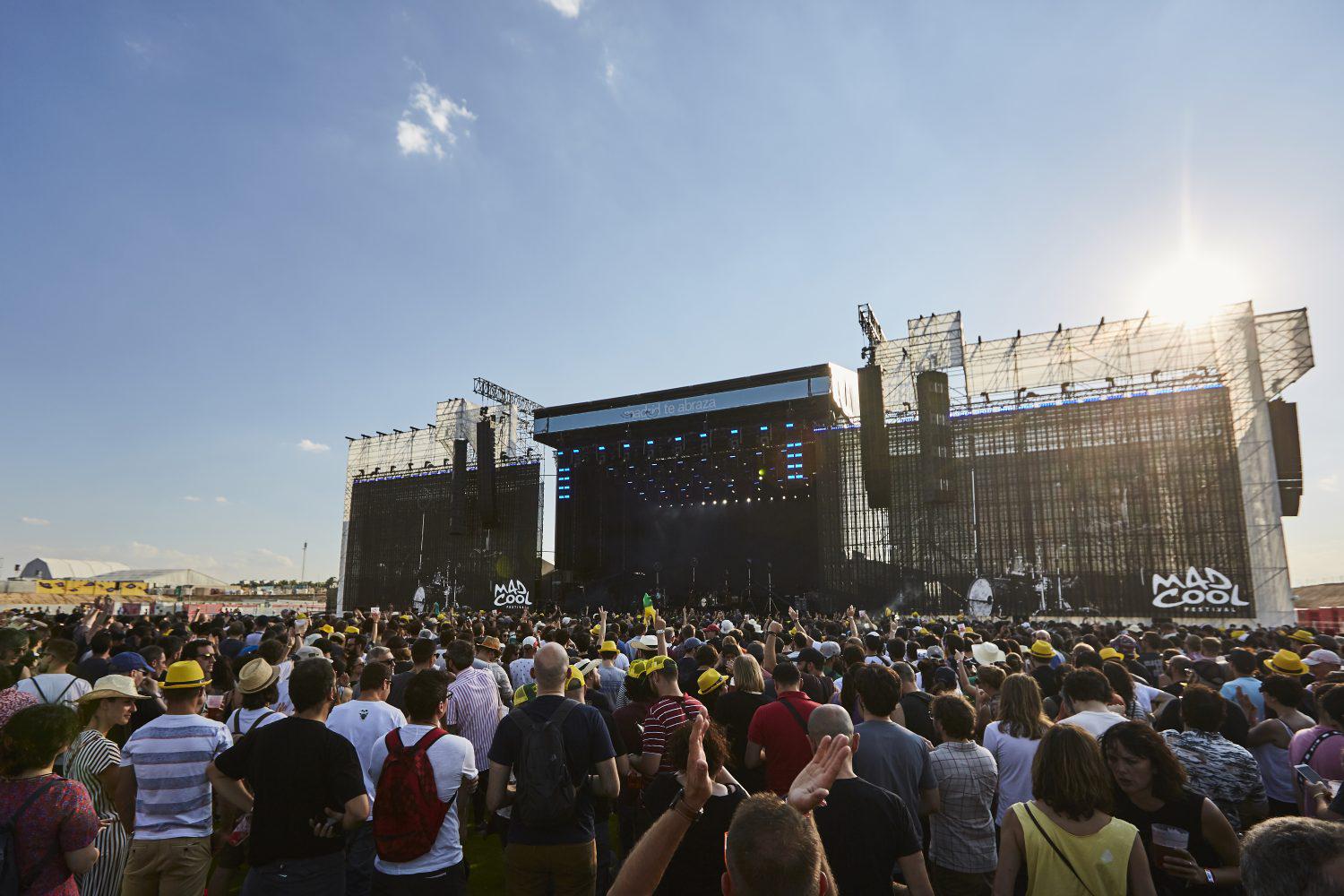
Mad Cool is Madrid's flagship rock and indie festival: it launched in 2016 and now takes place every July at the Iberdrola Music venue (Villaverde). Four days, multiple stages and international headliners. It is a ticketed event — you need a pass (full festival or single day), and they sell out in waves.
The festival that put Madrid on the map
Mad Cool kicked off in 2016 at La Caja Mágica (Usera district) and in under three years became one of Europe's leading rock and indie events. That first edition already drew over 100,000 people with Neil Young, The Who and The Prodigy. In 2018 — its attendance record year — it won the NME Award for 'Best Festival Lineup of the Year'. After a stint in Valdebebas, it has been held at the Iberdrola Music venue in Villaverde since 2023, not without controversy: at its debut there the city council fined it for noise violations. Pearl Jam, Metallica, Foo Fighters and Florence + The Machine have all graced its stages. One tip: the lineup changes every year and is confirmed in dribs and drabs — don't trust rumours or resellers claiming a 'leaked line-up'. Always check madcoolfestival.es.
Four days, multiple stages, many genres
The current format is four consecutive days (Wednesday to Saturday) in July — a recent change: until 2024 it ran for three days. Each day tends to have its own flavour — hard rock, alternative indie, mainstream pop, electronic — spread across around eight stages. On capacity, it's worth separating two figures that often get muddled: the Iberdrola Music venue is approved for over 100,000 people (the venue's own figure), but the festival's operational capacity is far lower. Since the reduction announced in 2024 to improve the experience, Mad Cool runs at around 50,000–55,000 attendees per day. Even so, it's still massive. One critical tip: with several stages running simultaneously, you simply can't see everything. Download the official app, mark your must-sees and plan around clashes before you walk in — crossing the site between sets takes time, and the big shows start on the dot.
Iberdrola Music: getting there and what to expect
The venue is at Calle Laguna Dalga 36–38, Villaverde district (south Madrid) — roughly 185,000 m² between the M-45 motorway and the Parque Lineal del Manzanares. The organisers describe it as one of Europe's largest sustainable leisure spaces, powered by renewable energy. From the city centre, the easiest option is Metro L3 to Villaverde Alto (about 20 minutes on foot); by Cercanías, San Cristóbal Industrial (C3, ~10 min) is the closest stop, and Los Espartales (L12) works as an alternative via Getafe. Inside you'll find food trucks and bars, free water refill stations, rest areas, first-aid points and accessible entrances. There is no camping. One tip: the late-night journey home is the real bottleneck. The city council publishes a 'Plan de movilidad Iberdrola Music' for each edition with extended Metro L3 service towards Sol and a free shuttle to Atocha — times and routes change every year, so confirm them before the night of your show.
Tickets, July heat and what to pack
This is a paid event and tickets move fast: there are four-day passes, single-day tickets and VIP tiers, all in digital format (no PDFs or screenshots). Prices rise in waves, so buy as early as possible at the official site madcoolfestival.es/tickets and steer clear of resellers like Viagogo, which inflate the price. The most serious logistical factor isn't musical — it's the heat. July in Madrid averages around 32 °C, with regular peaks of 35–40 °C and nights that rarely dip below 18 °C. Bring high-factor sun cream (SPF 50+), a cap, light-coloured loose clothing, and drink before you feel thirsty. You may bring one water bottle of up to 0.5 L with no lid, refillable at stations inside; other drinks and outside food are not allowed (except for children under 8). Backpacks up to ~20 L are fine; professional cameras and recording devices are prohibited.
Frequently asked questions
When and where does Mad Cool take place?
Is it a ticketed event? How much does it cost?
How do I get to the Iberdrola Music venue?
What can I bring, and how do I handle the heat?
Some links on this page are affiliate links: if you book through them, Andelaria may earn a commission at no extra cost to you. Transparency & affiliate policy
Book tickets and tours: Mad Cool FestivalPlan your trip
Book the essentials for your trip to Madrid.
Other places in Madrid
Museo del Prado
museoSpain's most important painting museum holds more than 8,000 works on display, among them Velázquez's Las Meninas, Bosch's The Garden of Earthly Delights and Goya's cartoons. Juan de Villanueva's neoclassical building, opened in 1819, is itself a monumental piece of architecture on the Paseo del Arte.
Palacio Real de Madrid
palacioThe official residence of the Spanish Crown, the Palacio Real is the largest royal palace in use in Western Europe, with 135,000 m² and 3,418 rooms. Built between 1738 and 1764 in the Italian Baroque style, it safeguards a collection of Flemish tapestries, armour and the Stradivarius Violin Collection.
Parque del Buen Retiro
parqueDeclared a UNESCO World Heritage Site in 2021, El Retiro covers 125 hectares in the heart of Madrid. Its Estanque Grande with the Monument to Alfonso XII, the Palacio de Cristal and the rose garden with more than 4,000 rosebushes make it Madrileños' favourite green lung.
Puerta del Sol
plazaKilometre zero for all of Spain's radial roads, the Puerta del Sol is the symbolic epicentre of Madrid and of the country. The 18th-century Real Casa de Correos, the bear and the strawberry tree — the city's heraldic emblem — and the twelve New Year's Eve chimes make it an unmissable landmark for any visitor.
Templo de Debod
temploAn authentic 2nd-century BC Egyptian temple, dismantled stone by stone in Nubia and given by Egypt to Spain in 1968 in gratitude for help rescuing Abu Simbel. Rebuilt in the Parque del Oeste with views over the Casa de Campo and the Sierra de Guadarrama, it is unique in the world outside Egypt.
Gran Vía y Edificio Metrópolis
avenidaMadrid's most famous commercial and theatre artery, opened between 1910 and 1933, packs some of the most spectacular buildings of European eclecticism into barely 1.3 km. The Edificio Metrópolis (1911), crowned by its bronze allegory and slate dome, marks the start of the avenue and is the city's most photographed skyline.
Fiestas de San Isidro
fiestaThe San Isidro Festival honours Madrid's patron saint every 15 May with a pilgrimage to the Pradera de Carabanchel, beside the hermitage and the Manzanares river. Free and open to all, it brings together more than 100 activities: street dances, chotis performances, rosquillas pastries and the great Feria Taurina de Las Ventas running alongside.
Orgullo de Madrid (MADO)
fiestaMadrid Pride (MADO) is Europe's largest LGBTQ+ event: its national march, free and open to all, runs along the Paseo del Prado to Colón and draws over two million people every first weekend of July. It was born in 1978 and has its heart in the Chueca neighbourhood.
Verbenas de Agosto: San Cayetano, San Lorenzo y La Paloma
fiestaThree back-to-back, free neighbourhood street parties in Madrid's castizo south-centre: San Cayetano (5–8 August, Rastro and Embajadores), San Lorenzo (9–12, Lavapiés) and La Paloma (14–17, La Latina), with the big day on the 15th. Chotis music, limoná, gallinejas and Manila shawls, all within less than a kilometre on foot.
Similar places in other cities
Festival de los Patios Cordobeses
CórdobaEvery first half of May, Córdoba opens around 53 privately owned competition courtyards for free — plus a dozen institutional spaces: geraniums, bougainvillea, and recycled terracotta pots in living, inhabited patios. UNESCO Intangible Heritage since 2012, with an official competition running since 1921. Free entry, no booking required, split daily hours.
Semana Santa de Córdoba
CórdobaCórdoba's Semana Santa is free and open to all, with processions moving through the medieval Jewish quarter from dawn into the early morning hours. Its defining feature in Spain: since 2017, the Carrera Oficial passes through the interior of the Mezquita-Catedral, a UNESCO World Heritage monument. Thirty-nine of the 42 brotherhoods take part. The festival holds National Tourist Interest status.
Noche Blanca del Flamenco de Córdoba
CórdobaOne June night, Córdoba scatters free flamenco across its historic old town. The Noche Blanca del Flamenco falls on the summer solstice (20–21 June) and sets up around ten simultaneous stages, running from 22:30 until 5:00 in the morning. No ticket, no booking: you walk in, listen, and drift from square to square.