Orgullo de Madrid (MADO)
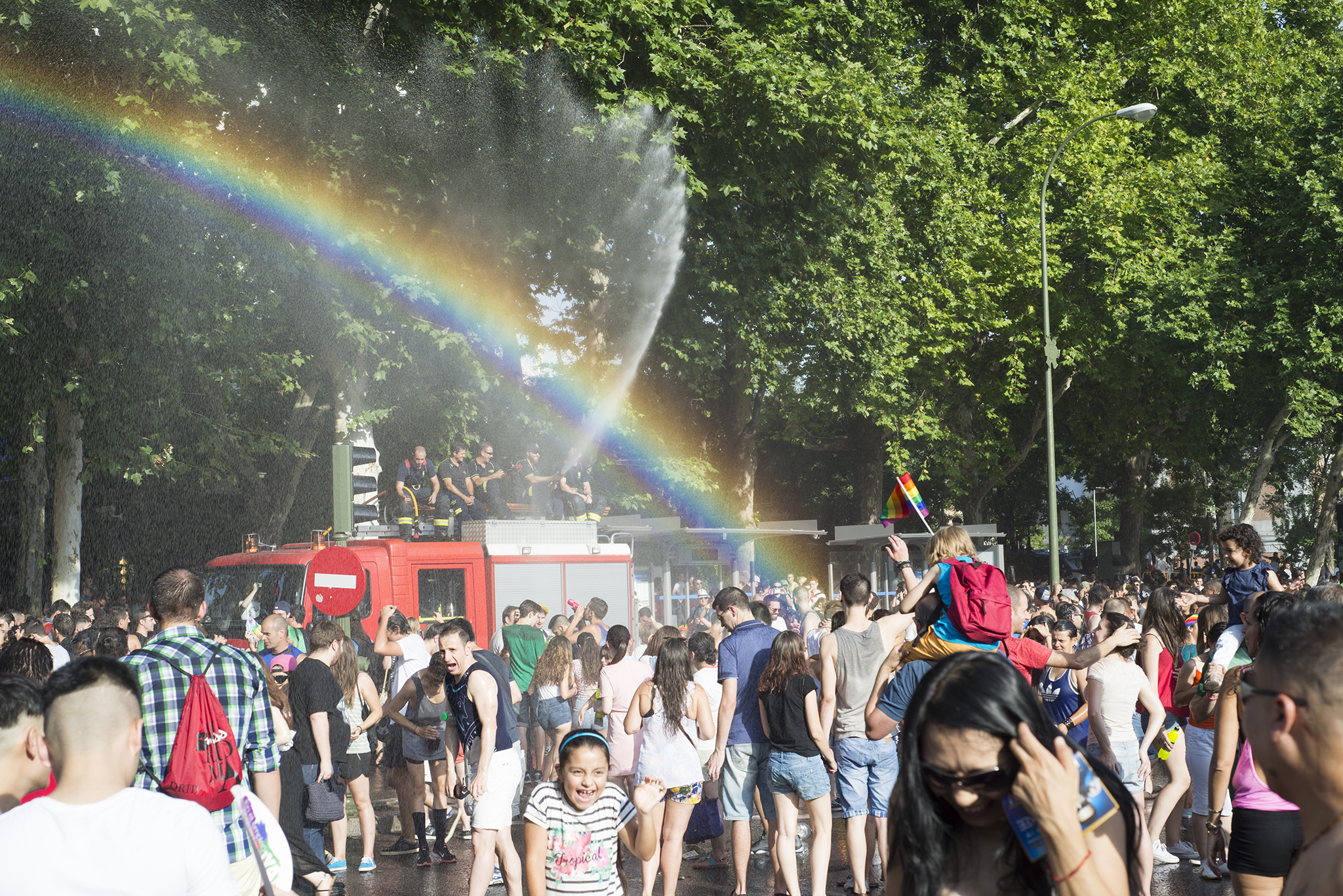
Madrid Pride (MADO) is Europe's largest LGBTQ+ event: its national march, free and open to all, runs along the Paseo del Prado to Colón and draws over two million people every first weekend of July. It was born in 1978 and has its heart in the Chueca neighbourhood.
From 1978 to Europe's biggest Pride
Madrid's first Pride march took place on 25 June 1978, called by the Frente de Liberación Homosexual de Castilla, with around 7,000 people marching from Calle O'Donnell to Menéndez Pelayo — nine years after Stonewall. The legalisation of equal marriage in 2005 pushed attendance past two million, and two milestones cemented its status as a world reference: Europride 2007 and, above all, WorldPride 2017, when Madrid became the first city ever to host both titles simultaneously. Those ten days drew around 3.5 million visitors (roughly two million for the central march alone), making it one of the largest Pride celebrations ever recorded and the biggest in European history. Today the National March consistently brings out more than two million people — more than London or Paris. Tip: this is a political demonstration, not just a party. If you want the festive atmosphere and floats, join the march; if you prefer calm, steer clear on the main Saturday.
Opening ceremony, High Heels Race and the march
Three events define the peak week. The opening ceremony (pregón) officially launches MADO at Plaza de Pedro Zerolo, the epicentre of Chueca, with performers from Madrid's nightlife scene and packed crowds from the very first hour. The High Heels Race on Calle Pelayo is the most photographed moment: contestants sprint in heels up to 15 cm high, changing outfits and touching up their make-up mid-course; spectators pack the pavements, so arrive well ahead if you want a decent spot. The LGBTQ+ National March, organised by FELGTBI+, COGAM and AEGAL, is the main event: it sets off around 19:00 from the Glorieta de Atocha (Carlos V), covers roughly 3.5 km along the Paseo del Prado, passes Cibeles and heads up Recoletos to Plaza de Colón. It lasts four to five hours, with the last floats arriving close to midnight. Key tip: position yourself near Atocha, where there is more room; Gran Vía and Chueca are party zones, not on the official route, and get completely overwhelmed.
Chueca and ten days of celebration
Chueca, right in the Centro district, is Madrid's historic LGBTQ+ neighbourhood and the beating heart of everything. Bars, clubs, terraces and street stages cluster around Plaza de Pedro Zerolo, and the festivities stretch for about ten days, from late June into early July. Before the main week, the Barrio Pride (Orgullo de Barrio) kicks things off with street activities, cultural events and a more neighbourhood feel — there are even charming touches like a solidarity pet parade in Pedro Zerolo. Free concerts are spread across several public stages: Plaza de Pedro Zerolo, Puerta del Sol (urban music), Plaza de las Reinas (female and dissident focus) and Plaza de España. Tip: the streets of Chueca (Pelayo, Gravina, Augusto Figueroa, Hortaleza, Barquillo) are closed to traffic and fill up to the point of barely being able to move; July heat in Madrid is no joke, so bring water, wear comfortable clothes and be patient with the night-time crowds. Check the official website for the line-up and programme of each edition.
Getting around, what's free and where to stay
The good news: the main events are free and open to everyone. The march and all concerts on public stages cost nothing; ticketed events are private (clubs, galas and indoor shows). Transport is the real headache. In recent editions, Chueca and Sol metro stations have closed for safety reasons every afternoon and evening on the busiest days — Sol sometimes as early as 18:30. Use alternative stations such as Gran Vía, Banco de España or Alonso Martínez, though access may still be restricted when the centre reaches capacity; check the specific arrangements for your year with Metro de Madrid. Avoid driving: there are extensive road closures around Chueca and Gran Vía, and almost everything in the centre is walkable. SAMUR medical teams deploy first-aid posts with defibrillators in the highest-density areas. On accommodation: book well in advance, as prices and occupancy spike across the whole city. Hotels in Chueca are in very high demand, but any central neighbourhood puts you within easy walking distance of the action.
Frequently asked questions
When does Madrid Pride take place?
Is there an entry fee?
What route does the march follow?
How do I get around during Pride?
Some links on this page are affiliate links: if you book through them, Andelaria may earn a commission at no extra cost to you. Transparency & affiliate policy
Book tickets and tours: Orgullo de Madrid (MADO)Plan your trip
Book the essentials for your trip to Madrid.
Other places in Madrid
Museo del Prado
museoSpain's most important painting museum holds more than 8,000 works on display, among them Velázquez's Las Meninas, Bosch's The Garden of Earthly Delights and Goya's cartoons. Juan de Villanueva's neoclassical building, opened in 1819, is itself a monumental piece of architecture on the Paseo del Arte.
Palacio Real de Madrid
palacioThe official residence of the Spanish Crown, the Palacio Real is the largest royal palace in use in Western Europe, with 135,000 m² and 3,418 rooms. Built between 1738 and 1764 in the Italian Baroque style, it safeguards a collection of Flemish tapestries, armour and the Stradivarius Violin Collection.
Parque del Buen Retiro
parqueDeclared a UNESCO World Heritage Site in 2021, El Retiro covers 125 hectares in the heart of Madrid. Its Estanque Grande with the Monument to Alfonso XII, the Palacio de Cristal and the rose garden with more than 4,000 rosebushes make it Madrileños' favourite green lung.
Puerta del Sol
plazaKilometre zero for all of Spain's radial roads, the Puerta del Sol is the symbolic epicentre of Madrid and of the country. The 18th-century Real Casa de Correos, the bear and the strawberry tree — the city's heraldic emblem — and the twelve New Year's Eve chimes make it an unmissable landmark for any visitor.
Templo de Debod
temploAn authentic 2nd-century BC Egyptian temple, dismantled stone by stone in Nubia and given by Egypt to Spain in 1968 in gratitude for help rescuing Abu Simbel. Rebuilt in the Parque del Oeste with views over the Casa de Campo and the Sierra de Guadarrama, it is unique in the world outside Egypt.
Gran Vía y Edificio Metrópolis
avenidaMadrid's most famous commercial and theatre artery, opened between 1910 and 1933, packs some of the most spectacular buildings of European eclecticism into barely 1.3 km. The Edificio Metrópolis (1911), crowned by its bronze allegory and slate dome, marks the start of the avenue and is the city's most photographed skyline.
Fiestas de San Isidro
fiestaThe San Isidro Festival honours Madrid's patron saint every 15 May with a pilgrimage to the Pradera de Carabanchel, beside the hermitage and the Manzanares river. Free and open to all, it brings together more than 100 activities: street dances, chotis performances, rosquillas pastries and the great Feria Taurina de Las Ventas running alongside.
Mad Cool Festival
fiestaMad Cool is Madrid's flagship rock and indie festival: it launched in 2016 and now takes place every July at the Iberdrola Music venue (Villaverde). Four days, multiple stages and international headliners. It is a ticketed event — you need a pass (full festival or single day), and they sell out in waves.
Verbenas de Agosto: San Cayetano, San Lorenzo y La Paloma
fiestaThree back-to-back, free neighbourhood street parties in Madrid's castizo south-centre: San Cayetano (5–8 August, Rastro and Embajadores), San Lorenzo (9–12, Lavapiés) and La Paloma (14–17, La Latina), with the big day on the 15th. Chotis music, limoná, gallinejas and Manila shawls, all within less than a kilometre on foot.
Similar places in other cities
Festival de los Patios Cordobeses
CórdobaEvery first half of May, Córdoba opens around 53 privately owned competition courtyards for free — plus a dozen institutional spaces: geraniums, bougainvillea, and recycled terracotta pots in living, inhabited patios. UNESCO Intangible Heritage since 2012, with an official competition running since 1921. Free entry, no booking required, split daily hours.
Semana Santa de Córdoba
CórdobaCórdoba's Semana Santa is free and open to all, with processions moving through the medieval Jewish quarter from dawn into the early morning hours. Its defining feature in Spain: since 2017, the Carrera Oficial passes through the interior of the Mezquita-Catedral, a UNESCO World Heritage monument. Thirty-nine of the 42 brotherhoods take part. The festival holds National Tourist Interest status.
Noche Blanca del Flamenco de Córdoba
CórdobaOne June night, Córdoba scatters free flamenco across its historic old town. The Noche Blanca del Flamenco falls on the summer solstice (20–21 June) and sets up around ten simultaneous stages, running from 22:30 until 5:00 in the morning. No ticket, no booking: you walk in, listen, and drift from square to square.