Queima das Fitas de Coimbra
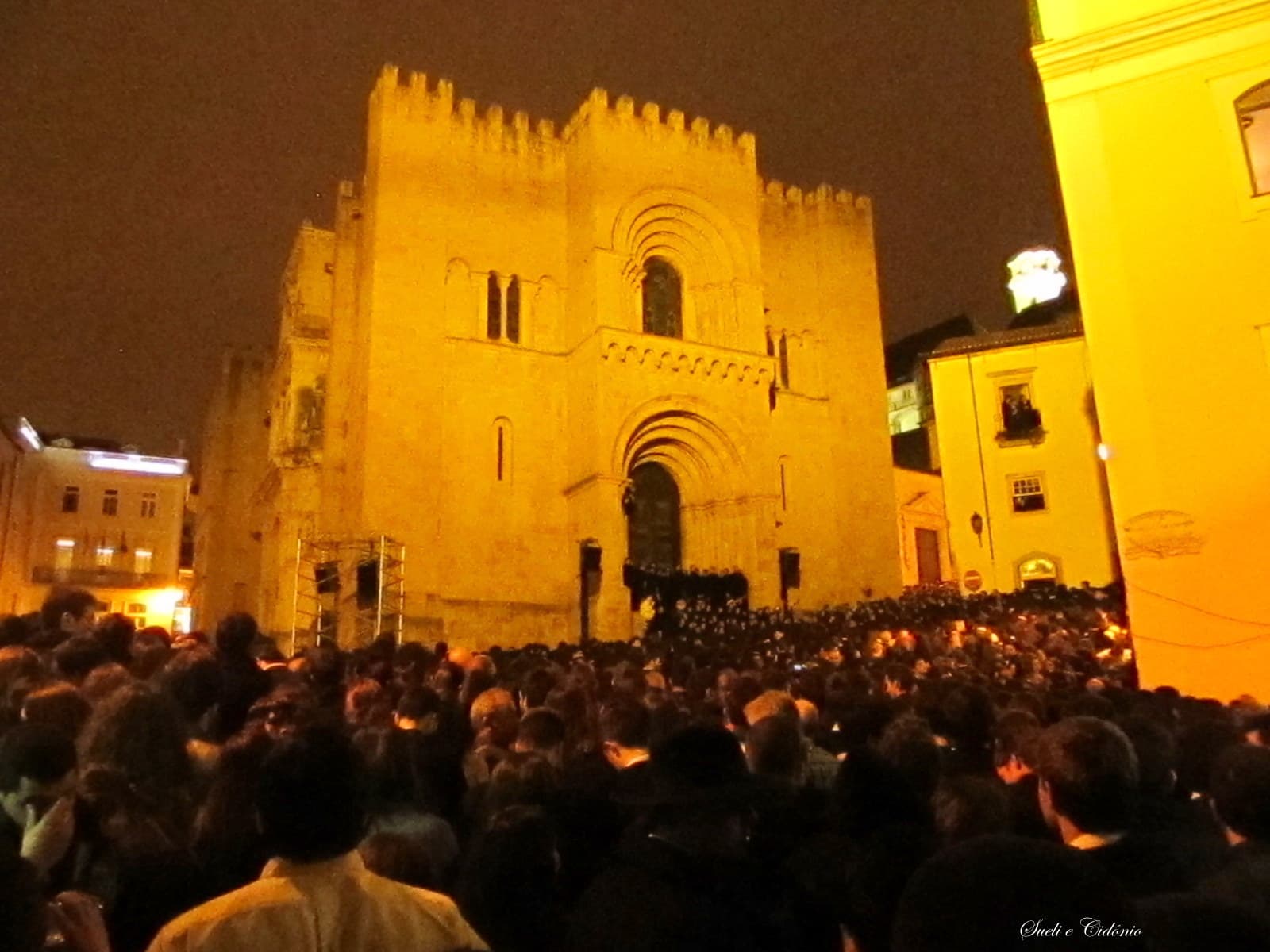
Eight days at the end of May when Coimbra becomes one of Europe's biggest academic festivals: midnight fado at the Sé Velha, black-caped fourth-year students in floats, and concerts until dawn. The 2026 edition ran from May 22 to 30, with the city closed to traffic for a full day.
What it is and where it comes from
The Queima das Fitas is the end-of-year celebration for students of the University of Coimbra — founded in Lisbon in 1290 and permanently settled in Coimbra since 1537 — and is considered one of Europe's largest academic festivals. Its roots trace back to the Centenário da Sebenta of 1899; in 1901, fourth-year law students organized a procession with about twenty allegorical floats, in 1905 the Enterro do Grau (Burial of the Degree) was held, and the festival as we know it today took shape around 1919. The name comes from a literal gesture: students used to tie their books and sebentas (lecture notes) with a ribbon wrapped in a cross, and fourth-year law students began burning those ribbons at the end of the course as a symbolic release. Each faculty has its own color — red for Law, yellow for Medicine, light blue for Science and Technology, dark blue for Arts, purple for Pharmacy — with no official symbolism behind them: it's pure identity and belonging.
The program, day by day
In 2026 the festival ran from May 22 to 30. It opened with the Serenata Monumental at midnight, in the early hours between May 21 and 22 (00:00 on May 22), at Largo da Sé Velha: five fado groups from the AAC's Secção de Fado singing to a crowd that listens standing and in silence. One detail that can wreck your plans: access to the Largo is capped at 4,000 students with entry controls, so if you're not enrolled at the University of Coimbra, your realistic option is the giant screen set up by the Porta Férrea (gates open 9pm to 11pm, first come first served). On May 24, the Queima do Grelo took place at 10am at Largo da Sé Nova, followed in the afternoon by the Cortejo dos Quartanistas (fourth-years' parade). On the 26th, the Baile de Gala was held at the P1 pitch of the Estádio Universitário. And every night, the Noites do Parque lit up Praça da Canção. The next edition falls in late May 2027, with exact dates still to be confirmed — check the AAC's official program.
What costs money and what doesn't
Worth being clear here, because there's a common misconception that everything is free — it isn't. The Praça da Canção venue, where the Noites do Parque take place, requires a paid ticket: there's a general pass for the whole run and single-night tickets, sold on BOL.pt; the ticket is exchanged for a wristband that doubles as entry pass and cashless wallet at the bars. Prices change every year, so check BOL.pt or the official website before budgeting. Free and out in the open air are the best moments: the Cortejo dos Quartanistas, the Queima do Grelo at Largo da Sé Nova, the Serenata broadcast at Porta Férrea, and the ongoing buzz through the Baixa. If your budget is tight, that alone gives you plenty of festival; the paid venue is the extra, not the main course.
How to experience it without the hassle
On the day of the Cortejo, the city grinds to a halt: traffic is cut roughly from midday to nighttime along the entire route (Pólo I and Rua Larga, Calçada Martim de Freitas, Praça da República, Av. Sá da Bandeira, Baixa and Portagem), with detours and a reinforced SMTUC bus line. The route changes every year — in 2026 it ran along the central metrobus lane through the Baixa — so check that year's SMTUC or Câmara Municipal notice. Good vantage points: Praça da República and Av. Sá da Bandeira. Where to sleep: city-center hotels sell out, so book 4-8 weeks ahead. Getting there by train: Alfa Pendular from Lisbon to Coimbra-B takes about 1h40, from Porto about 1h09, with a 5-minute shuttle to Coimbra-A. Practical tips: carry only the essentials with your phone in a zipped pocket, bring water and a cap for the parade, set a fixed meeting point since the network gets overloaded, and plan your return trip from Praça da Canção (a 25-30 minute walk from the center).
Frequently asked questions
When does the Queima das Fitas take place?
Can tourists attend the Serenata Monumental?
Do you need to pay for tickets?
Where should I stay and how do I get there?
Some links on this page are affiliate links: if you book through them, Andelaria may earn a commission at no extra cost to you. Transparency & affiliate policy
Book tickets and tours: Queima das Fitas de CoimbraPlan your trip
Book the essentials for your trip to Coimbra.
Other places in Coimbra
Biblioteca Joanina
monumentoAn 18th-century Baroque library inside the Paço das Escolas, with gilded Portuguese-carved shelving and a colony of bats that protects the old books at night. Visits are only in 20-minute slots with a ticket to the university complex; there's no standalone ticket.
Universidade de Coimbra — Paço das Escolas
monumentoA former royal palace turned university campus since the 16th century, a UNESCO World Heritage Site. It includes the Sala dos Capelos, the Capela de São Miguel and the Torre da Universidade, with views over the whole city and the Mondego valley.
Sé Velha de Coimbra
iglesiaA 12th-century Romanesque cathedral, one of Portugal's best-preserved, with a fortress-like look and a Gothic cloister added later. Its facade was the setting for the Serenata Monumental that opens the Queima das Fitas.
Sé Nova de Coimbra
iglesiaA former 17th-century Jesuit church with a Mannerist Baroque facade, built as the city's new cathedral after the Society of Jesus was expelled. It houses a Baroque organ and the baptismal font of Pedro I.
Portugal dos Pequenitos
parqueA theme park opened in 1940 with miniature replicas of Portuguese monuments and sites from the country's former overseas expansion, designed for families with children. One of Coimbra's classics for over eight decades.
Jardim Botânico da Universidade de Coimbra
parqueA botanical garden founded in 1772, one of the oldest in Portugal, with over 1,200 species spread across terraces that descend toward the river, plus greenhouses and a central pond.
Mosteiro de Santa Cruz
iglesiaA monastery founded in 1131 right in the heart of the Baixa, the burial place of Portugal's first two kings (Afonso Henriques and Sancho I). Its Manueline facade and tiled choir are must-sees.
Festas da Rainha Santa Isabel
fiestaEvery two years (even years), Coimbra honors Isabel of Aragon, the 14th-century queen and patron saint of the city. In 2026 the religious festivities run from July 1 to 12, with the two processions on July 9 and 12. Everything is free and outdoors; July 4 is a municipal holiday.
Similar places in other cities
Festa de São João do Porto
PortoThe Festa de São João do Porto — free and open to all — turns the night of 23–24 June into Portugal's most intense street party. At midnight, fireworks burst over the Douro (16 minutes in 2025) while the entire city takes to the streets with plastic hammers, sardines, and basil.
Super Bock Super Rock
PortoSuper Bock Super Rock is a paid festival born in July 1995 and one of Portugal's longest-running. From 2010 it was held every July near Praia do Meco (Sesimbra). After 30 years, in 2026 it reinvents itself as a series of standalone concerts. Check dates and tickets on the official website.
São Martinho do Porto
PortoSão Martinho is celebrated across Portugal on 11 November with the magusto: chestnuts roasted over fire and new wine. In Porto the festival is urban and free, with castanhas vendors along Santa Catarina and Bolhão, and neighbourhood magustos open to all in areas like Bonfim and Cedofeita.