Festas da Rainha Santa Isabel
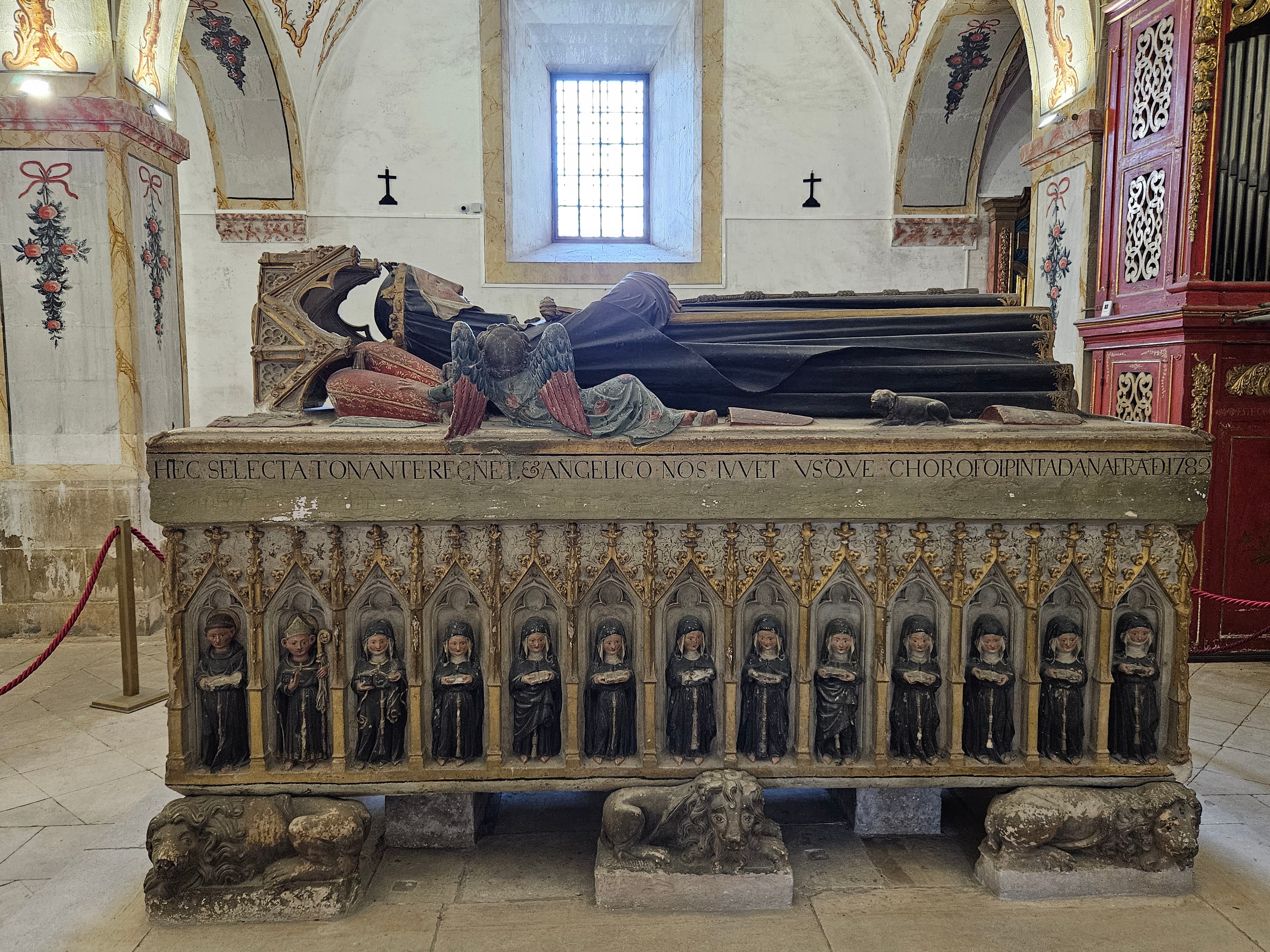
Every two years (even years), Coimbra honors Isabel of Aragon, the 14th-century queen and patron saint of the city. In 2026 the religious festivities run from July 1 to 12, with the two processions on July 9 and 12. Everything is free and outdoors; July 4 is a municipal holiday.
Who was the Rainha Santa Isabel
Isabel of Aragon was born on January 4, 1271, daughter of Pedro III of Aragon and Constance of Hohenstaufen. She married D. Dinis I of Portugal in 1282 at age 11 (a proxy marriage on February 11 in Barcelona, then the solemn wedding in Trancoso on June 26); they had Princess Constança and the future Afonso IV. She earned a reputation as a mediator and protector of the poor and sick, which is where the legend of the Miracle of the Roses comes from. She died at Estremoz Castle on July 4, 1336, at age 65, after a sudden fever struck her during a mediation trip between her son Afonso IV and her grandson Alfonso XI of Castile; the exact cause was never documented. In 1516 Leo X authorized her cult in the diocese of Coimbra, in 1556 Paul IV extended it to the whole kingdom, and Urban VIII canonized her on May 25, 1625. Tip: if you're here for "the July 4 festival," note that it's actually a municipal holiday with services closed, not the main event day.
The two processions: Traslado and Voto
The heart of the program is two processions. The Traslado carries the image from the Mosteiro de Santa Clara-a-Nova, across the Mondego to the center (Igreja de Santa Cruz / Sé Nova), marking the start of the festivities; the Voto, or Regresso, returns it to the monastery at the close, with confraternities, city authorities and thousands of locals. For the 2026 edition the confirmed dates are July 9 (penitential procession, departing around 6pm) and the return procession on July 12, within religious festivities running July 1-12 and the Festas da Cidade running July 3-19. Both processions are free and can be watched from the street. Key tip: on the 9th and 12th there are traffic closures in the Baixa and around access to Santa Clara-a-Nova from mid-afternoon, with bus detours and relocated stops. Go on foot and stake out a spot a good hour in advance; July in Coimbra gets hot, so look for shade and bring water.
How to plan your visit
First things first: check the year. The festival in its full form, with processions, is biennial and held in even years, so in an odd year you'll find minor activity and no processions. Verify the program at cm-coimbra.pt before booking. Around the processions there's a popular fair, music, markets and cultural activities organized by the city council that fill July with atmosphere, the liveliest month after May's Queima das Fitas. The rest of the year, the pilgrimage site is the Mosteiro de Santa Clara-a-Nova (Calçada de Santa Isabel, Alto de Santa Clara): it holds the silver and crystal tomb that presides over the main chapel, crafted after the body's transfer on October 27, 1677, with Mestre Pêro's original stone sepulcher (1330) in the choir below. Tip: don't go on July 4 or during a religious celebration, exactly when demand is highest, since the museum visit is suspended then.
Getting there, hours and prices without surprises
You can walk up to the monastery from the Baixa across the Ponte de Santa Clara, about 20-25 minutes, almost all uphill with no shade; in July, go early or late in the day. There's also an SMTUC city bus to Alto de Santa Clara, but check the current route at smtuc.pt since routes change and get diverted on procession days. Be cautious with hours and prices: available sources contradict each other (some list opening from early morning to late evening, changing between winter and summer; others a shorter window with a weekly closing day). Admission runs roughly €1-4 depending on which areas you visit (church, gallery, lower level), with free entry for children within a variable age range. Confirm on the official website or by calling +351 239 441 674. The church is open access during worship hours, but that's not the same as the tourist visit: during services the monument isn't open for touring.
Frequently asked questions
When are the Festas da Rainha Santa Isabel 2026?
Is it held every year?
Do you need a ticket to watch the processions?
How do I get to the Mosteiro de Santa Clara-a-Nova?
Some links on this page are affiliate links: if you book through them, Andelaria may earn a commission at no extra cost to you. Transparency & affiliate policy
Book tickets and tours: Festas da Rainha Santa IsabelPlan your trip
Book the essentials for your trip to Coimbra.
Other places in Coimbra
Biblioteca Joanina
monumentoAn 18th-century Baroque library inside the Paço das Escolas, with gilded Portuguese-carved shelving and a colony of bats that protects the old books at night. Visits are only in 20-minute slots with a ticket to the university complex; there's no standalone ticket.
Universidade de Coimbra — Paço das Escolas
monumentoA former royal palace turned university campus since the 16th century, a UNESCO World Heritage Site. It includes the Sala dos Capelos, the Capela de São Miguel and the Torre da Universidade, with views over the whole city and the Mondego valley.
Sé Velha de Coimbra
iglesiaA 12th-century Romanesque cathedral, one of Portugal's best-preserved, with a fortress-like look and a Gothic cloister added later. Its facade was the setting for the Serenata Monumental that opens the Queima das Fitas.
Sé Nova de Coimbra
iglesiaA former 17th-century Jesuit church with a Mannerist Baroque facade, built as the city's new cathedral after the Society of Jesus was expelled. It houses a Baroque organ and the baptismal font of Pedro I.
Portugal dos Pequenitos
parqueA theme park opened in 1940 with miniature replicas of Portuguese monuments and sites from the country's former overseas expansion, designed for families with children. One of Coimbra's classics for over eight decades.
Jardim Botânico da Universidade de Coimbra
parqueA botanical garden founded in 1772, one of the oldest in Portugal, with over 1,200 species spread across terraces that descend toward the river, plus greenhouses and a central pond.
Mosteiro de Santa Cruz
iglesiaA monastery founded in 1131 right in the heart of the Baixa, the burial place of Portugal's first two kings (Afonso Henriques and Sancho I). Its Manueline facade and tiled choir are must-sees.
Queima das Fitas de Coimbra
fiestaEight days at the end of May when Coimbra becomes one of Europe's biggest academic festivals: midnight fado at the Sé Velha, black-caped fourth-year students in floats, and concerts until dawn. The 2026 edition ran from May 22 to 30, with the city closed to traffic for a full day.
Similar places in other cities
Festa de São João do Porto
PortoThe Festa de São João do Porto — free and open to all — turns the night of 23–24 June into Portugal's most intense street party. At midnight, fireworks burst over the Douro (16 minutes in 2025) while the entire city takes to the streets with plastic hammers, sardines, and basil.
Super Bock Super Rock
PortoSuper Bock Super Rock is a paid festival born in July 1995 and one of Portugal's longest-running. From 2010 it was held every July near Praia do Meco (Sesimbra). After 30 years, in 2026 it reinvents itself as a series of standalone concerts. Check dates and tickets on the official website.
São Martinho do Porto
PortoSão Martinho is celebrated across Portugal on 11 November with the magusto: chestnuts roasted over fire and new wine. In Porto the festival is urban and free, with castanhas vendors along Santa Catarina and Bolhão, and neighbourhood magustos open to all in areas like Bonfim and Cedofeita.