Semana Santa de San Sebastián
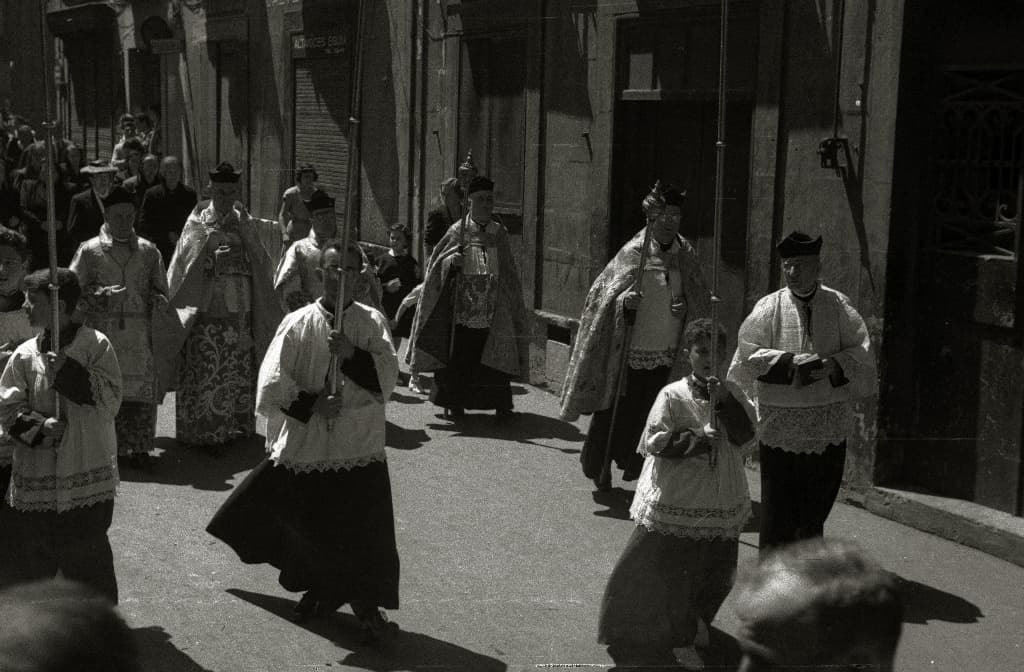
Donostia-San Sebastián's Holy Week returned in 2026 with processions for the first time in nearly six decades (the last was around 1966), driven by the Cofradía de Jesús Nazareno with more than 450 members. It's free, intimate, and far from overcrowded: the main event is the Good Friday procession, at 20:30 from the Catedral del Buen Pastor.
Intimate processions through the centre and Parte Vieja
Forget the spectacle of Seville or Málaga: Holy Week in Donostia is quiet and understated. In 2026 it returned to the streets after nearly six decades (the last procession was around 1966), led by the Cofradía de Jesús Nazareno, founded in 1927 and revived by local laypeople. The centrepiece is the Procession of the Holy Burial on Good Friday, at 20:30 from the Catedral del Buen Pastor, featuring three original restored floats — Jesús Nazareno, Cristo Yacente and Virgen de la Soledad — and penitents in white robes and purple capirotes. The route runs through the Ensanche (Urdaneta, San Martín, Guetaria, plaza Gipuzkoa), not through the Parte Vieja. Top tip: the most singular event is the Via Crucis up Monte Urgull, at 08:00 from behind the Basílica de Santa María — 14 stations in silence with the sea as backdrop. Always confirm dates and the full programme on the Catedral del Buen Pastor's website.
Pintxos during Holy Week: the best bars to visit
The other half of the trip is eating. The Parte Vieja has the densest pintxo crawl in Spain, and at Easter it's in full spring form: anchovy season begins (April–June), with Bar Txepetxa as the go-to spot (pintxos 3–5 €). Other classics: Ganbara (mushrooms, tuna carpaccio), Bar Néstor (just two tortillas a day; get there at 12:00 or 19:00), La Cuchara de San Telmo (suckling pig, braised cheeks) and Borda Berri (orzo with Idiazábal). Budget guide: 15–25 € per person across 4–5 bars with drinks. The txikiteo rule: one bar, one speciality, one drink, standing up, and you pay when you leave; order the hot items off the blackboard, not from the display case. Top tip: on Holy Thursday and Good Friday many bars get packed and some close for the holiday; arrive when they open, and if you're after a Michelin-starred restaurant, book 2–4 weeks in advance.
La Concha and the city in spring
March and April are among the best times to visit Donostia: fewer crowds than in summer, lower accommodation prices, and a city that feels alive without the hustle. The oceanic climate is mild — highs of 13–15 °C, cool but often sunny — with around 8 rainy days per month, so pack a waterproof and light layers. La Concha beach (1,350 m of fine sand, with the island of Santa Clara in the background) hosts no religious events, but it frames the whole week: you can walk its full length without jostling, even if it's not yet swimming weather. You'll also find the Peine del Viento, plaza de la Constitución and the walk up to Monte Urgull completely crowd-free. Top tip: the weather shifts quickly along the Bay of Biscay — a day can start bright and end in drizzle. Don't plan everything around sunshine and keep a good indoor backup in mind.
Combining Holy Week with the city's highlights
Beyond the religious events, Donostia has plenty to fill the day. The Aquarium, in the old port beside the Parte Vieja, usually opens during Holy Week and is a solid rainy-day option. Take the century-old funicular up Monte Igueldo for the best views of the bay, and walk out to Chillida's Peine del Viento — especially impressive when the sea is rough. Add the Kursaal, Museo San Telmo, the Balneario de La Perla and the Catedral del Buen Pastor itself to your list. If you want more Holy Week atmosphere, Hondarribia (~25 km, 30 min) holds processions that are often considered more elaborate than Donostia's. Top tip: check holiday opening hours before you go, since many places change their schedules on Holy Thursday and Good Friday. For further-afield trips like San Juan de Gaztelugatxe, factor in ~120–125 km and 1 h 35 min to 2 h by car depending on traffic and tolls: it's not the quick day trip many people picture.
Frequently asked questions
When is Holy Week in San Sebastián and what takes place?
Is it free to watch the processions?
Is Holy Week very crowded?
What's the weather like and how should I dress?
Some links on this page are affiliate links: if you book through them, Andelaria may earn a commission at no extra cost to you. Transparency & affiliate policy
Book tickets and tours: Semana Santa de San SebastiánPlan your trip
Book the essentials for your trip to San Sebastián.
Other places in San Sebastián
Playa de la Concha
playaThe most beautiful urban beach in Europe, with its unmistakable shell-like shape and the elegant 2 km Paseo de la Concha. Flanked by Monte Urgull and the island of Santa Clara, it offers fine sand, calm waters and postcard-perfect views of Palacio Miramar. The absolute symbol of Donostia and the epicentre of Basque summer life.
Parte Vieja (Casco Histórico)
barrioA labyrinth of medieval streets rebuilt after the fire of 1813, home to the world's highest concentration of pintxos bars per square metre. The gastronomic and festive heart of Donostia: Plaza de la Constitución — with the numbered balconies of the former bullring — and the Basílica de Santa María are its architectural jewels.
Monte Urgull y Castillo de la Mota
castilloA 123 m hill crowning the old town, topped by the Castillo de la Mota (12th century) and a monumental statue of the Sacred Heart (11 m). Paths through gardens and cannon batteries lead to viewpoints with panoramic views over La Concha bay and the port. Free entry all year round.
El Peine del Viento
monumentoThree Corten steel sculptures by Eduardo Chillida (1977) anchored in the rocks at the far end of Ondarreta beach, where the city merges with the Cantabrian Sea. Architect Luis Peña Ganchegui designed the surroundings with granite paving and water jets that emerge with the tides. The defining masterpiece of 20th-century Basque art.
Monte Igueldo
miradorAt 181 m altitude, this offers the most spectacular views of La Concha bay and the Cantabrian horizon. You reach the top on the 1912 wooden funicular, one of the oldest in the Basque Country. At the summit, a charming century-old amusement park rounds off the experience. An unmissable stop at sunset.
Kursaal (Palacio de Congresos y Auditorio)
museoTwo cubes of translucent glass designed by Rafael Moneo (1999) on the banks of the Urumea river, winners of the Mies van der Rohe Award. Home to the San Sebastián International Film Festival (one of the world's most prestigious) and the Quincena Musical. An icon of contemporary Spanish architecture, dramatically lit after dark.
Tamborrada de San Sebastián (Danborrada)
fiestaLa Tamborrada is Donostia's patron festival: every January 20th — a fixed date, never moved — the entire city beats drums and barrels for exactly 24 hours, midnight to midnight. More than 176 adult comparsas (+20,000 people) march through every neighbourhood. UNESCO Intangible Cultural Heritage (2018). Free and open to all.
Festival Internacional de Cine de San Sebastián (Zinemaldia)
fiestaZinemaldia is Spain's most prestigious film festival and the only one with FIAPF Category A status, alongside Cannes, Venice and Berlin. Every third or fourth week of September, San Sebastián awards its Golden Shell. Watching the red carpet is free; screenings are ticketed, with seats from around €8.75 per session.
Aste Nagusia — Semana Grande de San Sebastián
fiestaAste Nagusia is the main festival of Donostia-San Sebastián, held around 15 August (Assumption Day). In 2026 it runs from 8 to 15 August — nine free days that kick off with the cannon shot in Alderdi Eder. Its global trademark: the International Fireworks Competition, drawing ~90,000 people each night over La Concha bay.
Similar places in other cities
Fiestas de San Isidro
MadridThe San Isidro Festival honours Madrid's patron saint every 15 May with a pilgrimage to the Pradera de Carabanchel, beside the hermitage and the Manzanares river. Free and open to all, it brings together more than 100 activities: street dances, chotis performances, rosquillas pastries and the great Feria Taurina de Las Ventas running alongside.
Orgullo de Madrid (MADO)
MadridMadrid Pride (MADO) is Europe's largest LGBTQ+ event: its national march, free and open to all, runs along the Paseo del Prado to Colón and draws over two million people every first weekend of July. It was born in 1978 and has its heart in the Chueca neighbourhood.
Mad Cool Festival
MadridMad Cool is Madrid's flagship rock and indie festival: it launched in 2016 and now takes place every July at the Iberdrola Music venue (Villaverde). Four days, multiple stages and international headliners. It is a ticketed event — you need a pass (full festival or single day), and they sell out in waves.