Tamborrada de San Sebastián (Danborrada)
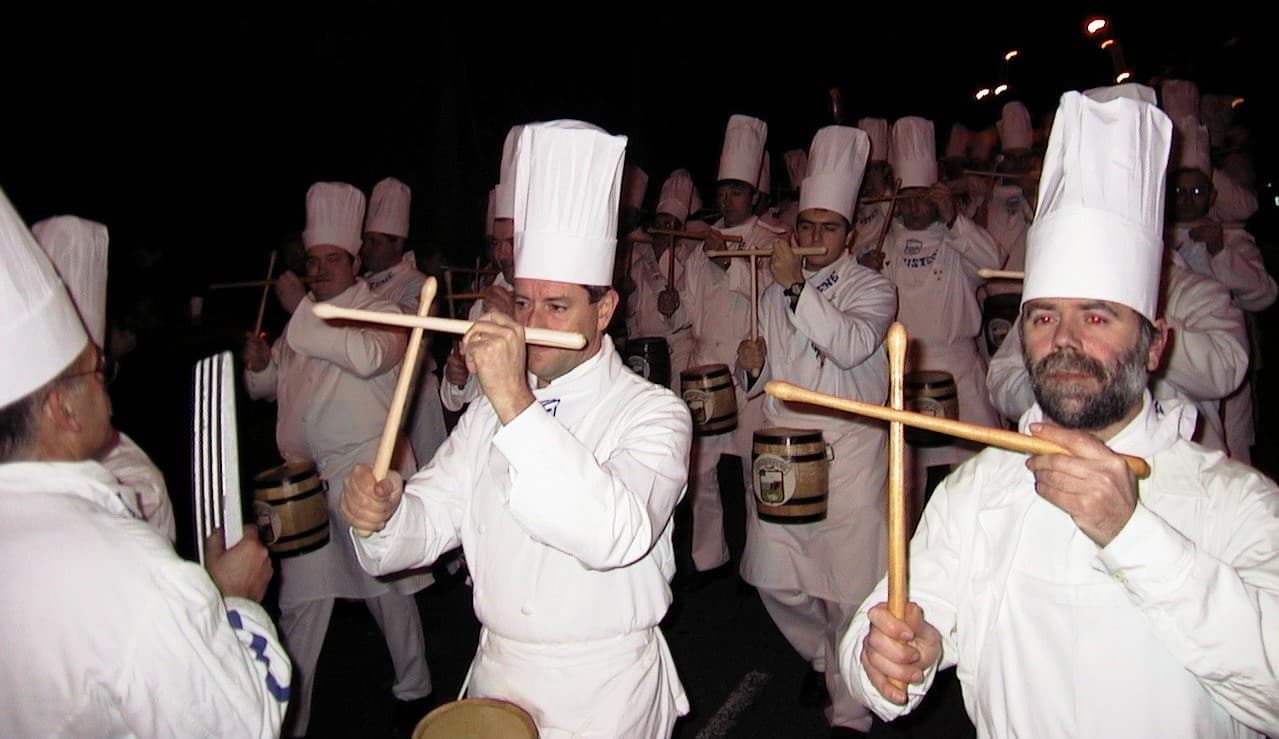
La Tamborrada is Donostia's patron festival: every January 20th — a fixed date, never moved — the entire city beats drums and barrels for exactly 24 hours, midnight to midnight. More than 176 adult comparsas (+20,000 people) march through every neighbourhood. UNESCO Intangible Cultural Heritage (2018). Free and open to all.
What it is and why it matters
La Tamborrada (Danborrada in Basque) is the most important and identity-defining festival of Donostia/San Sebastián: on the city's patron saint day, the whole city takes to the streets to beat drums and barrels. It is not a concert or a one-off parade, but a continuous, decentralised celebration that began around 1834–1836 as a carnivalesque parody of the Napoleonic occupation (1808–1813). In 2018, UNESCO inscribed it — alongside other Spanish tamboradas (Hellín, Baena) — on the Representative List of the Intangible Cultural Heritage of Humanity, recognising its role in community cohesion and intergenerational transmission. It is free and open to everyone: no tickets, no barriers — the festival happens in the street. It matters because it defines Donostia more than any monument: for one day the city organises itself into dozens of gastronomic and cultural societies that take over each neighbourhood. NOTE: do not confuse it with the Tamborrada de Azpeitia, which is a different festival in a different town.
When: January 20th, exactly 24 hours
The first thing to know is the date rule: La Tamborrada ALWAYS falls on January 20th, the feast of San Sebastián, with no exceptions and no shifting to the nearest weekend. And it lasts exactly 24 hours, midnight to midnight. It begins at 00:00 on the 20th with the flag-raising in the Plaza de la Constitución and ends at 00:00 on the 21st with the flag-lowering. There is no single parade: more than 167 adult tamboradas (over 20,000 participants in recent editions; the standing record of 22,736 beats the 2024 figure of 21,306) move simultaneously through every neighbourhood in a staggered sequence, so the drumming never falls silent. Each comparsa must have at least 40 barrel-carriers and must be sponsored by a gastronomic, charitable or cultural society. HEADS UP: this is deep winter, not a beach festival. In January temperatures range from 4 to 10 °C and it rains half the days — dress warmly. Check the official website for the programme and poster of the next edition.
The flag-raising and the Marcha de Sarriegui
The most sacred moment is the flag-raising in the Plaza de la Constitución, in the Parte Vieja, at 00:00 on the night of the 19th to 20th of January. The gastronomic society Gaztelubide (founded in 1934) leads the ceremony musically: it plays the Marcha de San Sebastián for the first time that year while the mayor raises the city flag. The flag-raising ritual in this square was established in 1926 — making 2026 its centenary — and Gaztelubide has led it since the society's founding, around 1934–1935. The festival closes 24 hours later with the flag-lowering, led by Unión Artesana (the oldest tamborada) since 1957, also here and typically met with tears from the crowd. The Marcha de San Sebastián was composed by Raimundo Sarriegui in 1861, when he was barely 23, with Basque lyrics by Serafín Baroja, father of Pío Baroja. CRITICAL TIP: the square fills completely; arrive at least 30 minutes before midnight or you will not see a thing.
Costumes, neighbourhoods and the children's tamborada
Each comparsa blends three characters with Napoleonic roots: soldiers (period military uniform and drum), cooks (white jacket and barrel) and water-carriers (traditional Basque dress and herradas, wooden buckets). The key is the mockery: Donostia's civilians parodied the occupying troops by beating their own kitchen utensils in military rhythm. The water-carrier figure was created by the society Kresala in 1981 to bring women into the festival. To experience it fully, move between neighbourhoods: the flag-raising and the night atmosphere happen in the Parte Vieja; at midday the Tamborrada Infantil (thousands of children) sets off from the Ayuntamiento through the Casco Antiguo — the most photogenic and family-friendly stretch. For food and drink: pintxos and txakoli (sparkling local white wine) at the bars of the Parte Vieja (Ganbara, Borda Berri, Gandarias, Casa Vergara), packed from early on; go at 12:30 or 19:30 to find a spot. GOTCHA: the sound of drums and barrels is non-stop for 24 hours across the whole city; without earplugs you will not sleep in any hotel in the centre. Bring them, especially for children.
Frequently asked questions
When is La Tamborrada and how long does it last?
Do you need a ticket to watch La Tamborrada?
What is the best moment to see it?
Do I need earplugs?
Some links on this page are affiliate links: if you book through them, Andelaria may earn a commission at no extra cost to you. Transparency & affiliate policy
Book tickets and tours: Tamborrada de San Sebastián (Danborrada)Plan your trip
Book the essentials for your trip to San Sebastián.
Other places in San Sebastián
Playa de la Concha
playaThe most beautiful urban beach in Europe, with its unmistakable shell-like shape and the elegant 2 km Paseo de la Concha. Flanked by Monte Urgull and the island of Santa Clara, it offers fine sand, calm waters and postcard-perfect views of Palacio Miramar. The absolute symbol of Donostia and the epicentre of Basque summer life.
Parte Vieja (Casco Histórico)
barrioA labyrinth of medieval streets rebuilt after the fire of 1813, home to the world's highest concentration of pintxos bars per square metre. The gastronomic and festive heart of Donostia: Plaza de la Constitución — with the numbered balconies of the former bullring — and the Basílica de Santa María are its architectural jewels.
Monte Urgull y Castillo de la Mota
castilloA 123 m hill crowning the old town, topped by the Castillo de la Mota (12th century) and a monumental statue of the Sacred Heart (11 m). Paths through gardens and cannon batteries lead to viewpoints with panoramic views over La Concha bay and the port. Free entry all year round.
El Peine del Viento
monumentoThree Corten steel sculptures by Eduardo Chillida (1977) anchored in the rocks at the far end of Ondarreta beach, where the city merges with the Cantabrian Sea. Architect Luis Peña Ganchegui designed the surroundings with granite paving and water jets that emerge with the tides. The defining masterpiece of 20th-century Basque art.
Monte Igueldo
miradorAt 181 m altitude, this offers the most spectacular views of La Concha bay and the Cantabrian horizon. You reach the top on the 1912 wooden funicular, one of the oldest in the Basque Country. At the summit, a charming century-old amusement park rounds off the experience. An unmissable stop at sunset.
Kursaal (Palacio de Congresos y Auditorio)
museoTwo cubes of translucent glass designed by Rafael Moneo (1999) on the banks of the Urumea river, winners of the Mies van der Rohe Award. Home to the San Sebastián International Film Festival (one of the world's most prestigious) and the Quincena Musical. An icon of contemporary Spanish architecture, dramatically lit after dark.
Festival Internacional de Cine de San Sebastián (Zinemaldia)
fiestaZinemaldia is Spain's most prestigious film festival and the only one with FIAPF Category A status, alongside Cannes, Venice and Berlin. Every third or fourth week of September, San Sebastián awards its Golden Shell. Watching the red carpet is free; screenings are ticketed, with seats from around €8.75 per session.
Aste Nagusia — Semana Grande de San Sebastián
fiestaAste Nagusia is the main festival of Donostia-San Sebastián, held around 15 August (Assumption Day). In 2026 it runs from 8 to 15 August — nine free days that kick off with the cannon shot in Alderdi Eder. Its global trademark: the International Fireworks Competition, drawing ~90,000 people each night over La Concha bay.
Similar places in other cities
Fiestas de San Isidro
MadridThe San Isidro Festival honours Madrid's patron saint every 15 May with a pilgrimage to the Pradera de Carabanchel, beside the hermitage and the Manzanares river. Free and open to all, it brings together more than 100 activities: street dances, chotis performances, rosquillas pastries and the great Feria Taurina de Las Ventas running alongside.
Orgullo de Madrid (MADO)
MadridMadrid Pride (MADO) is Europe's largest LGBTQ+ event: its national march, free and open to all, runs along the Paseo del Prado to Colón and draws over two million people every first weekend of July. It was born in 1978 and has its heart in the Chueca neighbourhood.
Mad Cool Festival
MadridMad Cool is Madrid's flagship rock and indie festival: it launched in 2016 and now takes place every July at the Iberdrola Music venue (Villaverde). Four days, multiple stages and international headliners. It is a ticketed event — you need a pass (full festival or single day), and they sell out in waves.